

From Geneva to Uganda: Why Governance Matters to Uganda’s Platform Work and Just Transitions

Katherine Kamedde, COFTU
In this personal reflection following her first participation at the 114th International Labour Conference, Katherine Kamedde explores what the newly adopted Platform Economy Convention and discussions on governance readiness mean for Uganda. Drawing connections between global labour standards and national realities, she reflects on how stronger institutions can help ensure digital transformation delivers decent work and just transitions.
By Katherine Kamedde, Head of Administration, Finance and Corporate Affairs, Central Organisation of Free Trade Unions (COFTU), Uganda
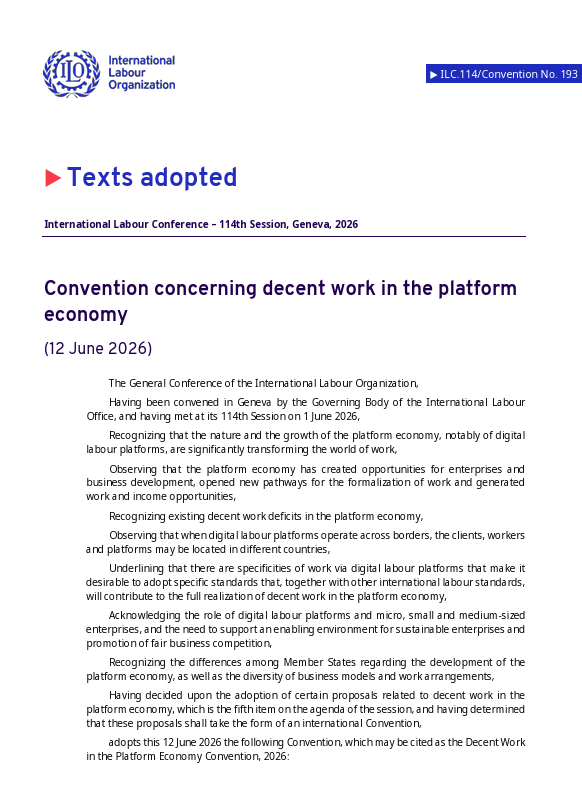
Attending the 114th International Labour Conference (ILC) in Geneva as a delegate from Central Organisation of Free Trade Unions (COFTU), a Labour Federation of Trade Unions, for the first time was inspiring. Coming from Uganda, where trade unions continue to advocate for decent work amid rapid economic change, it was remarkable to witness governments, employers and workers from around the world negotiating International Labour Standards (ILSs) that will shape the future of work. The adoption of the Decent Work in the Platform Economy Convention, 2026 (No. 193) was more than a diplomatic achievement; it was recognition that the world of work has fundamentally changed and that labour governance must change with it.
As discussions unfolded, I found myself constantly reflecting on the realities back home. Across Uganda, digital platforms have transformed employment opportunities. Thousands of young people now earn incomes as ride-hailing drivers, food delivery riders, online freelancers, digital marketers, content creators and e-commerce vendors. Others rely on social media platforms such as Facebook, TikTok and WhatsApp to sell products or services. While these opportunities have expanded access to income, they have also exposed workers to new forms of vulnerability.
Many platform workers lack written contracts, social protection, occupational safety measures or clear mechanisms for resolving disputes. Earnings fluctuate according to opaque algorithms, commissions change without consultation, and workers often shoulder all the business risks themselves. For many, flexibility comes at the cost of security. Reliable statistics of those engaged in this line of work are blurry.

These challenges are not unique to Uganda. They are shared across many economies where digital innovation is advancing faster than labour regulation. Delegates from Asia, the Americas, the Caribbean and Europe shared similar experiences with developing economies facing these challenges more acutely. This is why Convention No. 193 is significant. It acknowledges that platform workers deserve the same fundamental rights and protections as other workers, regardless of whether their employer is a factory, an office or a digital application.
Yet one lesson stood out above all others: adopting ILSs is only the beginning. Their impact depends entirely on the ability of national institutions to implement them effectively. This is where governance readiness becomes essential. The launch of the TASC Platform's Preparing Governance for Just Transitions Policy Guide reinforces this important message. Preparing for the future of work requires more than drafting new laws. It requires institutions that can anticipate change, coordinate across sectors and respond quickly to emerging labour market realities.
Uganda already possesses strong institutional foundations through the Ministry of Gender, Labour and Social Development, workers' and employers' organisations like COFTU, and labour administration systems. However, platform work challenges many traditional assumptions about employment relationships. Existing legal definitions of employer, employee and workplace often fail to capture the complexity of digital labour platforms.
Take, for example, an Uber driver operating in Kampala. The driver may own the vehicle, work independently, receive assignments through an application developed outside Uganda and be paid electronically after platform commissions are deducted. If disputes arise over account suspension, earnings or unfair treatment, determining responsibility becomes difficult. Similar situations exist for delivery riders navigating Kampala traffic, online freelance designers serving international clients, or traders running small digital businesses through online marketplaces. Traditional labour governance systems were not designed for these employment models.
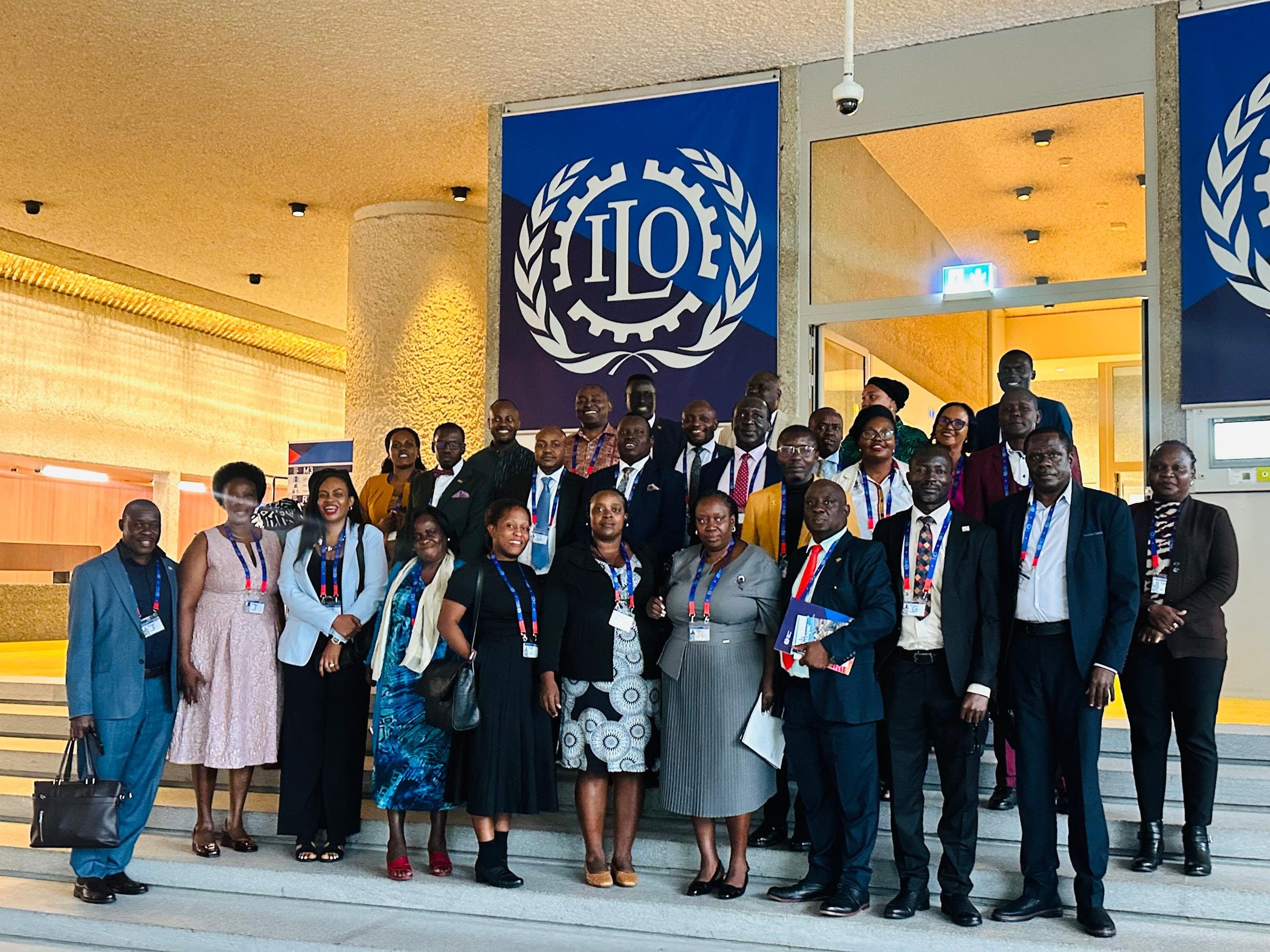
COFTU Uganda delegation for the ILC 2026, 1-12 June, led by Secretary General Dr. Sam Lyomoki.
Governance readiness therefore means strengthening institutions before these challenges become crises. Labour inspectors need new skills to understand digital workplaces. Policymakers require better labour market data to understand platform employment. Social dialogue institutions such as the Tripartite plus, must create space for platform workers, whose voices are often absent from conventional industrial relations structures. Social protection systems should become more flexible so that workers with irregular incomes can still access pensions, health insurance and other benefits.
The discussions also reinforced another important lesson: just transitions extend beyond platform work. Successful transitions depend on strong institutions that place people at the centre of policy decisions. Workers must not simply adapt to change; they should actively participate in shaping it. For Uganda, this presents an opportunity rather than a challenge alone. The country's youthful population is innovative, entrepreneurial and increasingly connected to digital markets. With effective governance, digital platforms can become engines of decent work, enterprise development and inclusive economic growth. Without it, they risk creating a growing workforce trapped in insecure employment with limited protection.
As I left Geneva, I returned with renewed conviction that ILSs remain relevant because they provide a common vision of fairness in an evolving world of work. More importantly, I returned convinced that trade unions, governments, employers and development partners must work together to translate those standards into practical reforms that improve workers' lives.
The conversations in Geneva reminded us that the future of work is not something that will happen tomorrow, it is already here. The question is whether our institutions are prepared for it. For Uganda and many countries across the Global South, building governance readiness today will determine whether future transitions become pathways to decent work and shared prosperity, or sources of deeper inequality. That is perhaps the most enduring lesson I bring home from the 114th International Labour Conference.
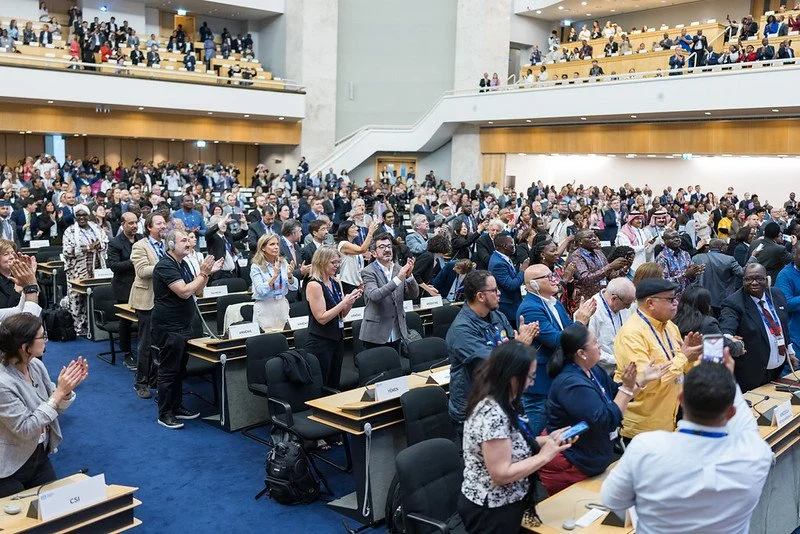
114th International Labour Conference, photo credit: ILO
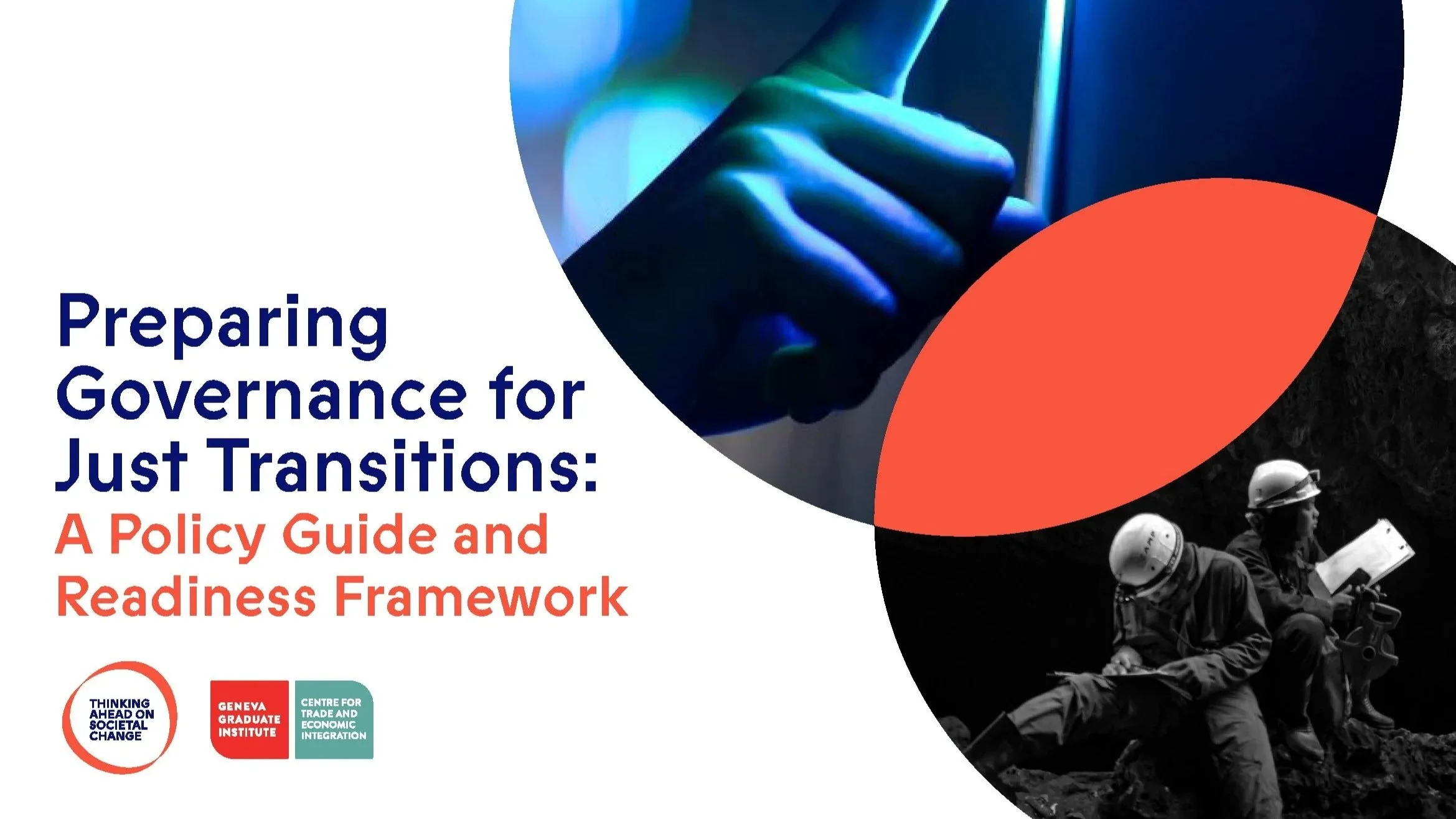
Drawing on insights from the Trade and Labour Programme, this Policy Guide introduces a Governance Readiness Framework to help governments, international organisations, businesses, and social partners assess whether institutions are equipped to manage the labour consequences of economic transitions. Moving beyond compensation and reskilling alone, it argues that just transitions depend on the capacity to anticipate risks, coordinate across policy domains, adapt regulation, and enforce protections. The guide offers a practical diagnostic tool to identify governance gaps and strengthen readiness across green, digital, industrial, and geopolitical transitions.