

ILO Convention No. 193: A global framework for decent work in the platform economy
What the new international labour standard establishes, and what implementation now requires.
The adoption of the Decent Work in the Platform Economy Convention, 2026 (No. 193) marks a historic milestone for international labour governance, establishing the first global labour standard dedicated to platform work. In this analysis, Dr Maria Mexi examines how the Convention responds to the realities of an increasingly digital, cross-border labour market, introducing new international standards on workers' rights, algorithmic management, social protection, and governance. She also explores the practical challenges that now lie ahead, from ratification and national implementation to strengthening institutions, social dialogue, and enforcement to ensure the Convention translates into meaningful protections for platform workers worldwide.
By Dr Maria Mexi, Senior Labour and Social Policy Advisor, TASC Platform
On 12 June 2026, the International Labour Conference adopted the Decent Work in the Platform Economy Convention, 2026 (No. 193), the first international labour standard dedicated to platform work. The outcome was far from assured: negotiations in 2025 had advanced little beyond definitions and scope, and the text was finalised only in the session’s closing days. The instrument received 406 votes in favour, 8 against and 36 abstentions, securing substantial tripartite backing.
The Convention establishes a global floor for a diverse, frequently cross-border labour market of over 150 million workers worldwide. It addresses not only employment status but also fundamental rights, pay, social protection, occupational safety and health, algorithmic management, data, dispute resolution and enforcement.
It is more than a catalogue of protections: it is an institutional response to a labour market in which work is dispersed, status is contested and management is increasingly automated, connecting substantive rights to representation, accountability and negotiated rule-making.
A framework for a fragmented market
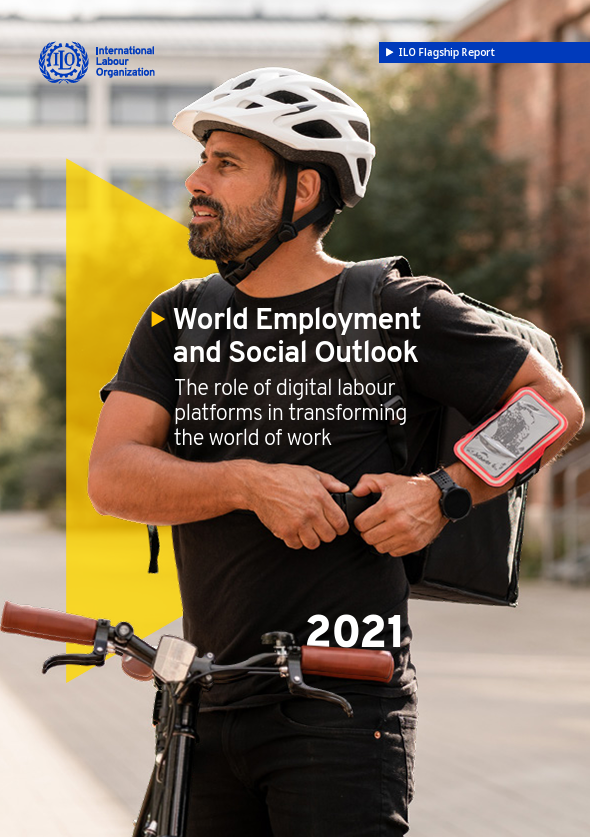
Platform work spans location-based services (transport, delivery, domestic and care work) and online work such as translation, design and data annotation. Platform, worker and client may sit in different jurisdictions, and national approaches to classification, social protection, collective rights and algorithmic management have developed unevenly.
Convention No. 193 responds with a common framework implemented through national laws, collective agreements, court decisions or a combination of these. It covers online and location-based platforms and workers in the formal and informal economies, whether or not in an employment relationship, and requires measures to facilitate formalisation, including registration of self-employed workers. Limited exclusions are possible only where substantial problems arise, after consultation and subject to reporting.
The Convention’s regulatory architecture
The Convention distinguishes universal protections from rights linked to employment status. Fundamental principles and rights at work apply across the platform economy: freedom of association and collective bargaining; the elimination of forced labour, child labour and discrimination; and a safe and healthy working environment. It also covers violence and harassment, timely and full payment, information on earnings and deductions, personal-data safeguards, protection for migrants and refugees, dispute resolution and remedies. Workers may withdraw from work posing imminent and serious danger without undue consequences, and discriminatory or otherwise unlawful suspension, deactivation or termination is prohibited.
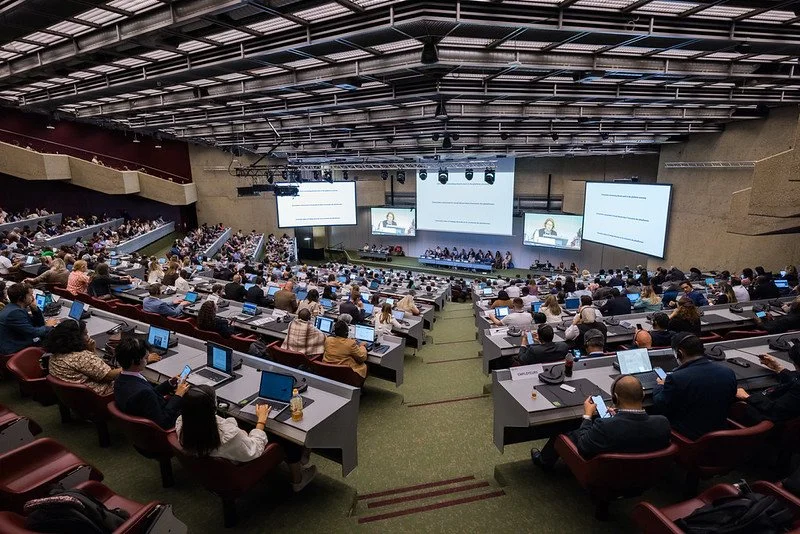
114th International Labour Conference - Photo credit: ILO
Employment status nevertheless remains consequential. The Convention does not classify every platform worker as an employee; it requires correct classification guided mainly by the facts of how work is performed and paid rather than contractual labels, codifying the primacy-of-facts principle. Employees must receive at least the applicable statutory or negotiated minimum wage, excluding tips, plus compensation for work-related expenses, and governments must consider extending minimum-wage measures to workers outside an employment relationship. Social-security access must be no less favourable than for other workers with the same classification.
The provisions on automated systems are particularly significant. Platforms must inform workers, before engagement, and their representatives about systems that monitor, evaluate or generate decisions about work, and explain their effects on working conditions and access to work. Workers may request a written explanation of significant adverse decisions and, where appropriate, a review of decisions involving unpaid earnings, suspension, deactivation or termination, with appropriate human involvement required. They may also request access to, correction of and erasure of their personal data, subject to retention rules.
The Convention also addresses institutional responsibility. Where intermediaries are permitted, governments must allocate responsibilities between them and platforms, and terms and conditions should preferably be governed by the law of the country where the work is performed. These provisions help prevent accountability from being displaced through contractual or cross-border structures.
Tripartism as a mode of governance
Tripartism was not only the process that produced the text; it is part of the Convention’s implementation design.
Article 24 requires implementation in consultation with representative employers’ and workers’ organisations and recognises collective agreements as one means of giving effect to the Convention. In a sector of fast-changing technology and heterogeneous business models, legislation can set the floor while social dialogue and collective bargaining translate it into sectoral and workplace rules on pay, data, automated decision-making, occupational risks and dispute resolution.
ILO research documents emerging forms of worker organisation, collective action and bargaining in the platform economy, while also showing that effective collective bargaining remains limited. Convention No. 193 provides a stronger enabling framework, including for workers whose contractual status has restricted access to collective representation.
From adoption to implementation

114th International Labour Conference - Photo credit: ILO
The Convention becomes binding only on countries that ratify it. It will enter into force 12 months after the first two ratifications are registered and, subsequently, for each ratifying country 12 months after its ratification.
For governments, the immediate agenda is a gap analysis of law and practice, tripartite consultation and a roadmap for ratification. Implementation will demand clear classification rules, adequate social protection, capable labour inspectorates, accessible remedies, the expertise to scrutinise automated systems and, for cross-border operations and subcontracting chains, clear jurisdictional rules and international cooperation.
For platforms, compliance means more than revised contractual terms: documented payment processes, transparent automated management, human review of consequential decisions, responsible data governance and effective grievance mechanisms. Employers’ and workers’ organisations will be central to converting principles into operational standards through social dialogue and collective bargaining.
The International Labour Conference did not have time to adopt the planned Recommendation that would have provided more detailed guidance, adopting instead a resolution urging ratification and ILO follow-up. National tripartite processes will therefore be central in resolving implementation questions.
Convention No. 193 neither standardises platform business models nor settles every dispute over employment status. It establishes a global floor and a governance method: enforceable rights, accountable use of technology and institutionalised participation by governments, employers and workers. The test of Convention No. 193 will therefore be more political rather than textual: a floor is only as firm as the institutions willing to stand on it.
Dr Maria Mexi is senior labour and social policy advisor at the TASC Platform. She is co-editor of Social Dialogue in the Gig Economy: A Comparative Empirical Analysis (Edward Elgar, 2023), and her research on platform work includes ILO work with global social partners and co-coordination of the SNIS-funded project ‘’Gig Economy and its Implications for Social Dialogue and Workers' Protection’’.
Key ILO resources:
Decent Work in the Platform Economy Convention, 2026 (No. 193)
The authoritative text of the Convention as adopted by the International Labour Conference.
How will Convention No. 193 promote decent work in the platform economy?
An accessible ILO question-and-answer overview explaining the Convention’s purpose, coverage and principal protections.
Realizing decent work in the platform economy
The ILO’s comprehensive law-and-practice report, prepared for the international standard-setting process.