

How can just transitions be delivered in practice? This article presents TASC Platform’s new Policy Guide as a governance-readiness framework for identifying risks early, closing accountability gaps, and building more coherent, inclusive, and actionable transition planning.
What makes a transition just?
At its core, a just transition is about embedding decent work, labour rights, livelihoods, and inclusive development within industrial change.
Too often, however, the answer is reduced to what comes after disruption: compensation, reskilling, regional support. That is, however, only part of the picture. A just transition depends on whether the institutions governing change are capable of anticipating disruption, coordinating across policy domains, adapting to new production realities, and enforcing protections as transitions happen.
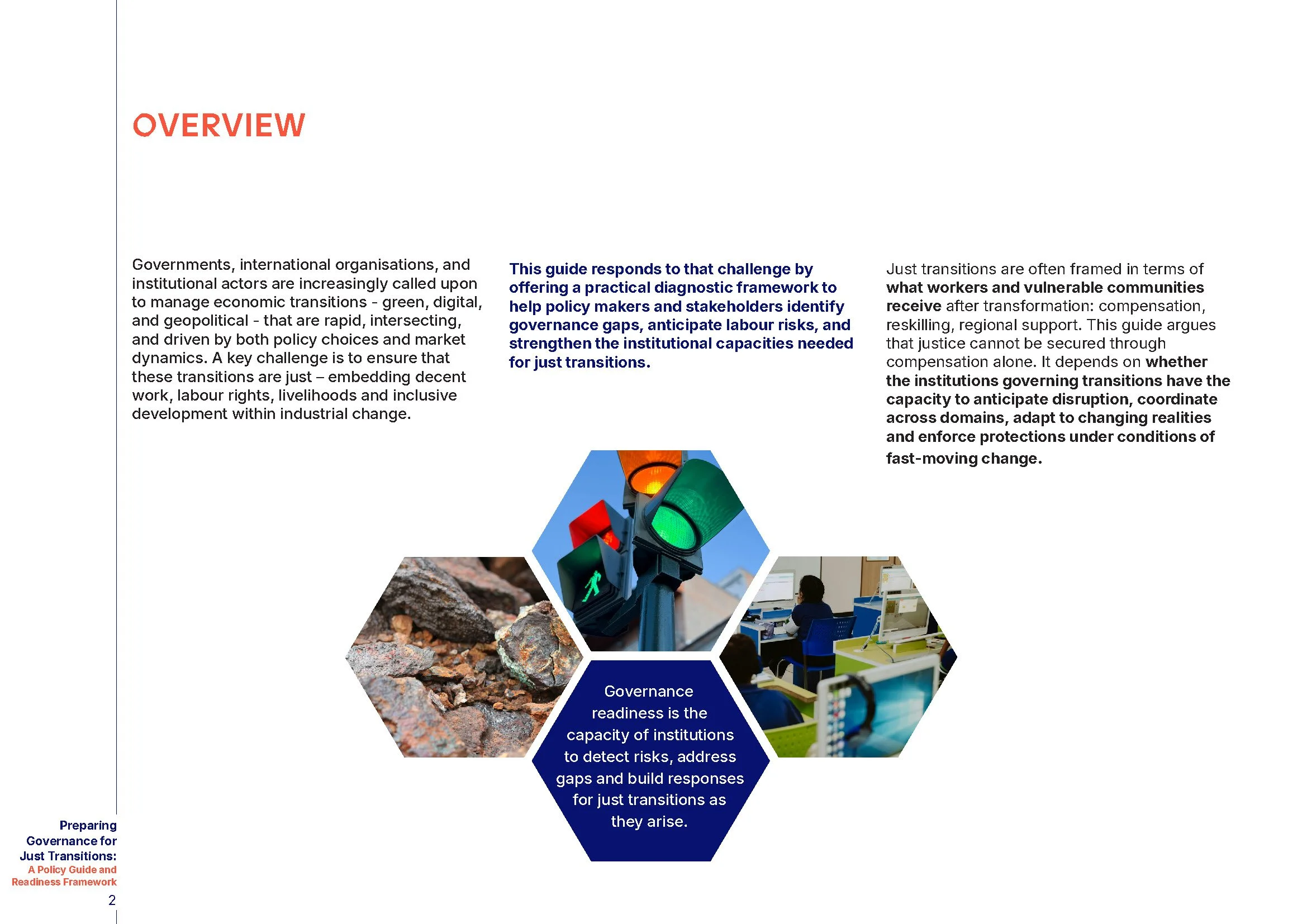
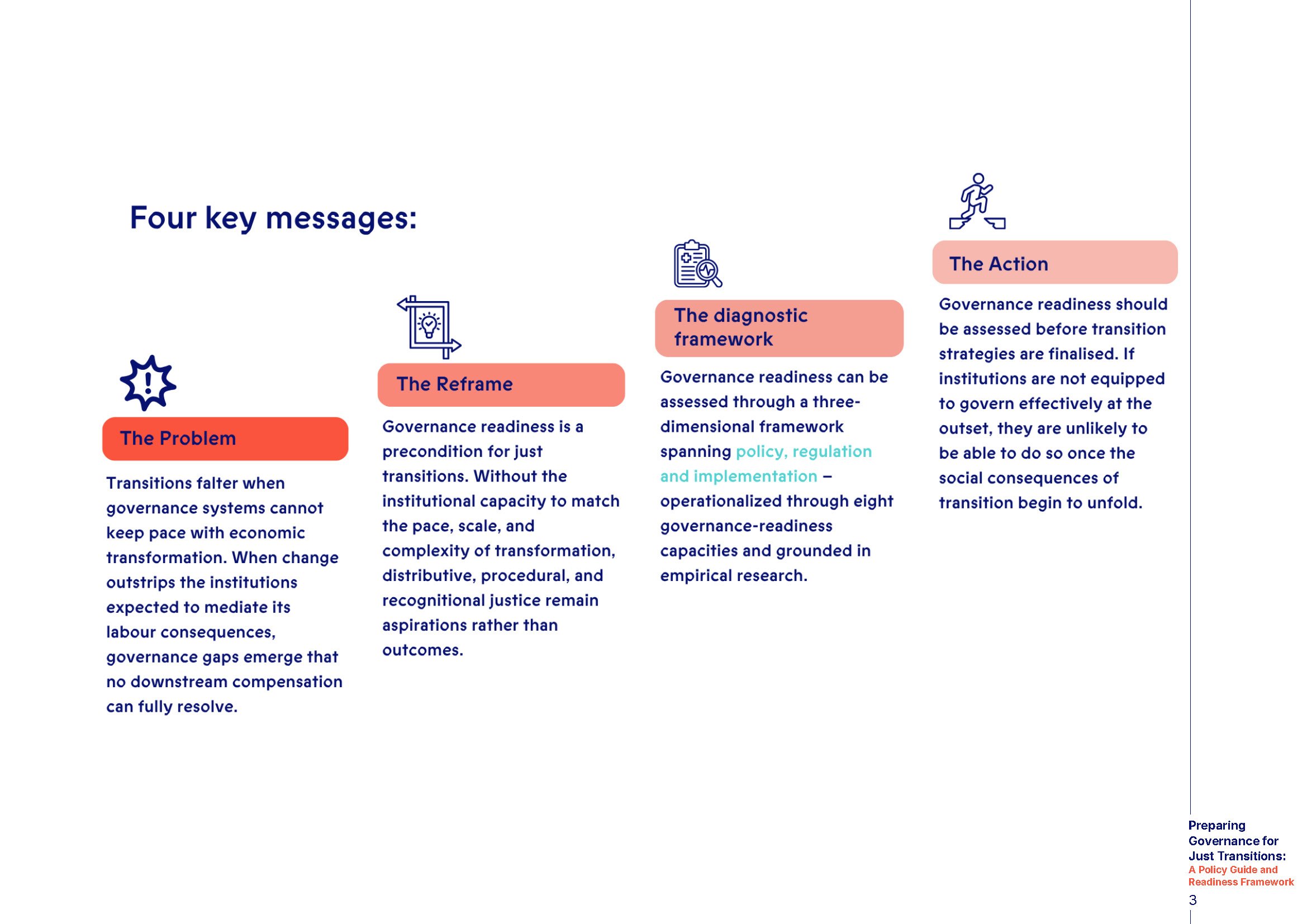
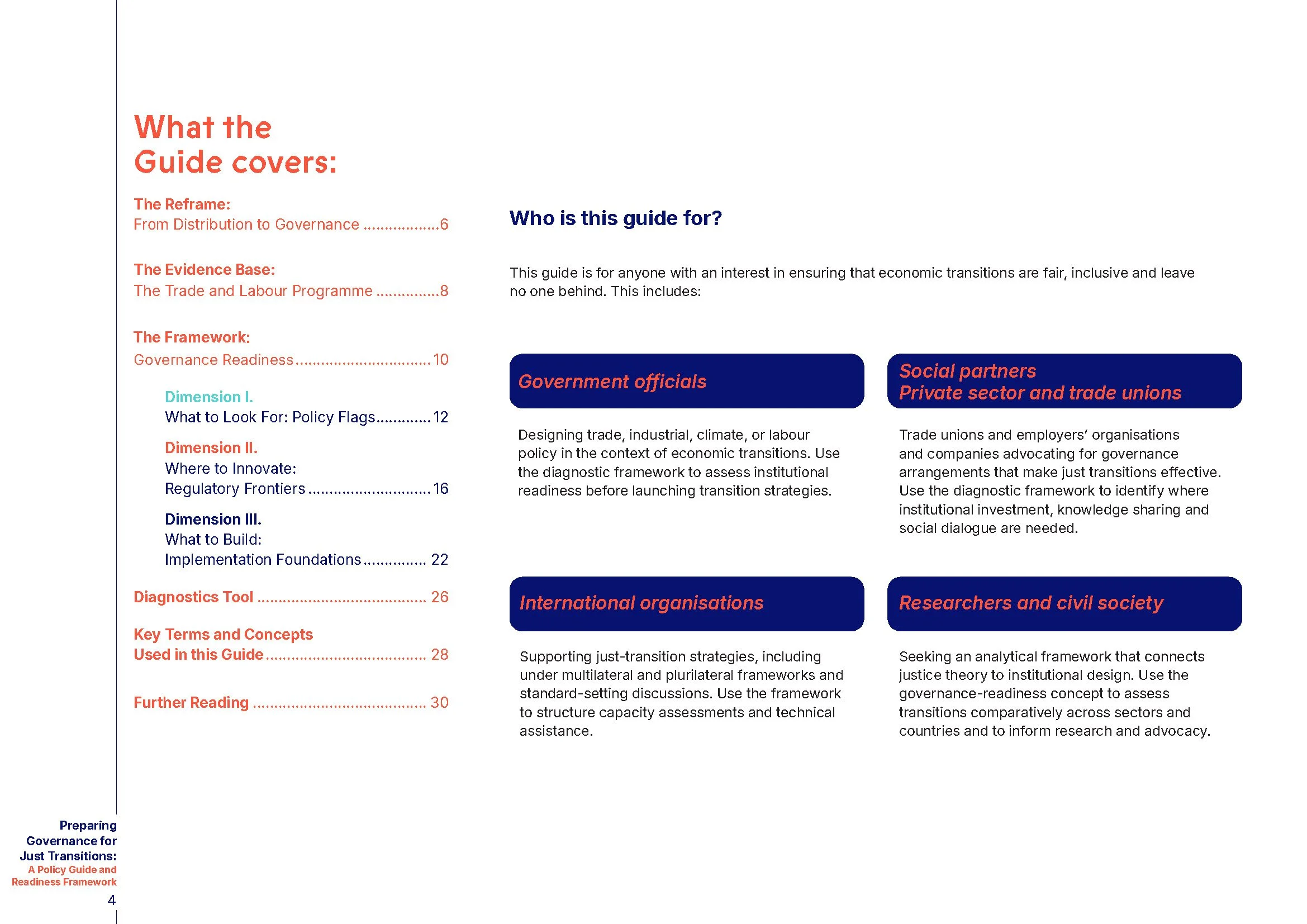
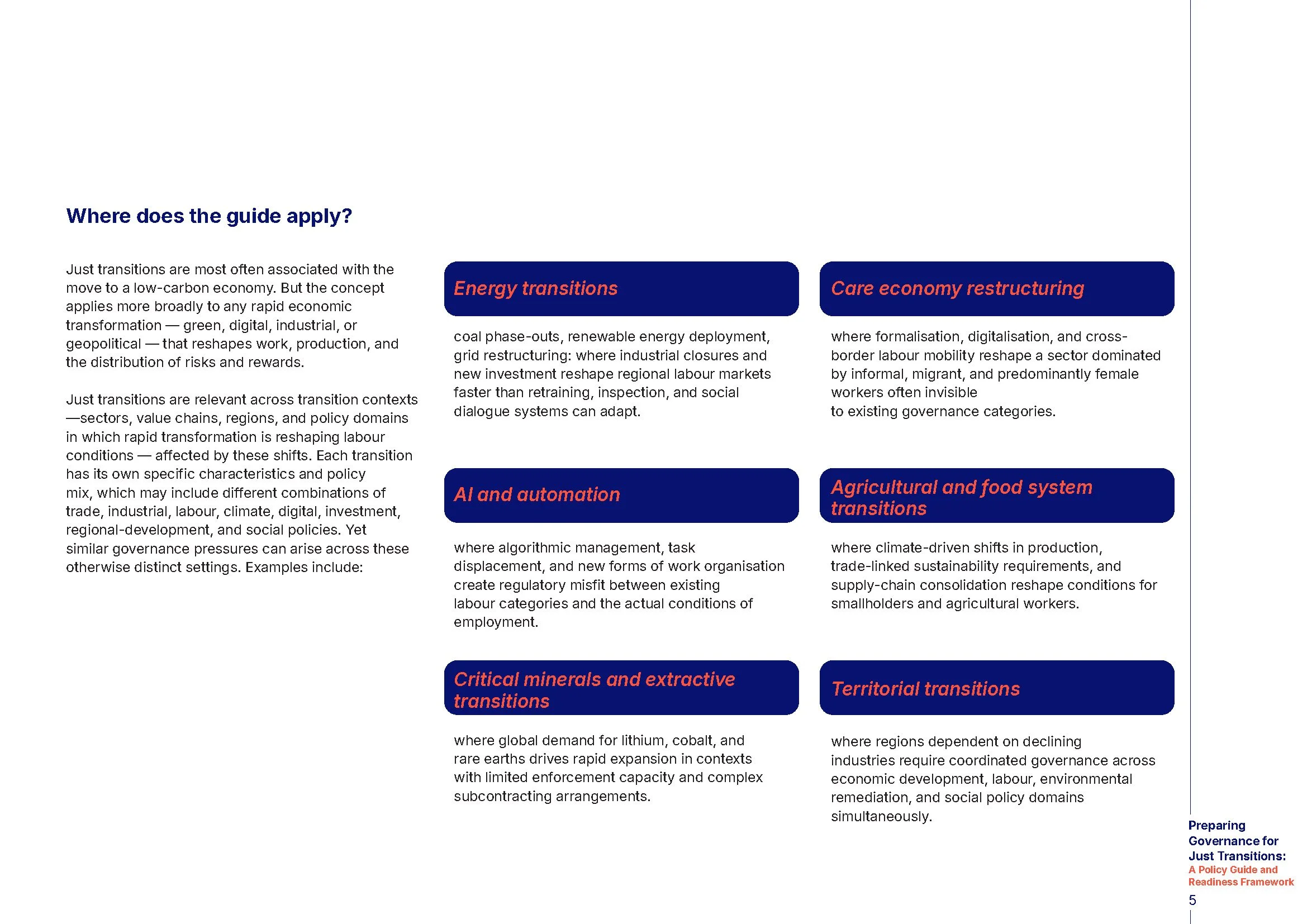
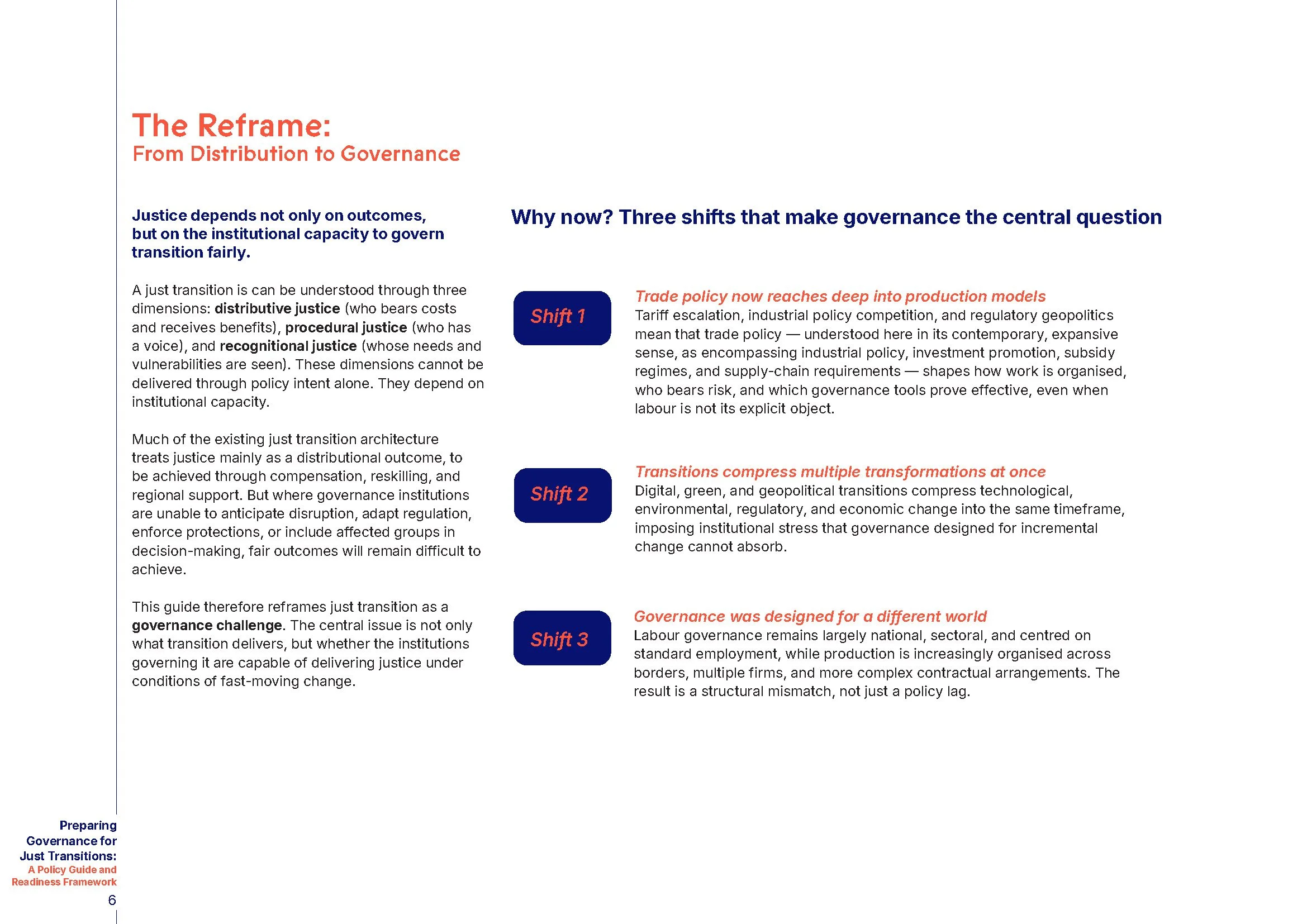
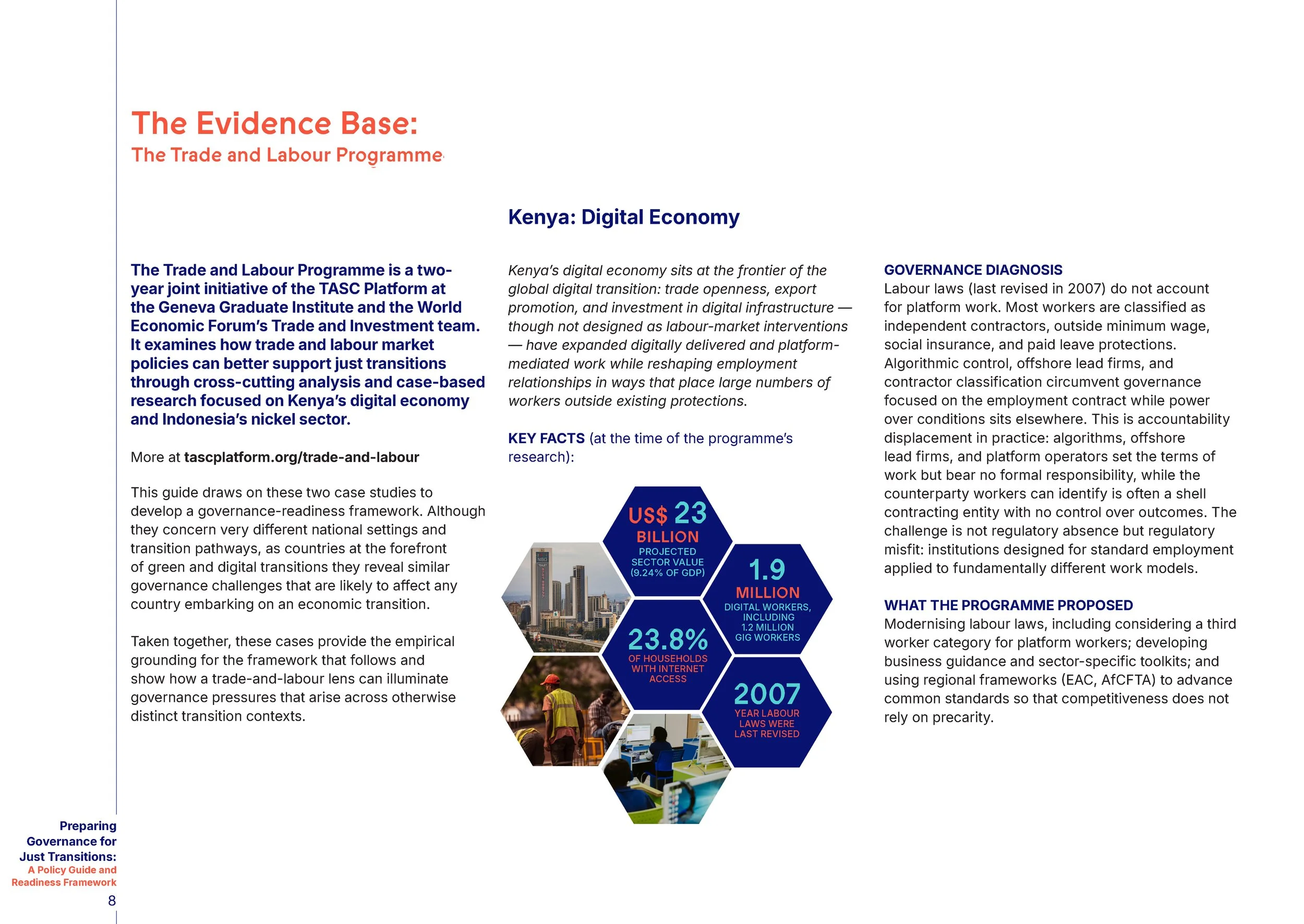
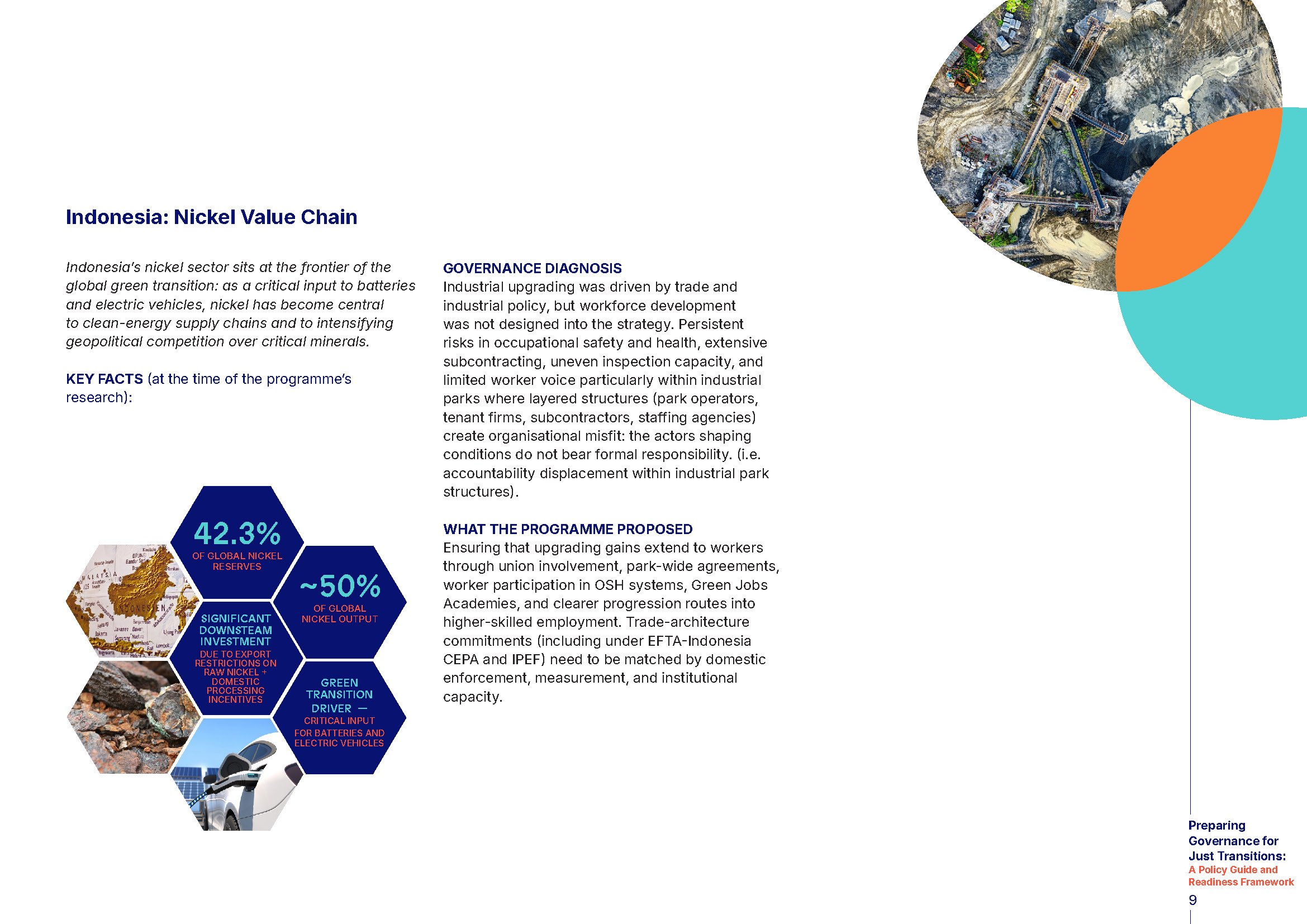
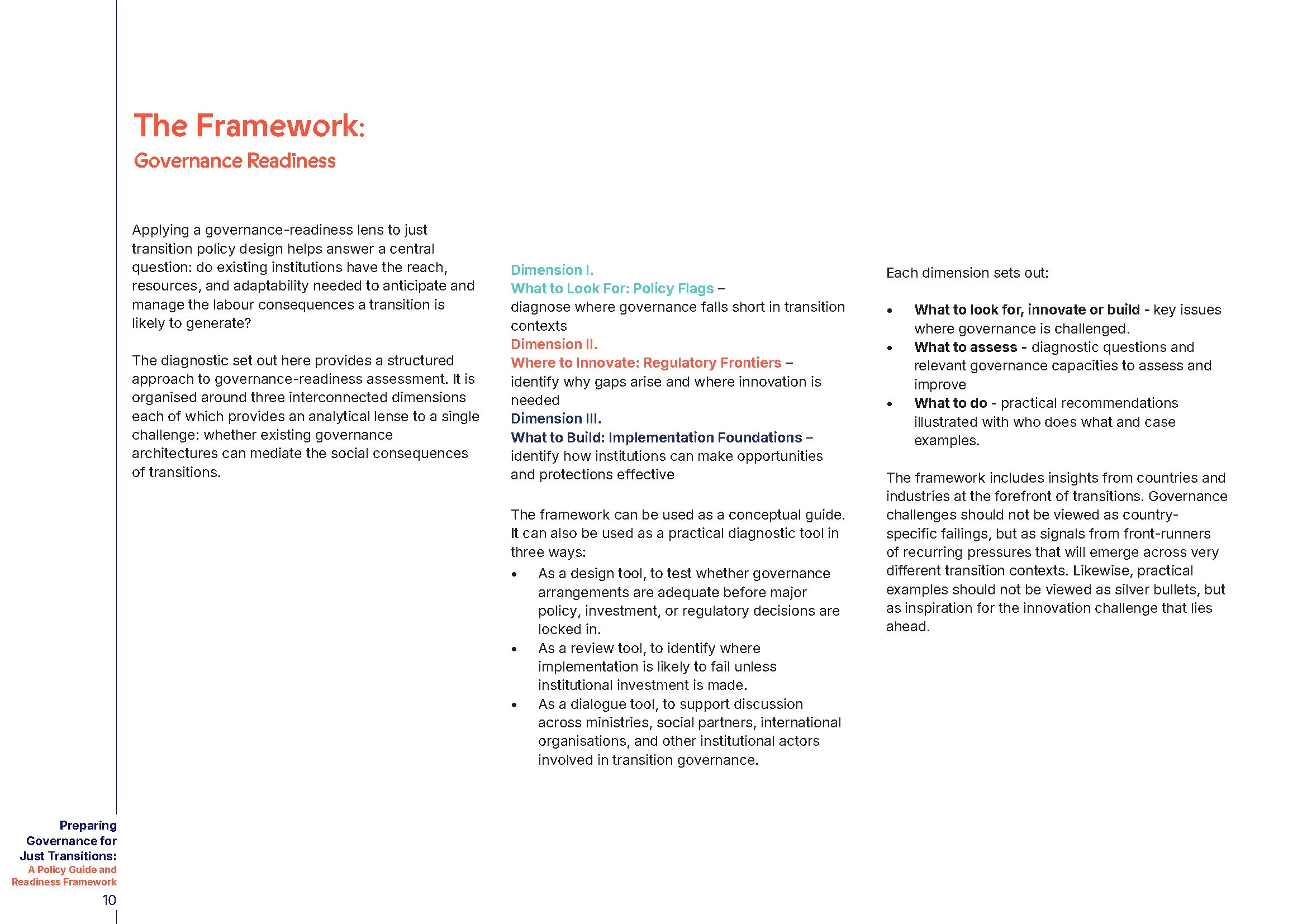
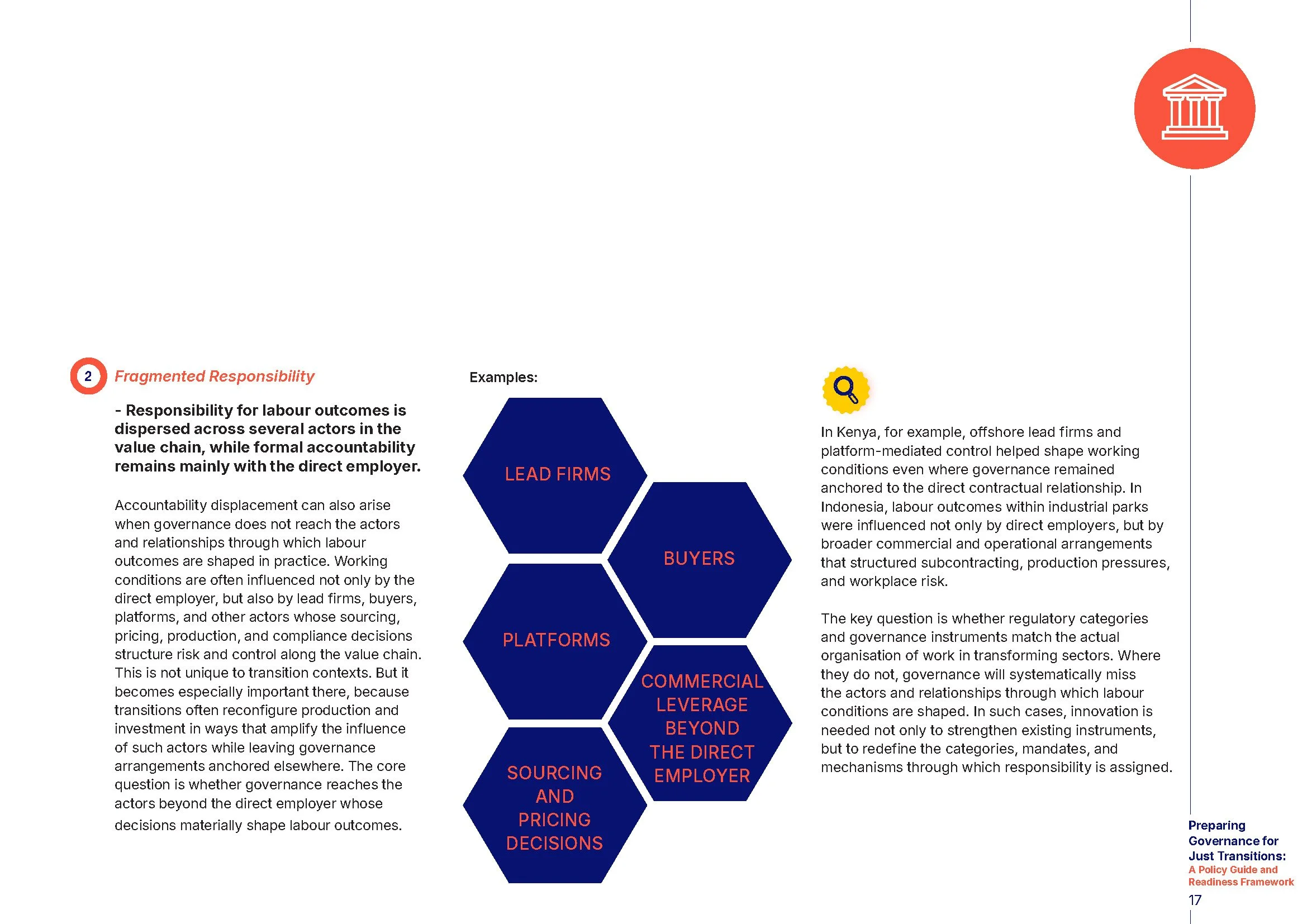
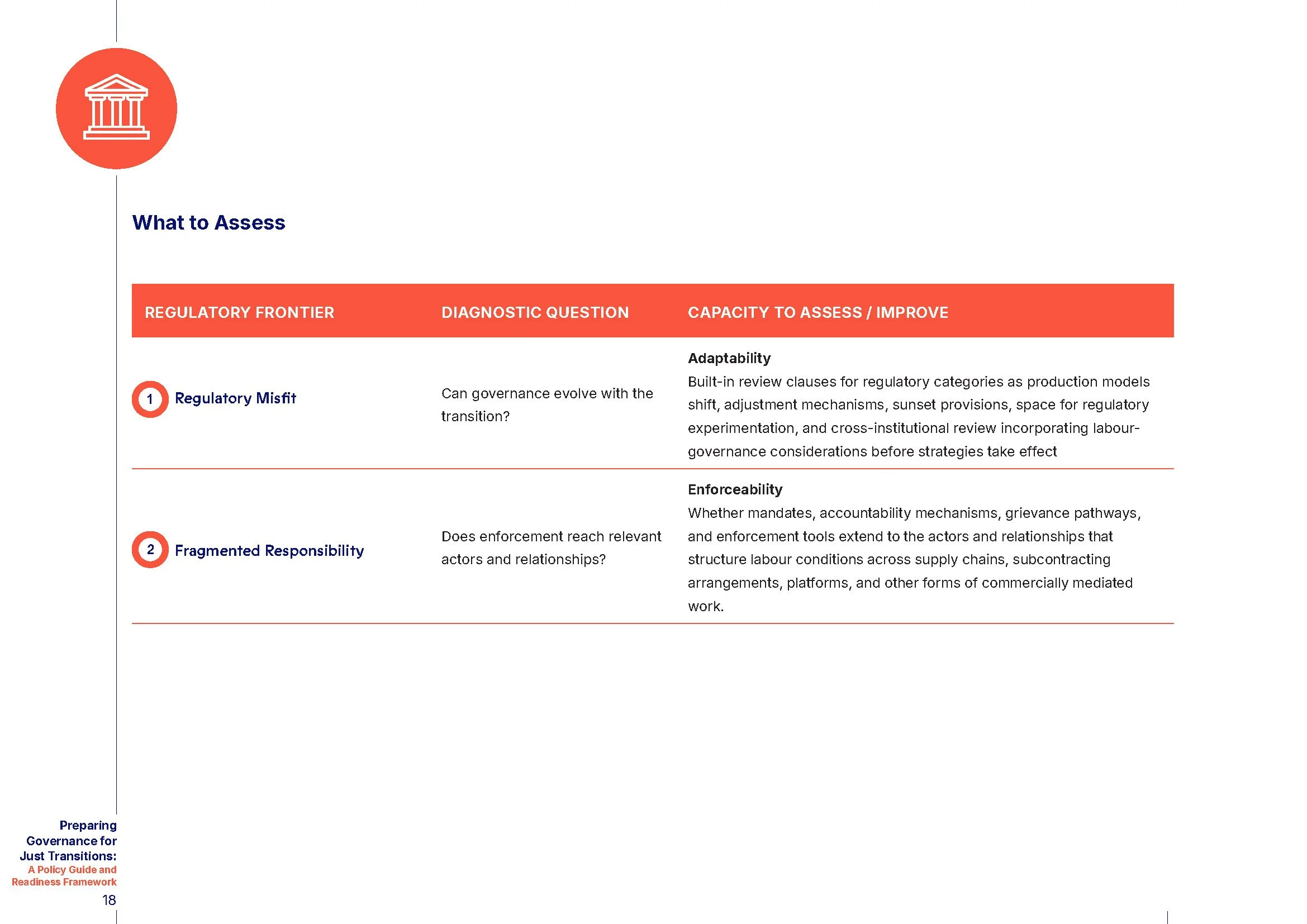
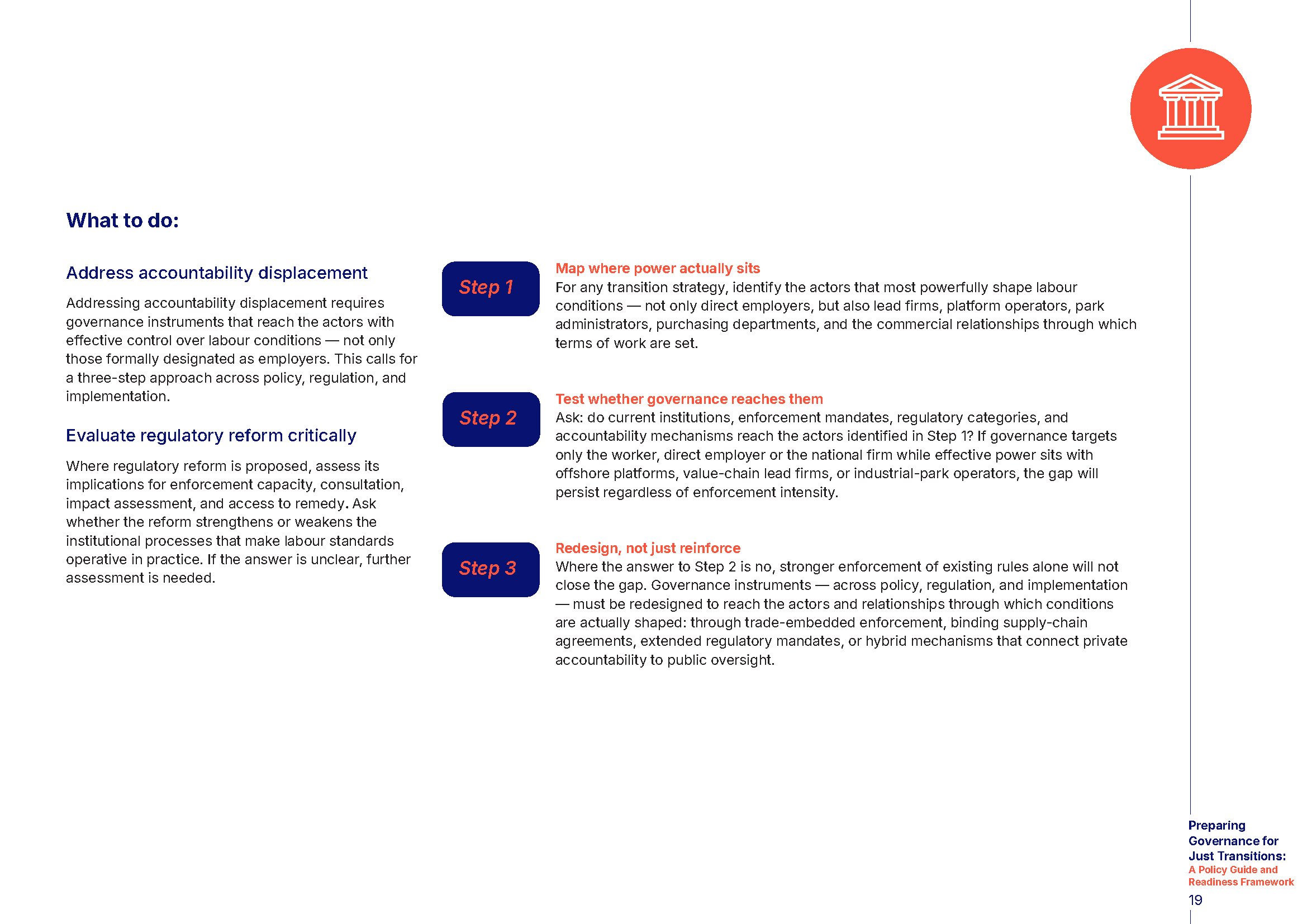
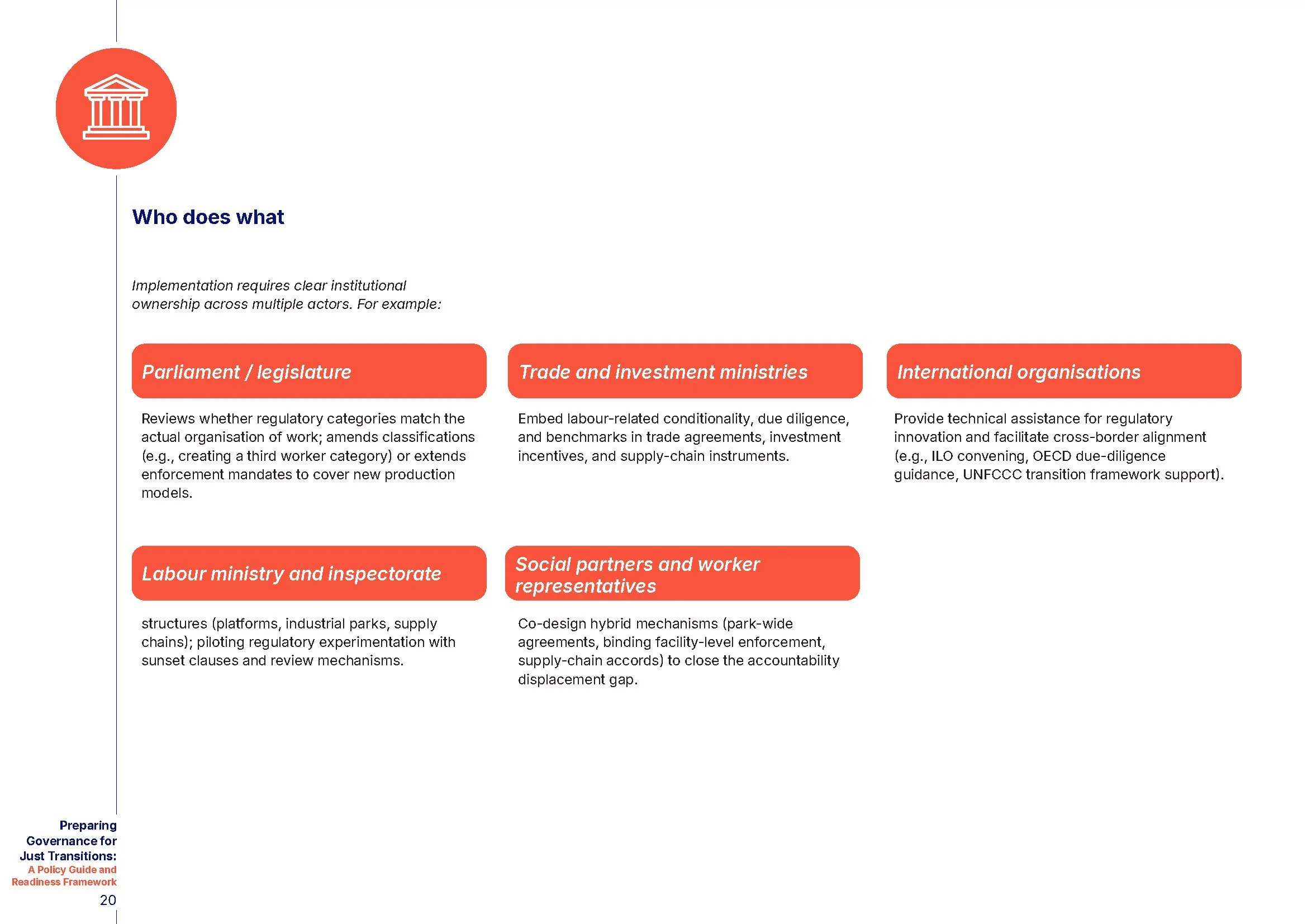
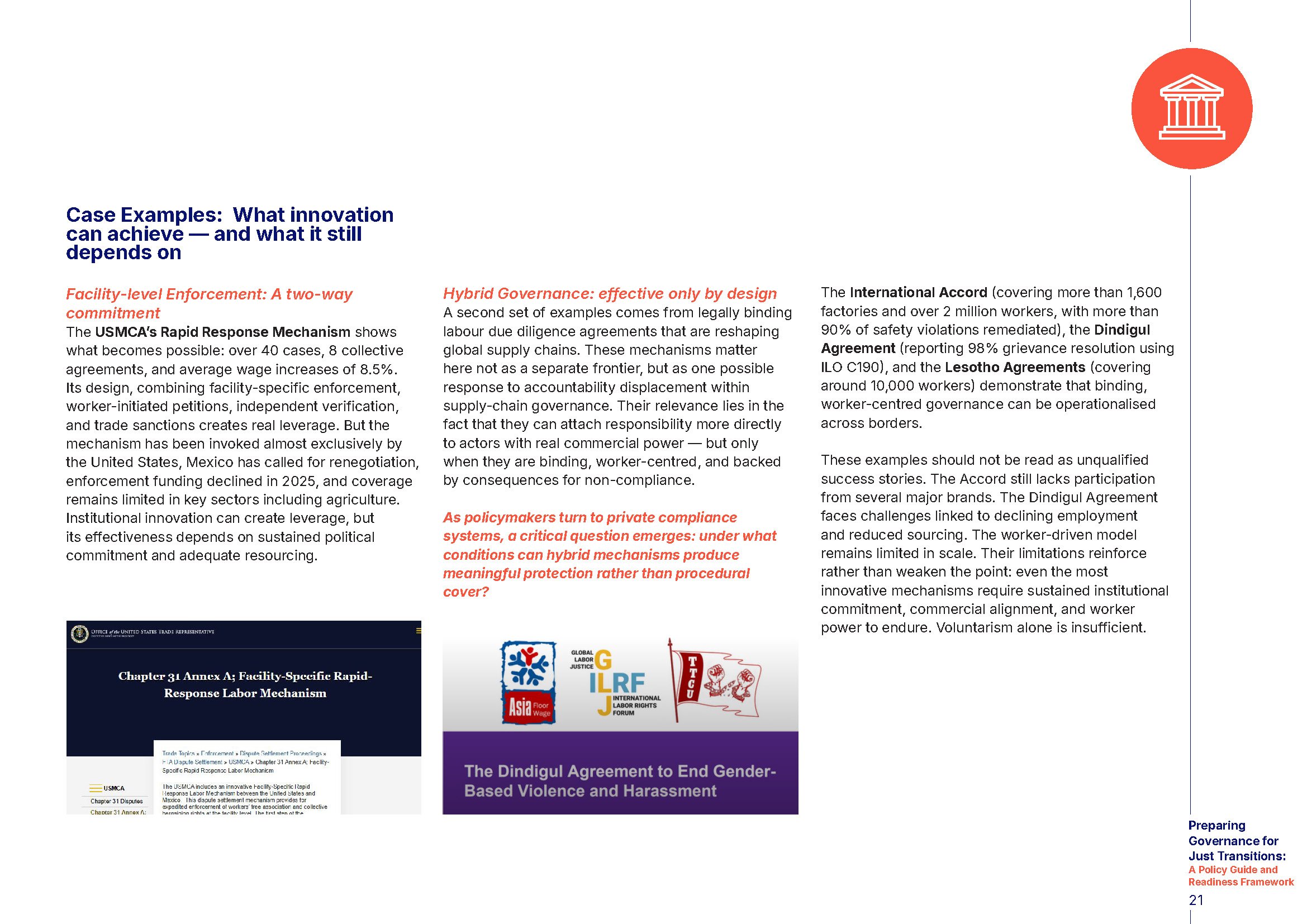
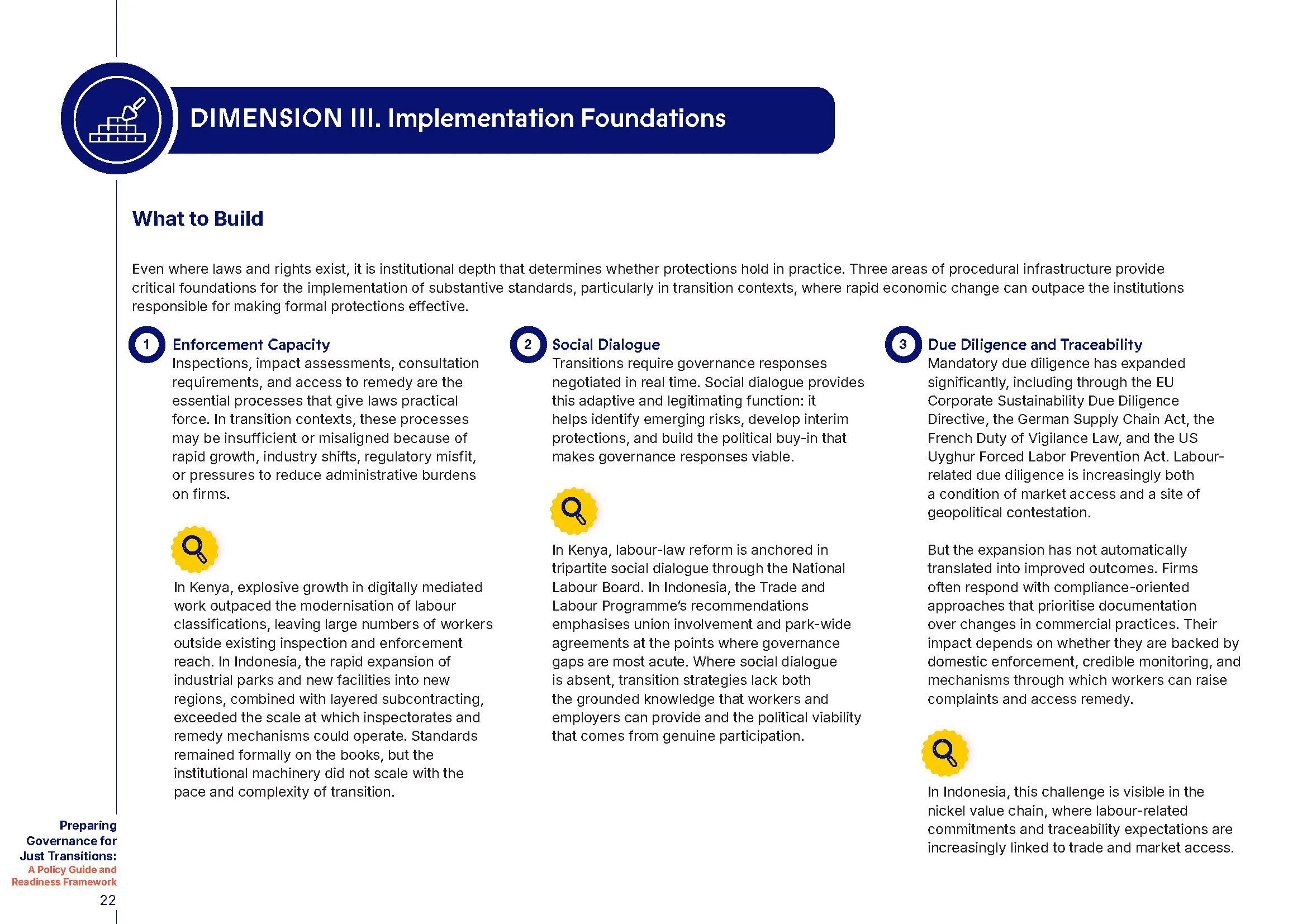
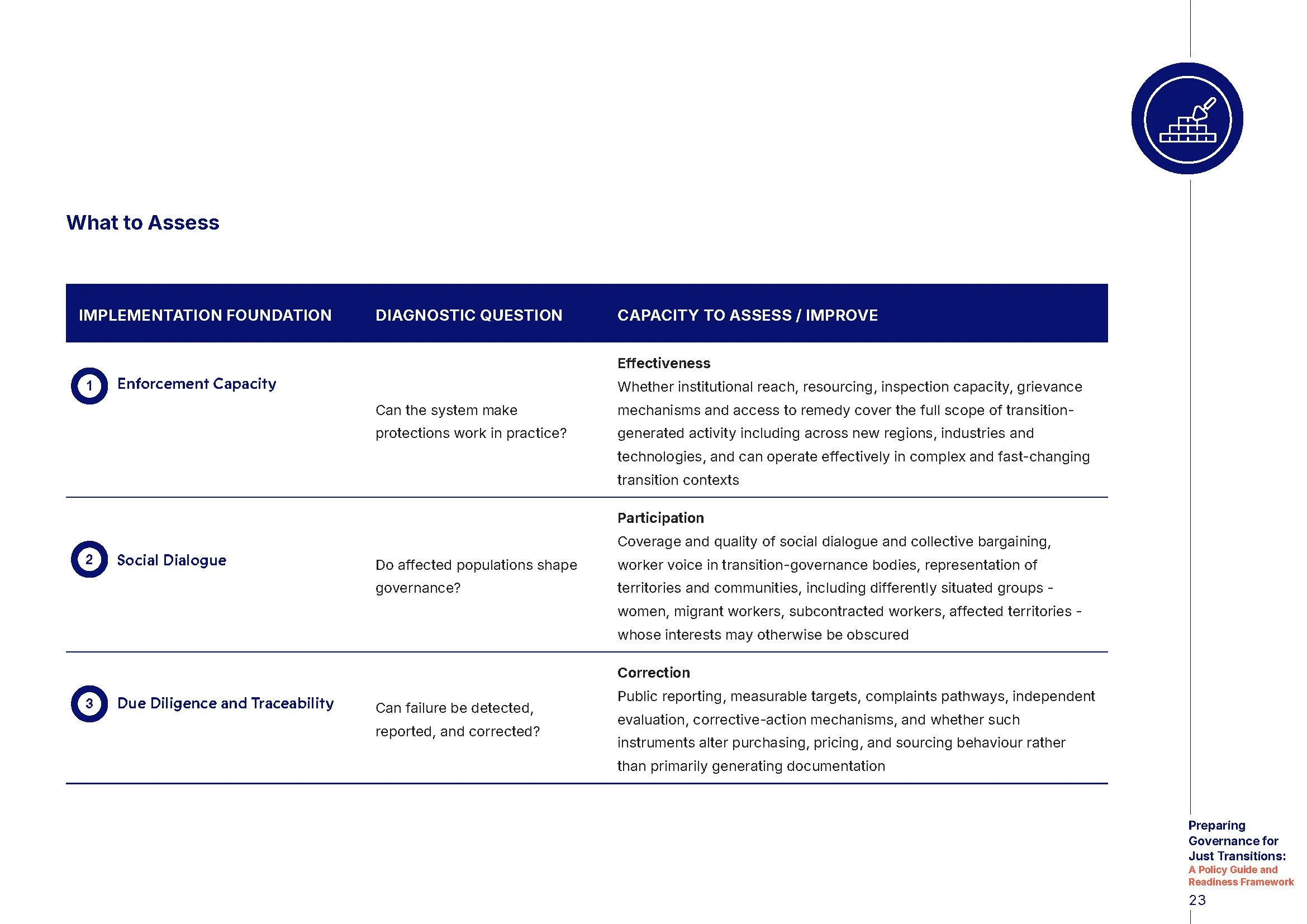
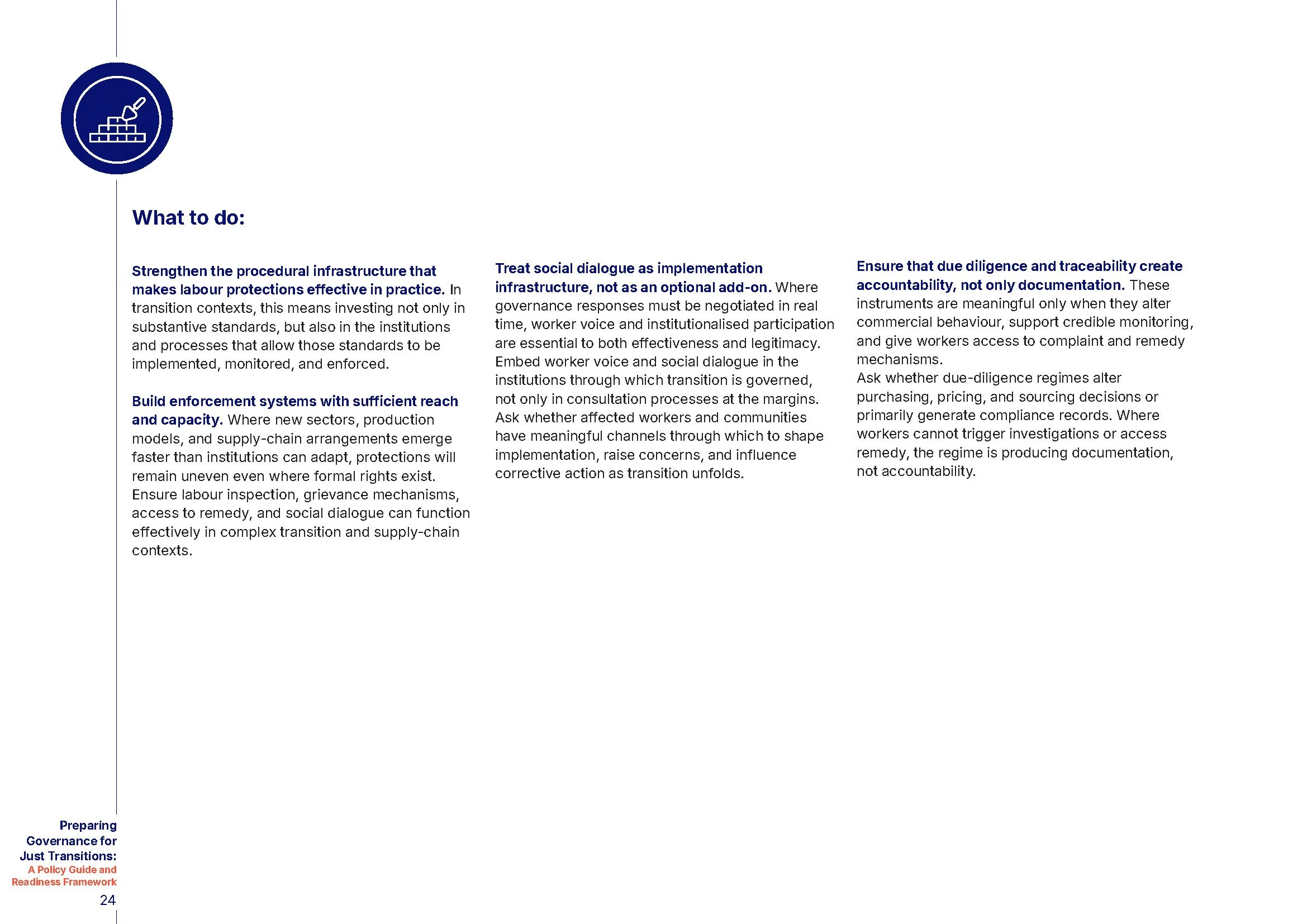
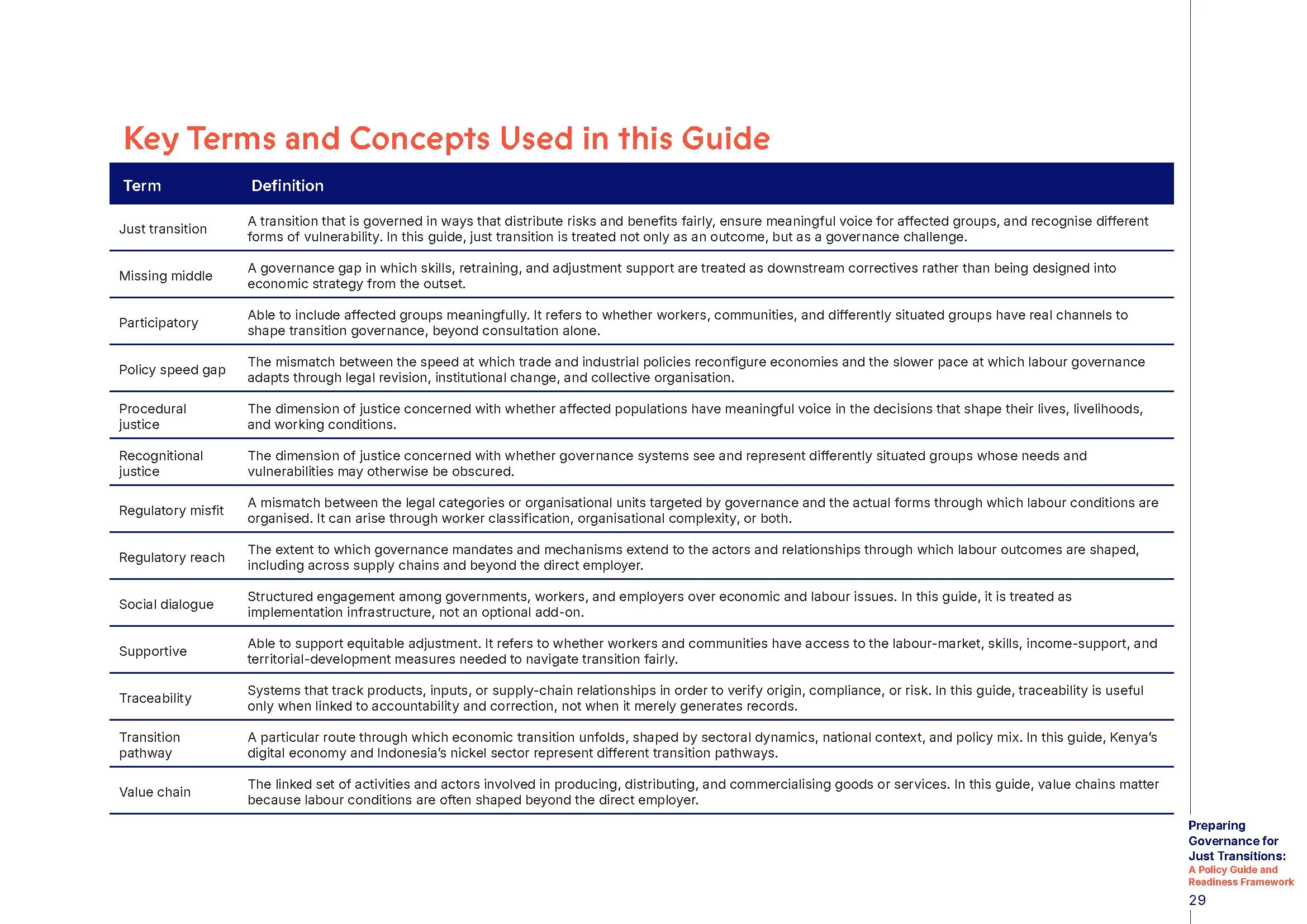
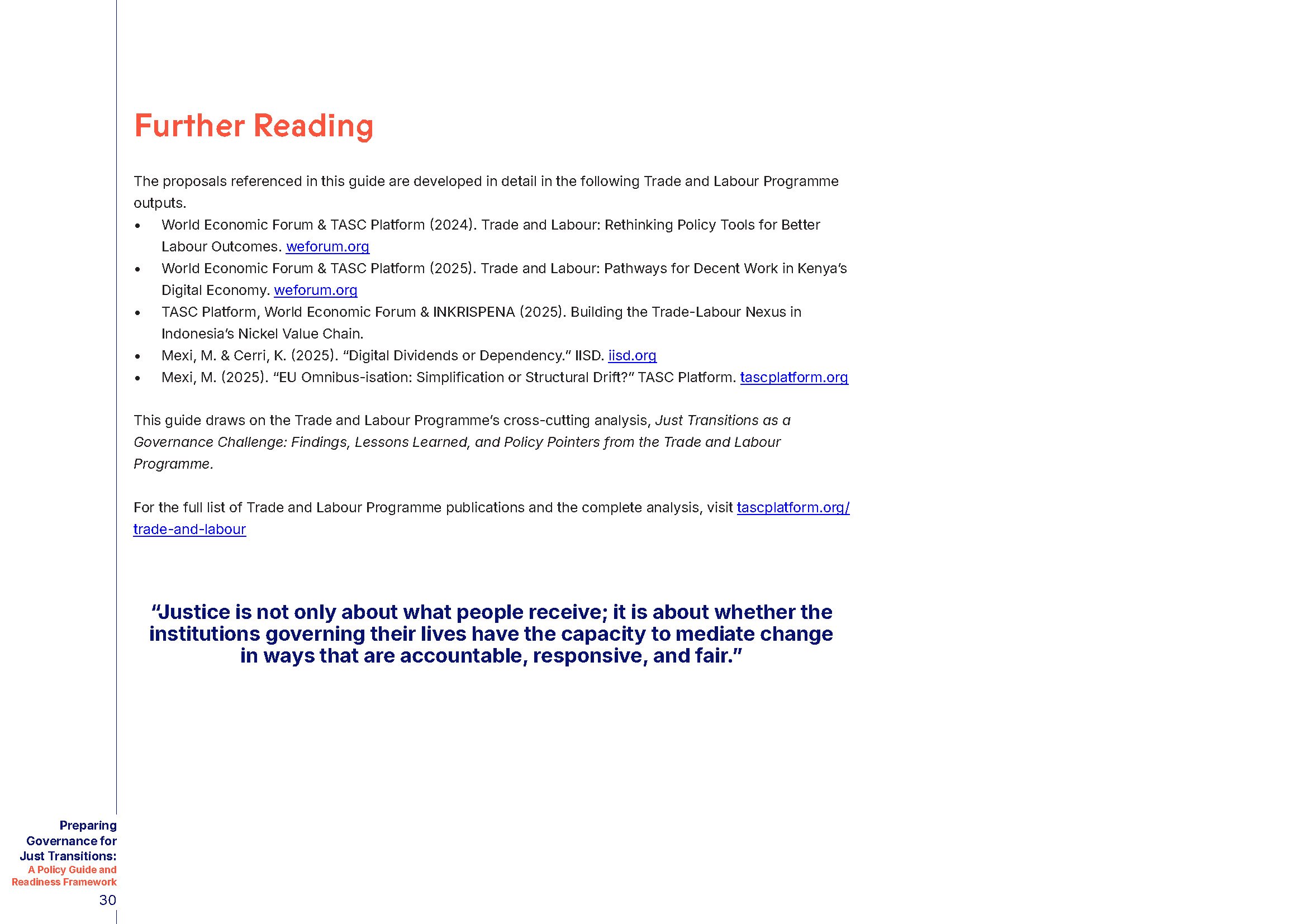
Drawn from the TASC Platform’s Trade and Labour Programme’s deep dives into Kenya’s digital economy and Indonesia’s nickel value chain, Preparing Governance for Just Transitions: A Policy Guide and Readiness Framework (the “Policy Guide”), authored by Maria Mexi and Kitrhona Cerri, reframes just transition as a governance challenge.
A Governance Challenge
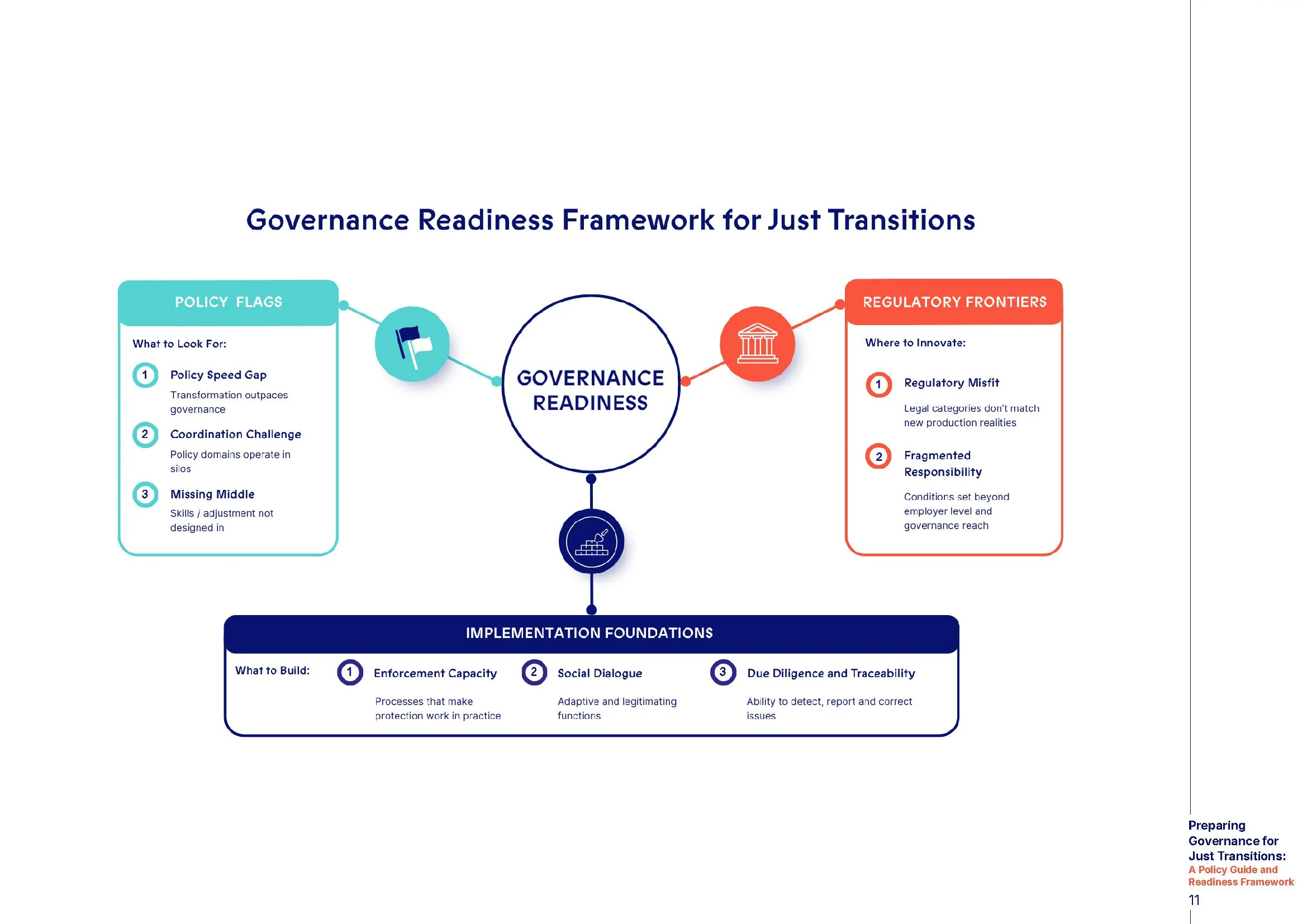
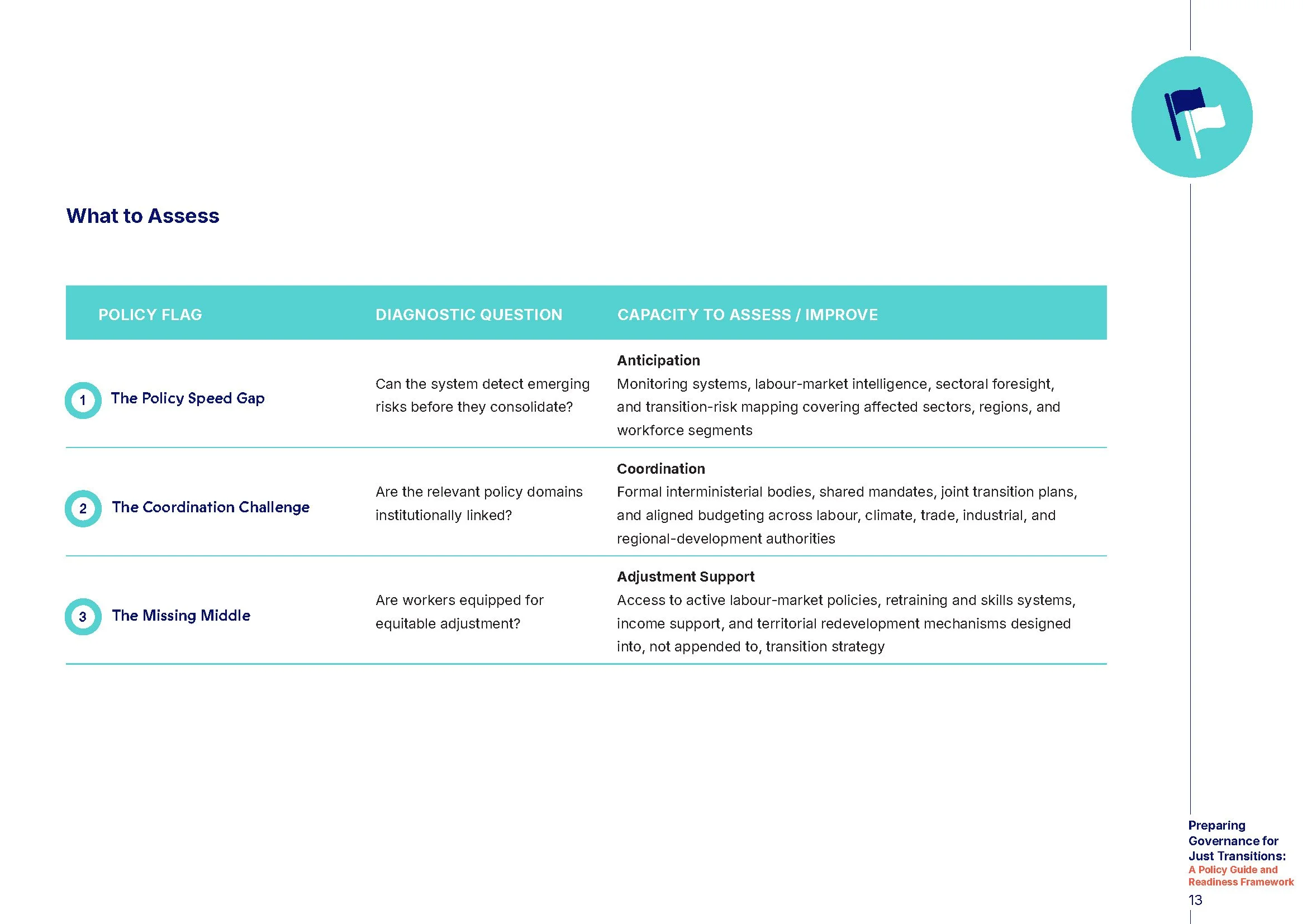
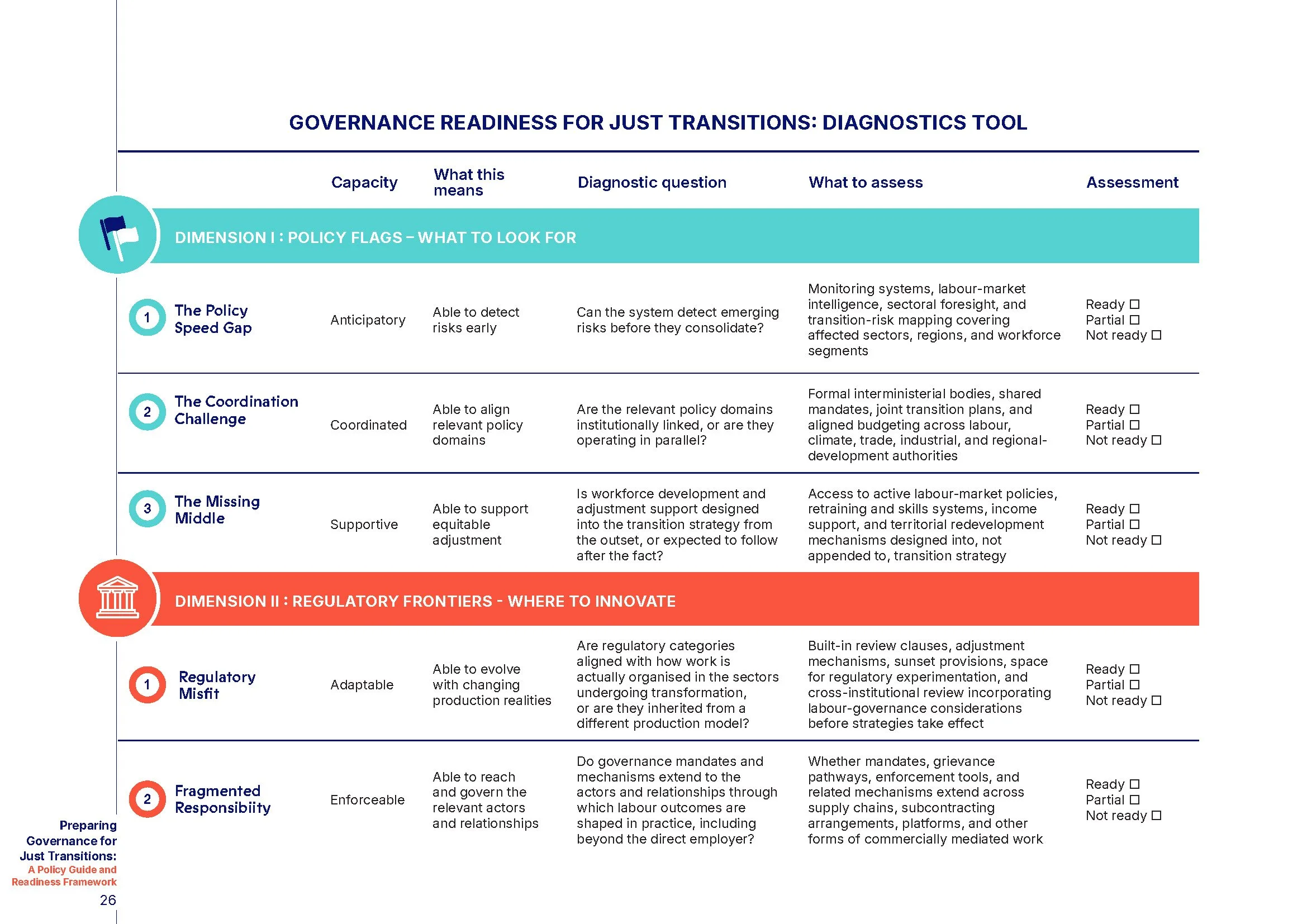
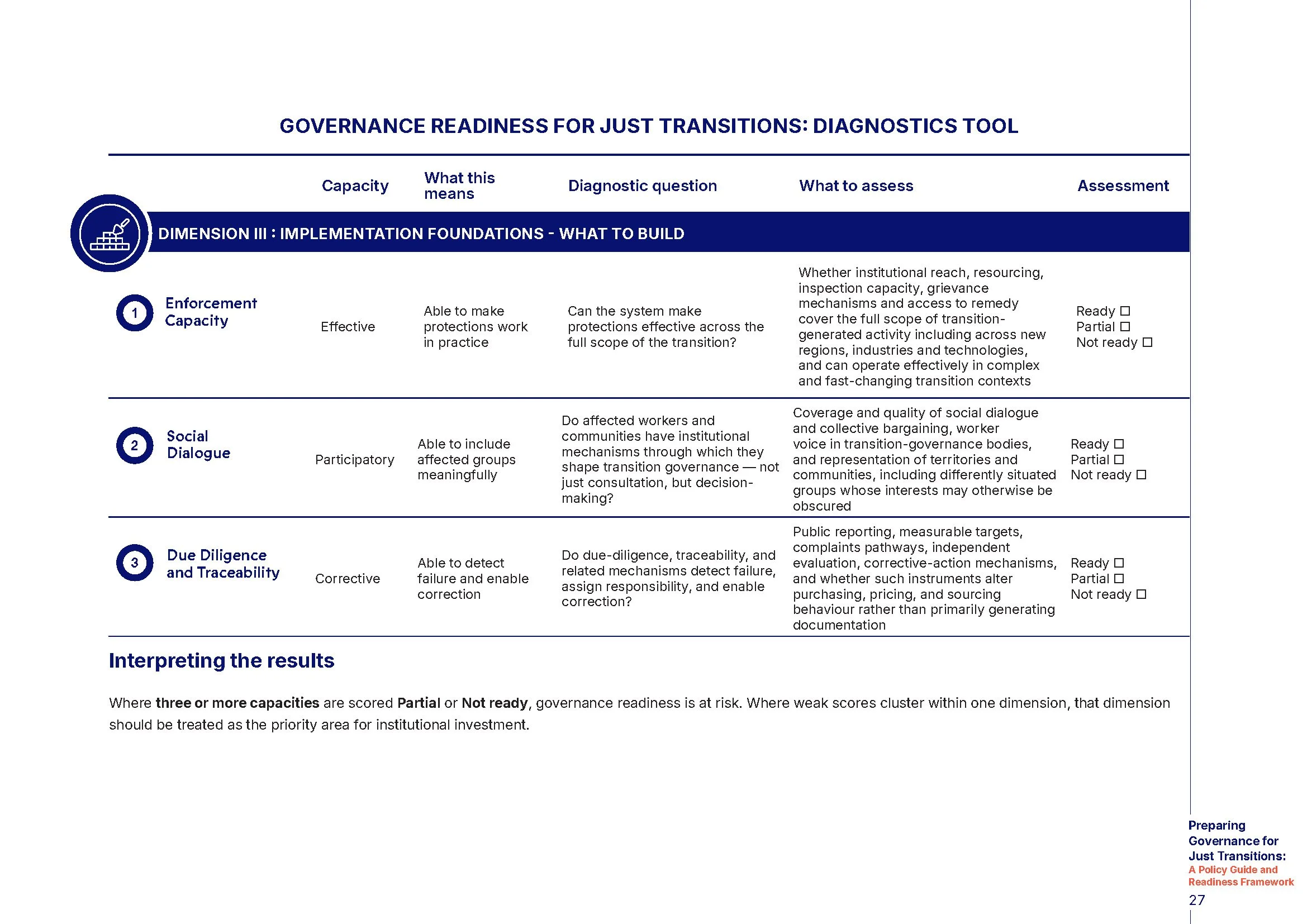
A just transition is defined by how it is governed. To help institutions respond and anticipate, the Policy Guide offers a practical governance-readiness framework built around three dimensions:
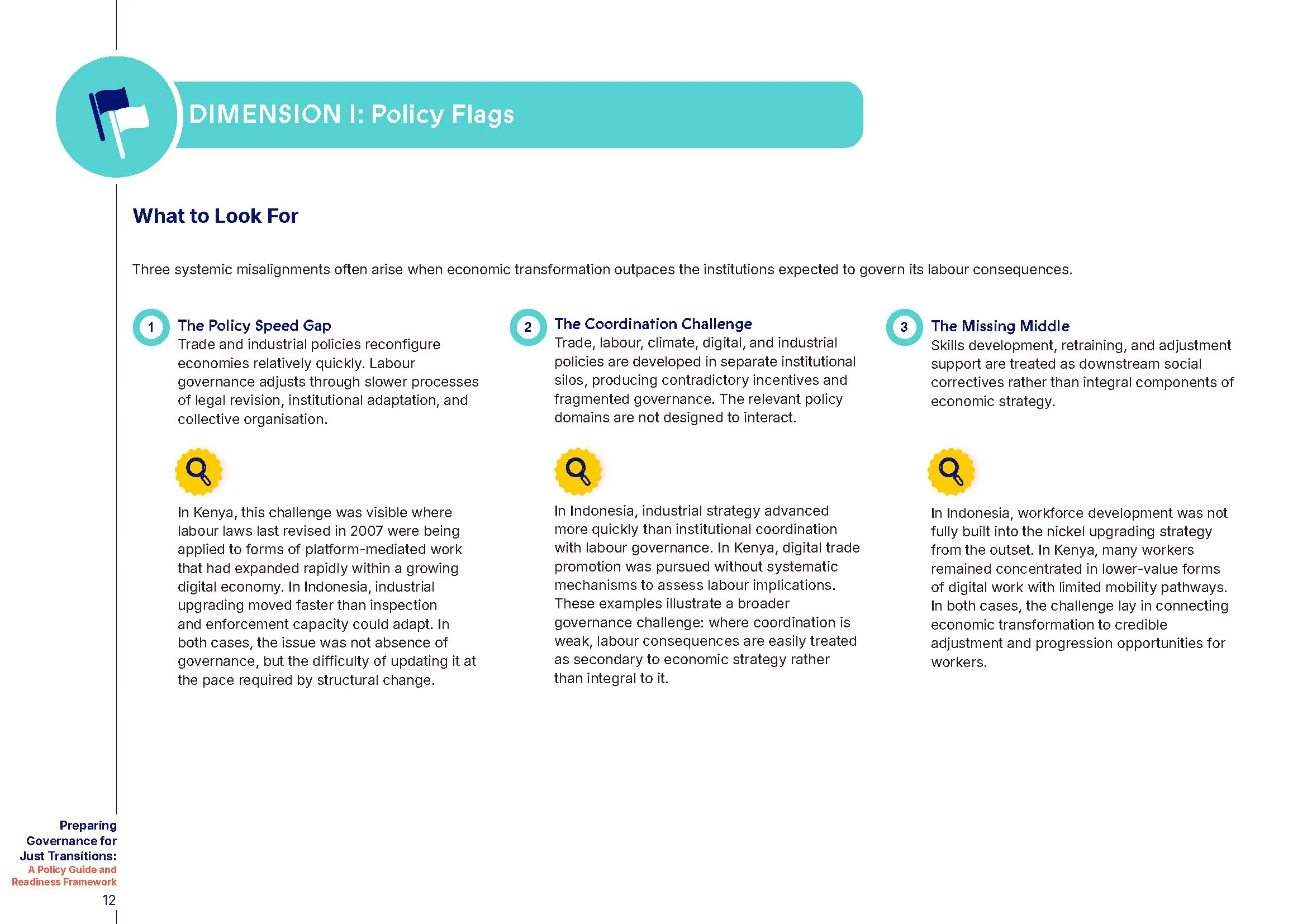
Policy Flags, asking whether transformation is outpacing governance, whether trade, labour, climate, and industrial policies are still operating in silos, and whether workforce development and adjustment support are built in from the start or added later as correction.
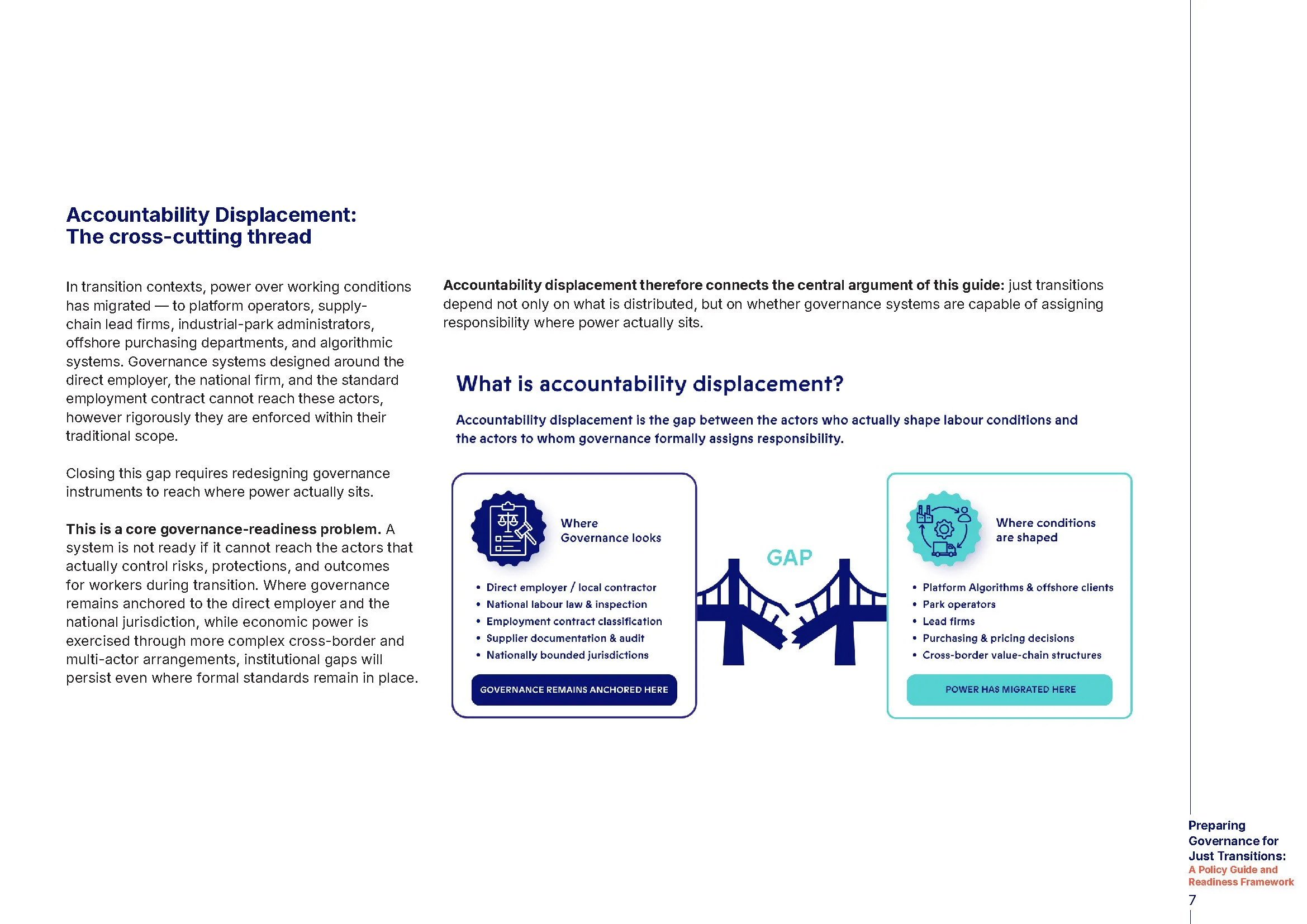
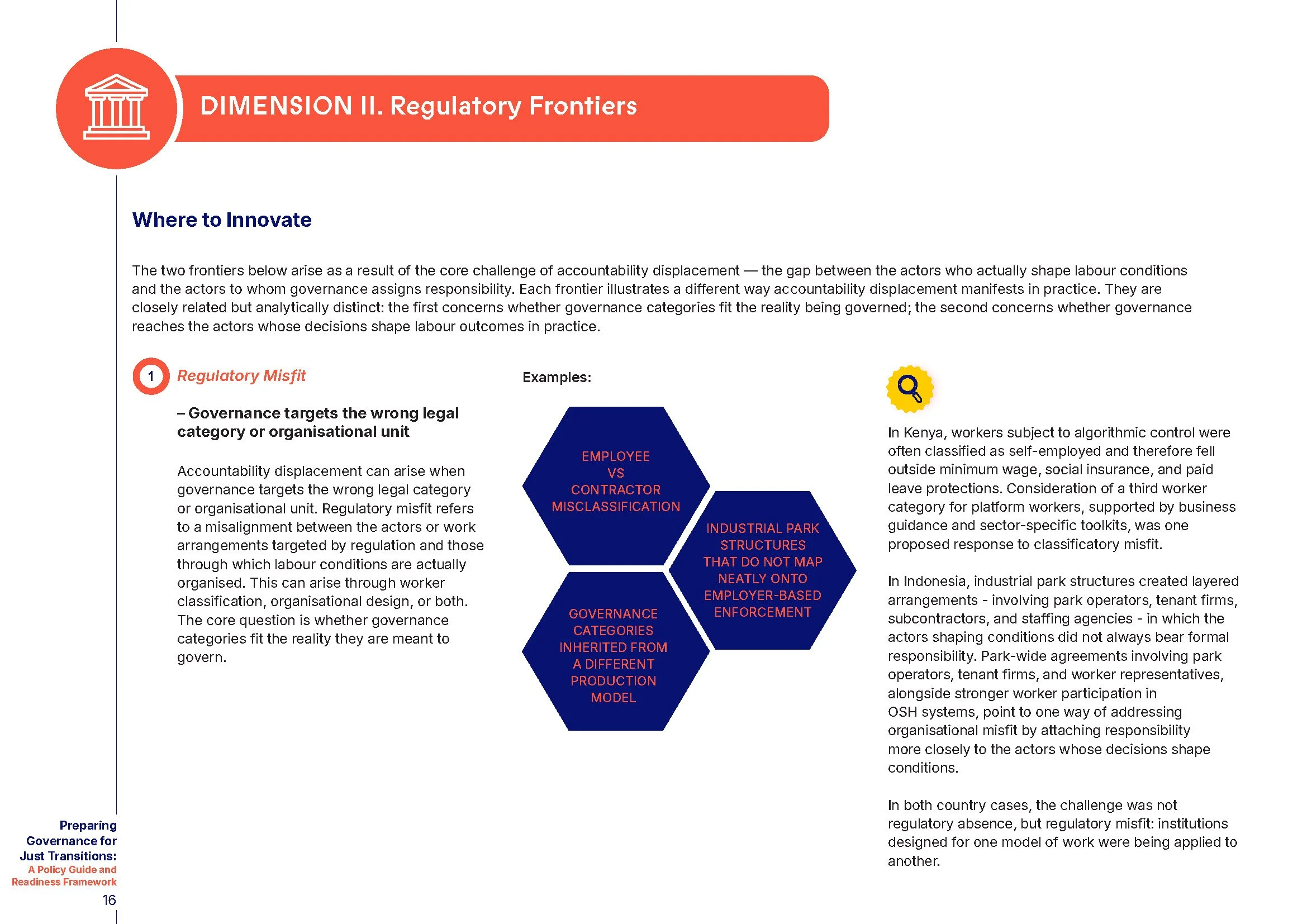
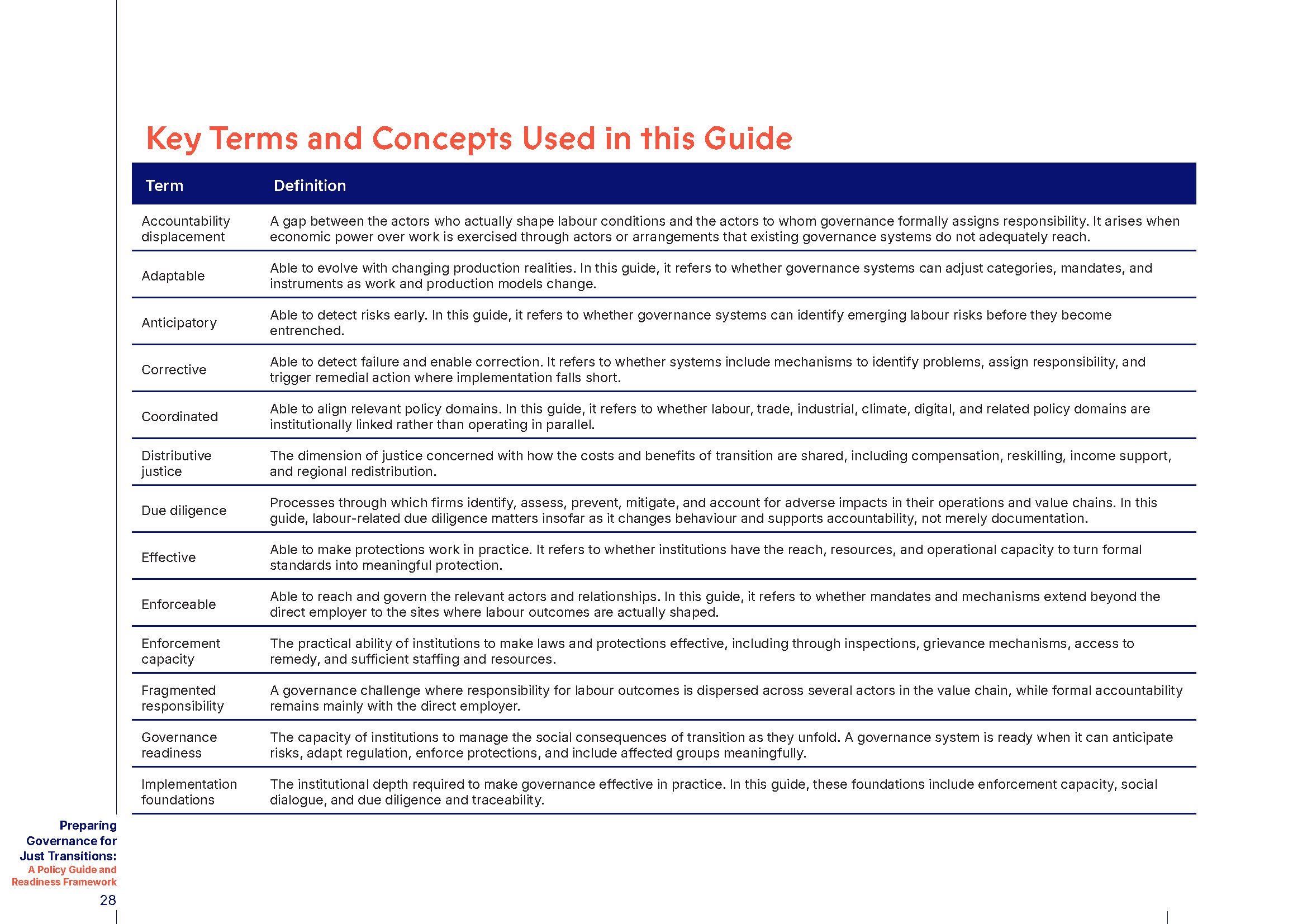
Regulatory Frontiers, addressing how policy must innovate to address accountability displacement the growing gap between the actors who shape labour conditions and the actors governance still formally targets.
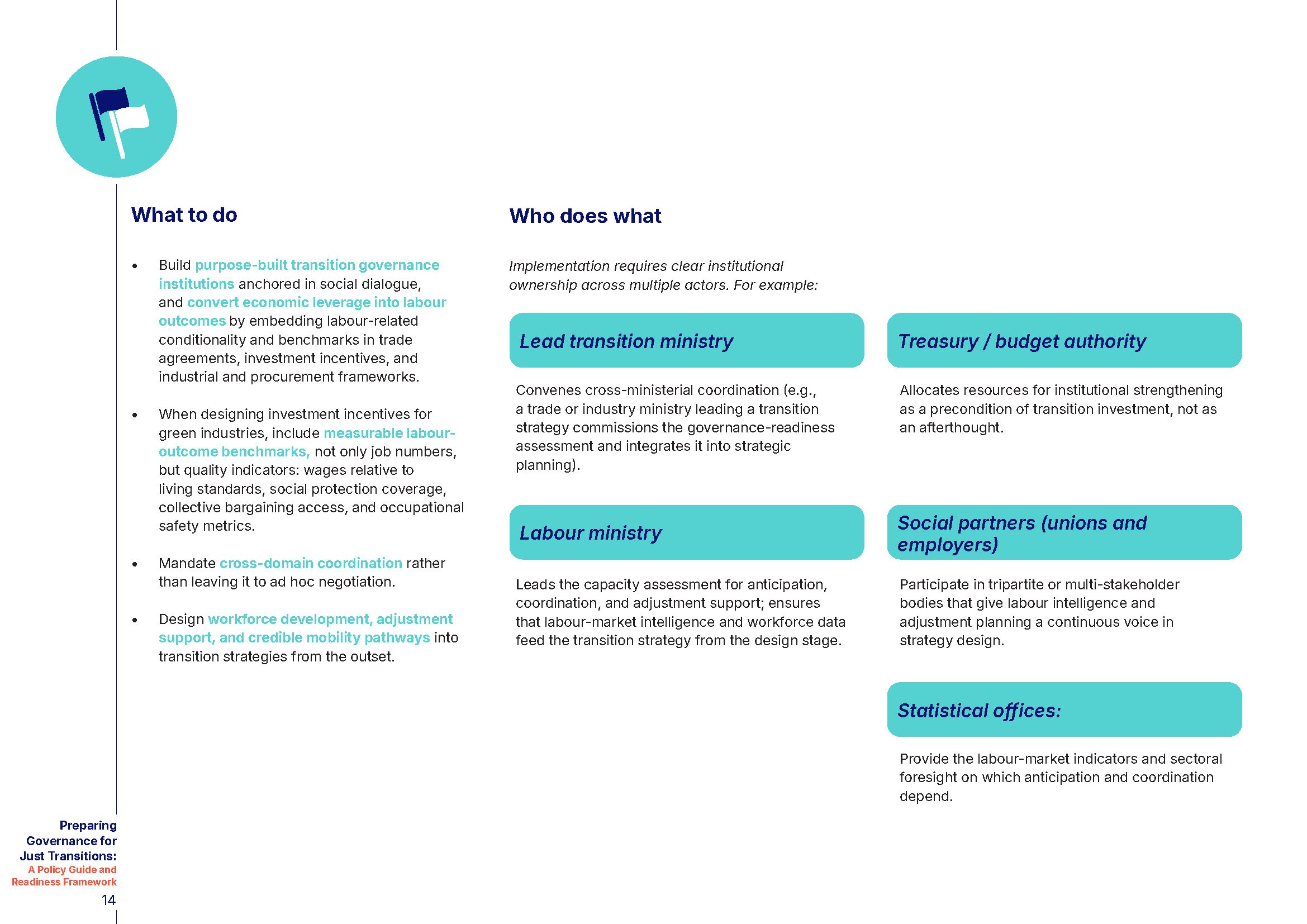
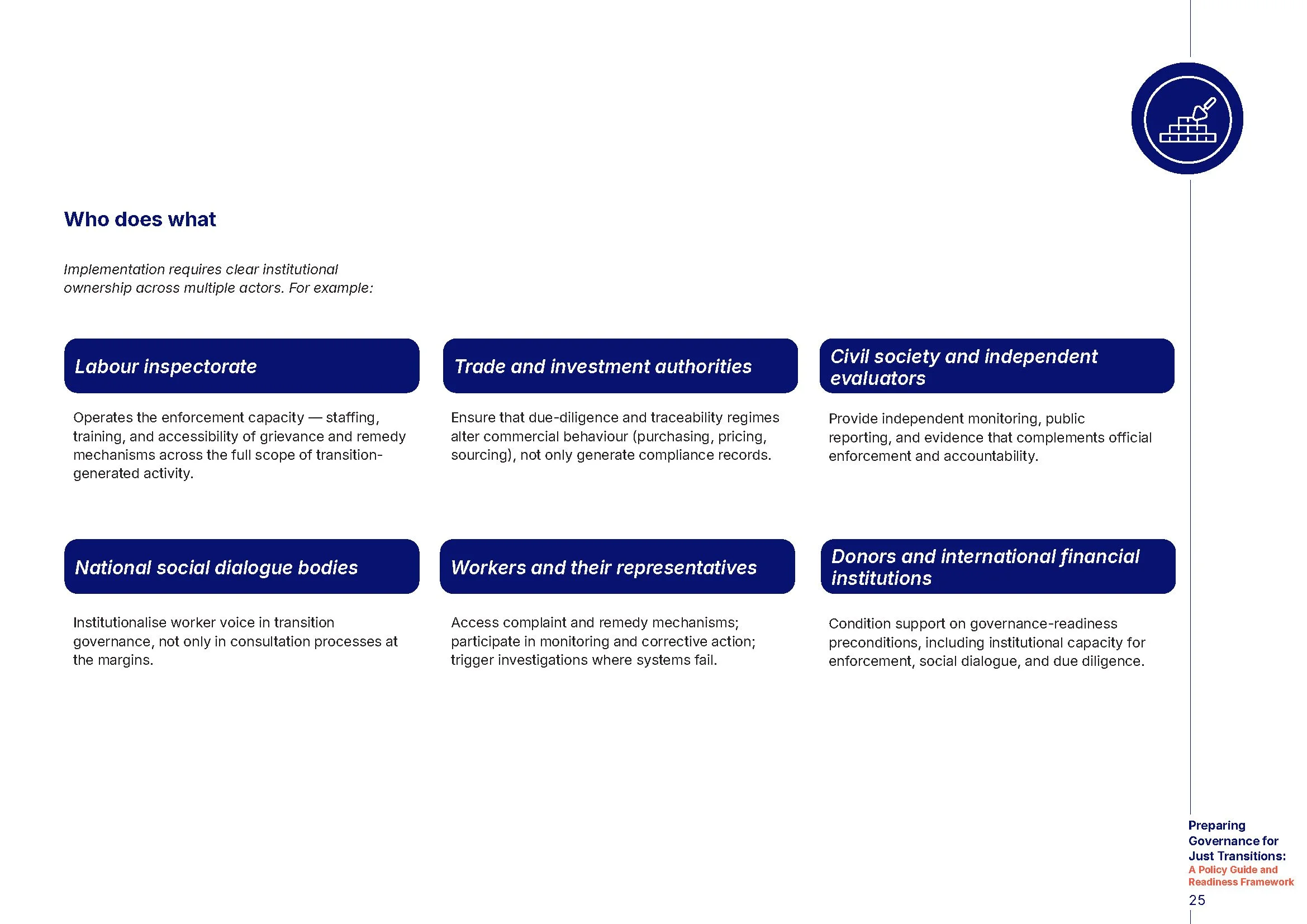
Implementation Foundations, defining what needs to be in place for these commitments to be delivered: evidence, planning, social dialogue, coordination, financing, enforcement, monitoring, and corrective mechanisms.
The Guide functions as both a conceptual framework and a practical diagnostic tool, helping policymakers identify where governance is falling short, where innovation is needed, and what institutional depth must be built if transitions are to be credible, inclusive, and durable.
The urgency of this governance lens becomes clearer as green, digital, industrial and geopolitical shifts collide at speed. Trade policy reaches deeper into production models, while labour governance is being asked to respond to pressures it was not designed to absorb. This is why the Guide argues for a more integrated governance approach. Just transition policies often remain scattered across climate policy, labour-market policy, industrial policy, skills, social protection, trade, and development. The Guide pushes instead for governance that is more coherent, inclusive, and accountable — one that connects these areas and makes transition planning more deliverable in practice.
From Policy Silos to Institutional Readiness
At the launch webinar of the Policy Guide: Just Transitions as a Governance Challenge: Policy Pointers from our Trade and Labour Programme, Kitrhona Cerri, Executive Director of the TASC Platform and co-author of the Poilcy Guide, was joined by co-author Maria Mexi, Senior Policy Advisor at the TASC Platform and Visiting Fellow and Adjunct Professor at the ILR Global Labour Institute, Cornell University, together with discussants Gudela Grote, Alfredo Novales Bilbao, Konstantinos Papadakis, and Marcel Vernooij.
“When we pretend it is all win-win, it is not, and we need to be transparent about that.”
In that exchange, Gudela Grote, TASC Platform Co-Chair, reminded participants that procedural justice matters as much as distributive justice, especially when transitions create both winners and losers:
Spain’s experience, shared by Alfredo Novales Bilbao, Labour Counsellor at the Department of Labour, Migrations and Social Security at the Permanent Mission of Spain to the United Nations and other International Organizations in Geneva, during the launch of the Policy Guide, offered a concrete illustration of what this can look like in practice.
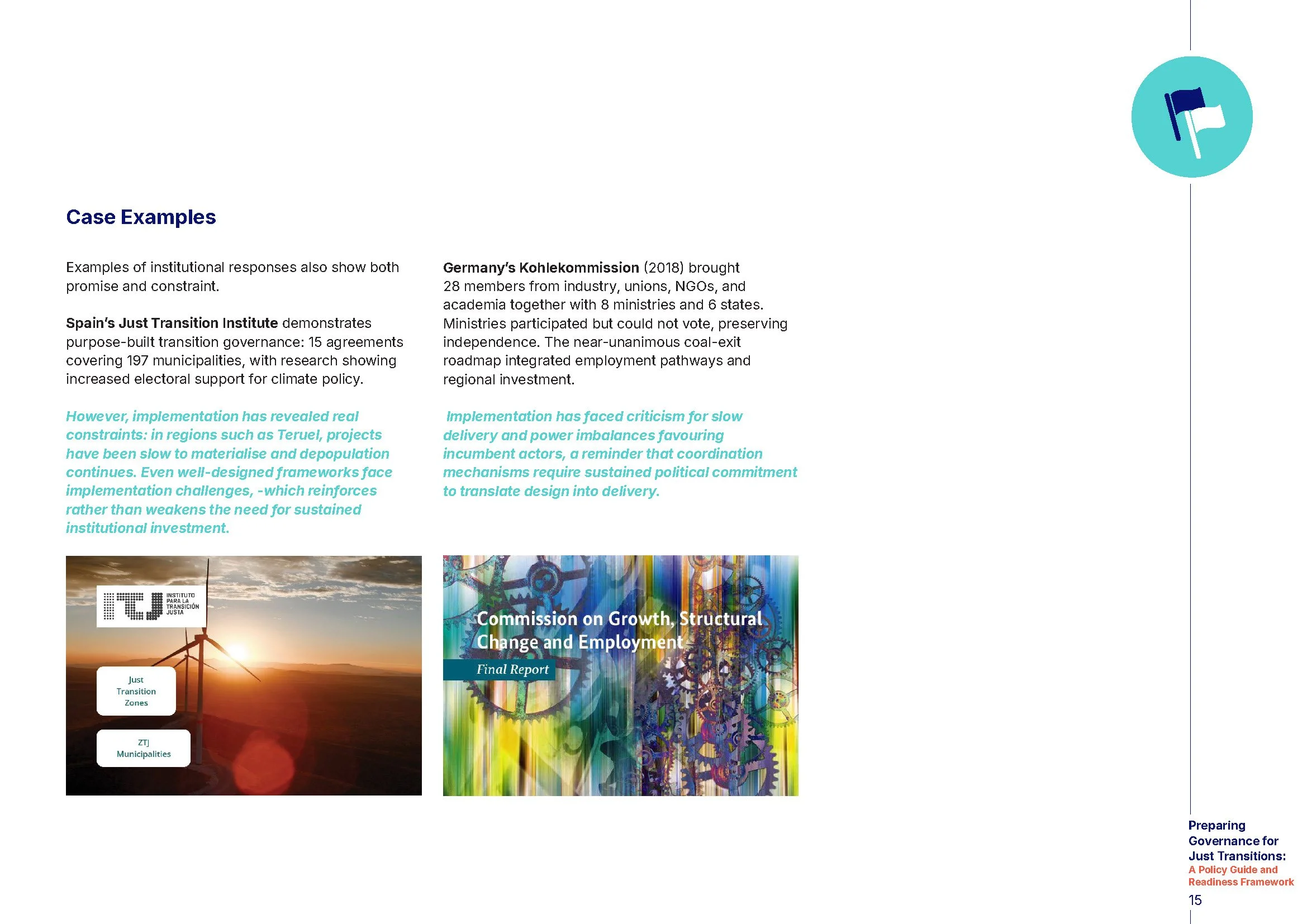
He pointed to Spain’s Just Transition Agreements as “co-governance tools” aligned with the ILO’s Guidelines for a Just Transition and the Paris Agreement, and noted that 15 agreements have already been signed, covering 197 municipalities across eight autonomous communities.
Negotiated case by case and adapted to local economic structures, these territorial agreements show how governance can be built into transition design from the outset, supporting upskilling and reskilling, fairer benefit-sharing, and stronger social acceptance.
Konstantinos Papadakis of the ILO reinforced why the Guide matters., reinforced why the Policy Guide matters.
“In every transition, there are winners and losers, and the distribution of cost and benefits is fundamentally a governance and political question more than a technical one.”
He noted, echoing the Guide’s insistence that just transitions cannot be reduced to compensation alone. He also pointed to the deeper institutional stakes at play: “Readiness matters not only for policy effectiveness, it also matters for democracy itself.”
Papadakis also picked up on what the Guide calls the missing middle, the space where skills policy should connect economic strategy to decent work outcomes. This is where transition design too often leaves critical questions until later: adjustment support, social protection, and the capacities of governance actors themselves to participate meaningfully in shaping change.
Marcel Vernooij, Director of Public Sector Engagement at IDH, brought that same logic into the reality of global supply chains. Drawing on IDH’s work on living wages and living incomes, he underlined both the limits of simplistic win-win narratives and the value of the Guide itself: it is “very, very useful” precisely because it combines “both the theoretical background and the practical perspective,” offering a strong basis for diagnosing how institutions and governance systems can respond to transition in different contexts. He also made clear that fragmented responsibility cannot be addressed without much stronger cooperation across the silos of labour, trade, economic development and agriculture.
“We see a clear need, not only for compensation of those that are left behind, but, we see a need for an approach where everyone is really taken on board. This is not to say, of course, that there can or will only be winners (…) The lesson is that perhaps we have not looked sufficiently enough in how losers are being affected by trade policies.”
From Diagnosis to Action
The essence of the Guide is that just transition must be governed before disruption becomes social harm. It offers policymakers, institutions, social partners, and stakeholders a way to assess where they are ready, and where gaps remain — detecting risks early, strengthening institutional capacity, closing accountability gaps, and turning just transition from a broad normative commitment into an operational governance agenda.
We invite readers to engage with the Policy Guide, test it against their own contexts, and share where it sharpens debate, strengthens practice, or points to what must come next.
The Guide is complemented by the analytical paper, Just Transitions as a Governance Challenge: Findings, Lessons Learned, and Policy Pointers from the Trade and Labour Programme, which synthesises the Programme's cross-cutting findings and develops the conceptual and empirical foundations that the Policy Guide translates into a practical Governance Readiness Framework.

The Trade and Labour Programme convenes stakeholders across trade and labour research, policy and practice to examine how economic, digital and climate transitions can deliver more just and inclusive outcomes. Through fieldwork, multistakeholder dialogue, and policy engagement, the programme is building momentum for a global trade system that is socially responsive, economically resilient, and fit for the future of work, and the future of working together.
📬 Interested in joining this dialogue? Get in touch with us.