

Who Leads in Times of Transition?
Leadership au féminin, the Glass Cliff and the future of Multiliateralism
For the first time in the United Nations' 80-year history, four women are among the six officially declared candidates for the position of Secretary General of the United Nations. The prospect of a woman leading the organisation has never seemed more tangible. As calls for women's leadership grow, a broader question is emerging: why do such moments often coincide with periods of institutional uncertainty and transition, precisely when institutions themselves are under pressure?
By Yasmeen Chaudhry, Programme and Partnerships Manager, TASC Platfom
The Road to the First Woman UN Secretary-General
On 9 June, the Geneva Graduate Institute hosted a high-level debatefeaturing Michelle Bachelet, María Fernanda Espinosa, and Rebeca Grynspan, three officially declared candidates for the position of United Nations Secretary-General.
1945–2015
For most of the United Nations' history, the appointment of the Secretary-General took place largely behind closed doors, with Member States under no obligation to make nominations public.
2016: A Historic Opening
The General Assembly introduced public hearings with candidates, making the selection process more transparent. Seven of the 13 officially nominated candidates were women, the highest number in the UN's history, although António Guterres was ultimately appointed.
2021: An Uncontested Reappointment
Guterres secured a second term without a woman receiving a formal Member State nomination, despite public campaigns encouraging female candidates.
2026: The Most Competitive Race Yet
With Guterres stepping down at the end of his second term, six candidates have officially entered the race, four women and two men. Never before has the prospect of a woman becoming Secretary-General appeared so tangible.
Ten days later, the conversation in Geneva shifted. While the debate at the Geneva Graduate Institute focused on restoring trust in multilateralism, a roundtable hosted by the Geneva Press Club asked a related question: what kind of leadership do institutions seek when they themselves are under pressure?
Bringing together Anda Filip, the first woman Secretary General of the Inter-Parliamentary Union, Marie-Laure Salles, the first woman Director of the Geneva Graduate Institute, Flavia Bustreo, former candidate for Director-General of the World Health Organization, and Mark Cassayre, Permanent Observer in Geneva for the International Development Law Organization (IDLO), the discussion explored leadership at a moment of profound uncertainty for both international institutions and the multilateral system itself.
The timing is significant and difficult to ignore.
After eighty years, nine Secretaries-General, and no woman at the helm of the United Nations, the possibility of a woman Secretary-General has never seemed more real. Yet the more revealing question is why, after decades spent trying to break the glass ceiling, do women appear to reach the highest offices precisely when institutions themselves are under strain?
It was moderator Géraldine Savary, Executive Director of the Geneva Press Club, who introduced a concept that reframed the discussion: the glass cliff.
Unlike the better-known glass ceiling, which refers to barriers preventing women from reaching positions of power, the glass cliff describes the phenomenon where women are finally invited into leadership - but often at the very moment when institutions are struggling, expectations are highest, and the risk of failure is greatest.
Savary's reflection reached far beyond gender representation. Is the growing momentum behind a woman Secretary-General evidence that long-standing barriers are finally beginning to fall? Or do institutions become more willing to embrace different forms of leadership when established approaches appear to be reaching their limits? Periods of transition do not simply change who leads, they also reshape what organisations begin to value in leadership.
Savary also questioned whether there is a risk attached to the experience of women candidates risks being measured against a narrower, gender-defined lens, particularly when measured against more traditional definitions of leadership rooted in security and geopolitics.
Beyond Representation
For Flavia Bustreo, the issue was never simply symbolic. The prospect of a woman Secretary General is historic, precisely because it remains exceptional. While progress has been made, she noted that many of the most influential international organisations have still never been led by a woman. The question is no longer whether qualified women exist. It is whether institutions are prepared to recognise them as leaders.
Anda Filip argued that progress rarely happens by accident. Equality must be built into institutions themselves. As she noted, meaningful change comes through the institutionalisation of gender equality, a process that "does not happen overnight."
Mark Cassayre observed "this is not a question for some of us, it is a question for all of us." Leadership diversity, he argued, is not a challenge for women alone. It is a collective responsibility. Institutions change when men and women work together to challenge assumptions about power, representation, and authority.
Taken together, these perspectives point towards a common conclusion. The challenge is not simply increasing the number of women in leadership. It is recognising that the qualities most needed in times of transition have too often been undervalued when carried by women.
The Leadership Multilateralism Needs
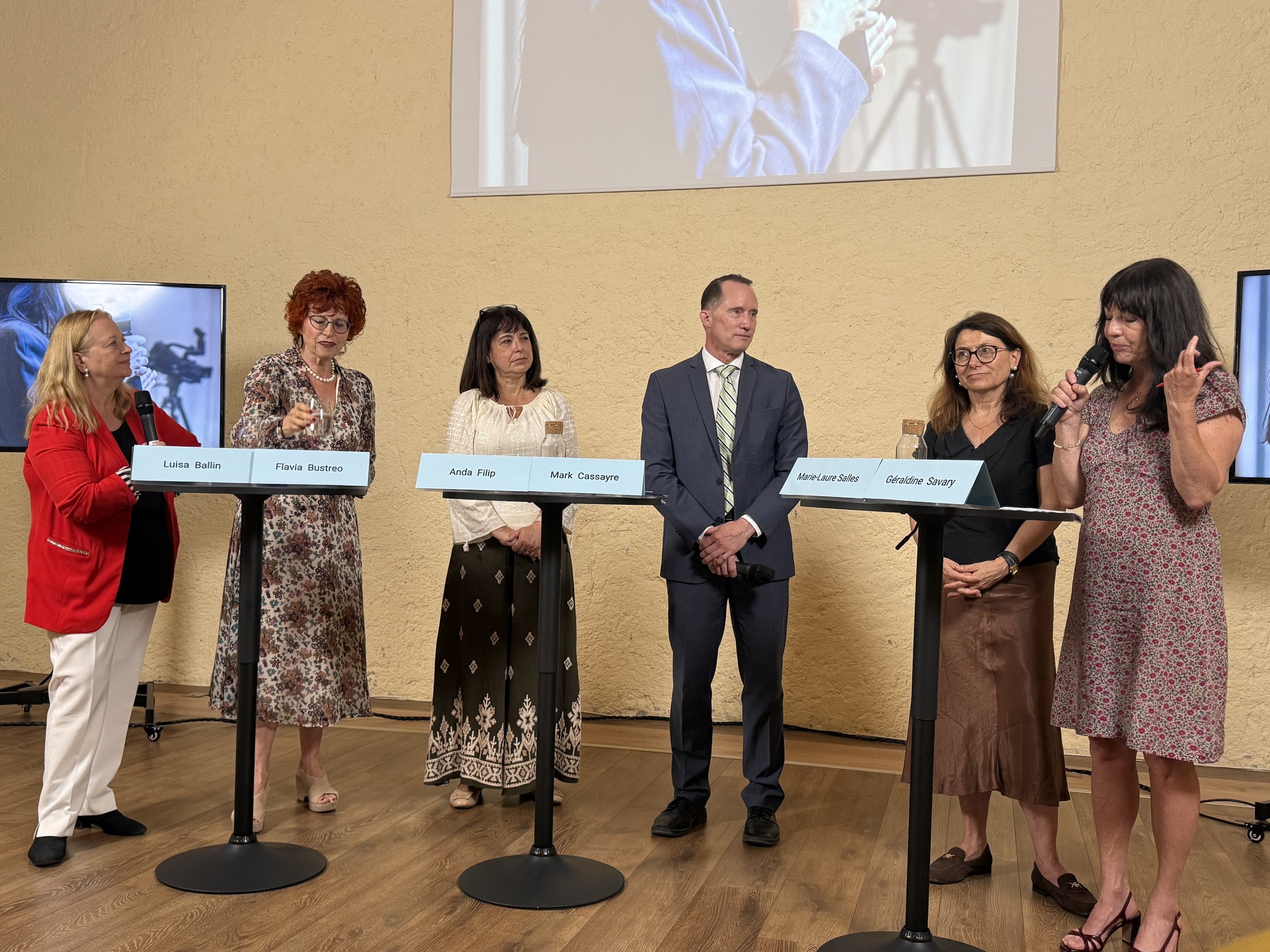
The real question, Marie-Laure Salles suggested, may not be whether the next Secretary-General is a woman. It may be whether the international system is prepared to value a different culture of leadership. As she put it, the issue is not simply the gender listed on a person's passport. It is whether leaders embody a particular commitment to international cooperation and the common good.
When institutions enter periods of uncertainty, they begin questioning not only who leads, but what leadership should look like. In that sense, the debate surrounding the next Secretary-General extends beyond the identity of any individual candidate it asks what kinds of leaders emerge during periods of transition. It challenges assumptions about authority, competence, and power. And it invites reflection on whether institutions facing uncertainty are prepared not only to diversify who leads, but to rethink what leadership itself should look like.
The conversation emerging in Geneva suggests that this may be the more consequential question. Not whether the United Nations is ready for a woman Secretary-General, but whether multilateralism is ready for the forms of leadership that moments of transition demand.
The next chapter in this conversation is already underway. On 23 July, candidates for the position of United Nations Secretary-General will engage directly with civil society in a global townhallconvened by the President of the General Assembly, another milestone in the UN's increasingly transparent selection process. The Geneva Graduate Institute and the TASC Platform will continue exploring what this historic moment reveals about leadership, institutional renewal, and the future of multilateral cooperation.