


ai governance
Agency, accountability and the ai supply chain
The TASC Platform explores AI Governance across the entire AI Supply Chain, asking where debates and action are currently focused, and what is being overlooked.
Current AI Governance discussions are focused on regulating and scaling frontier models, managing potential risks, avoiding hypothetical negative use-cases and investing in speculative opportunities.
Whether any of these risks and opportunities become a reality is dependent on the evolution of the AI supply chain, where significant social, economic and geopolitical impacts are playing out now.
Our AI Governance Programme responds to a gap in the AI discourse: Policymakers lack a clear overview of the AI supply chain, the challenges faced and policy space available.
Can a better shared understanding of the AI supply chain open the door to broader opportunities for influence, policy and regulatory action, and international cooperation?
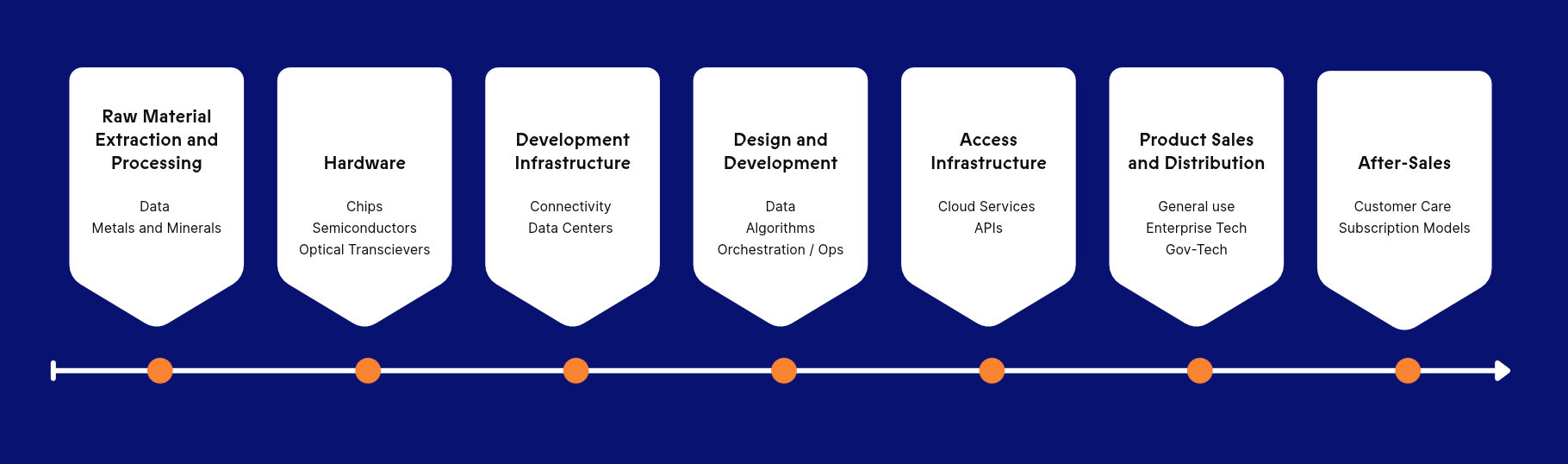
“The global AI supply chain spans raw material extraction, chip manufacturing, data collection and annotation, model training, infrastructure, deployment and hardware disposal across countries. Further investigation is needed to better understand it’s full impacts.”
demystifying the ai supply chain
As a foundation for more informed policy discussion, TASC is developing an accessible approach to better understand the AI supply chain and examine each level through four connected lenses: Power, People, Prospects and Policies.
power
Where are power, profits and leverage distributed or concentrated?

people
Where are the humans? What are their circumstances and levels of agency?

prospects
What futures are we heading for? What alternatives could be imagined/influenced?

policies
What policy space and tools exist to better manage the transition? Can we learn and transfer approaches from other industries?
insights & perspectives
-
![]()
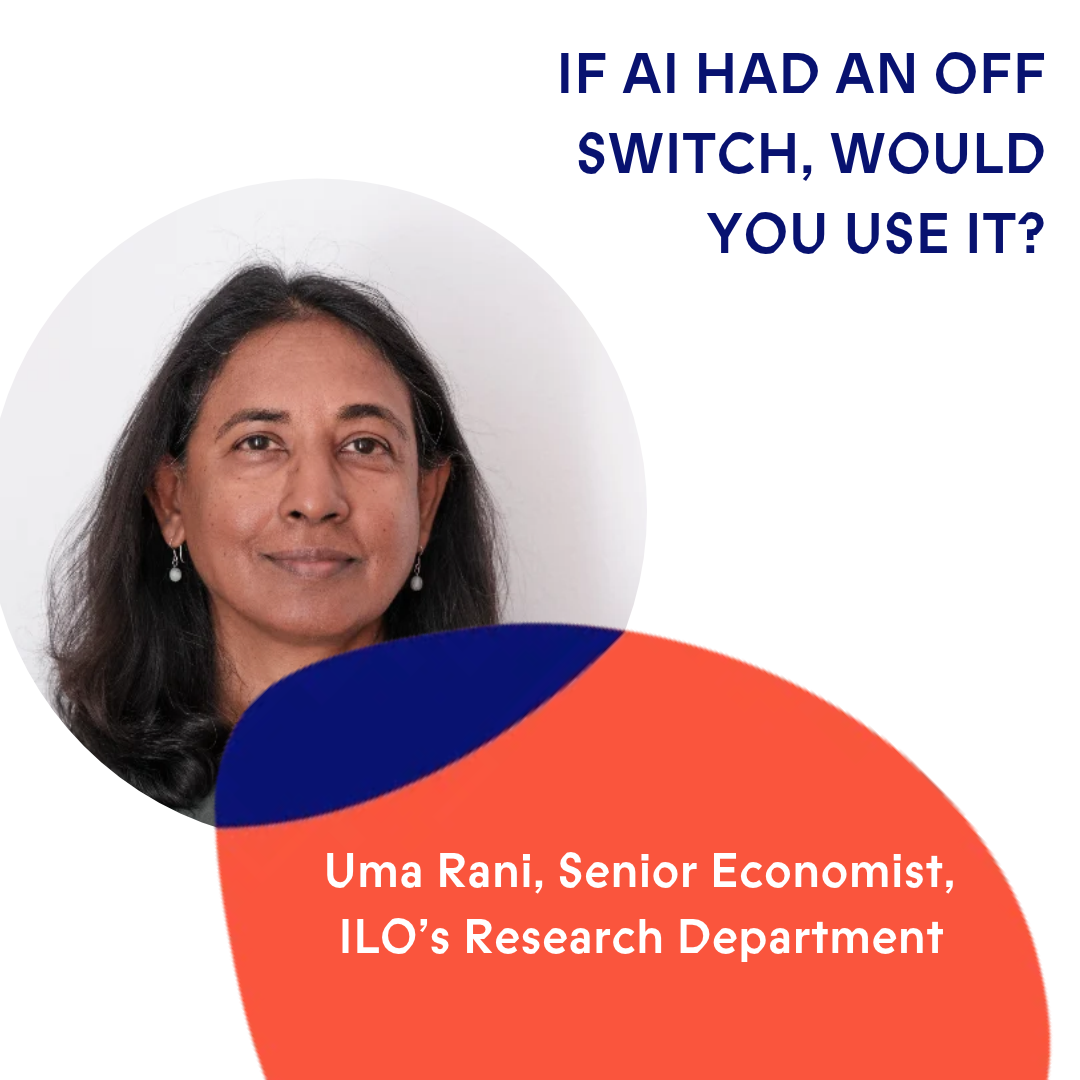
In this reflection on the closing roundtable of the 9th Annual Conference of the International Network on Digital Labour (INDL-9), Uma Rani, Senior Economist in the ILO’s Research Department, examines a wider view of data work along AI supply chains and shares the questions research is currently asking, the evidence policymakers need, and where policy can intervene to strengthen AI governance.
-
![]()
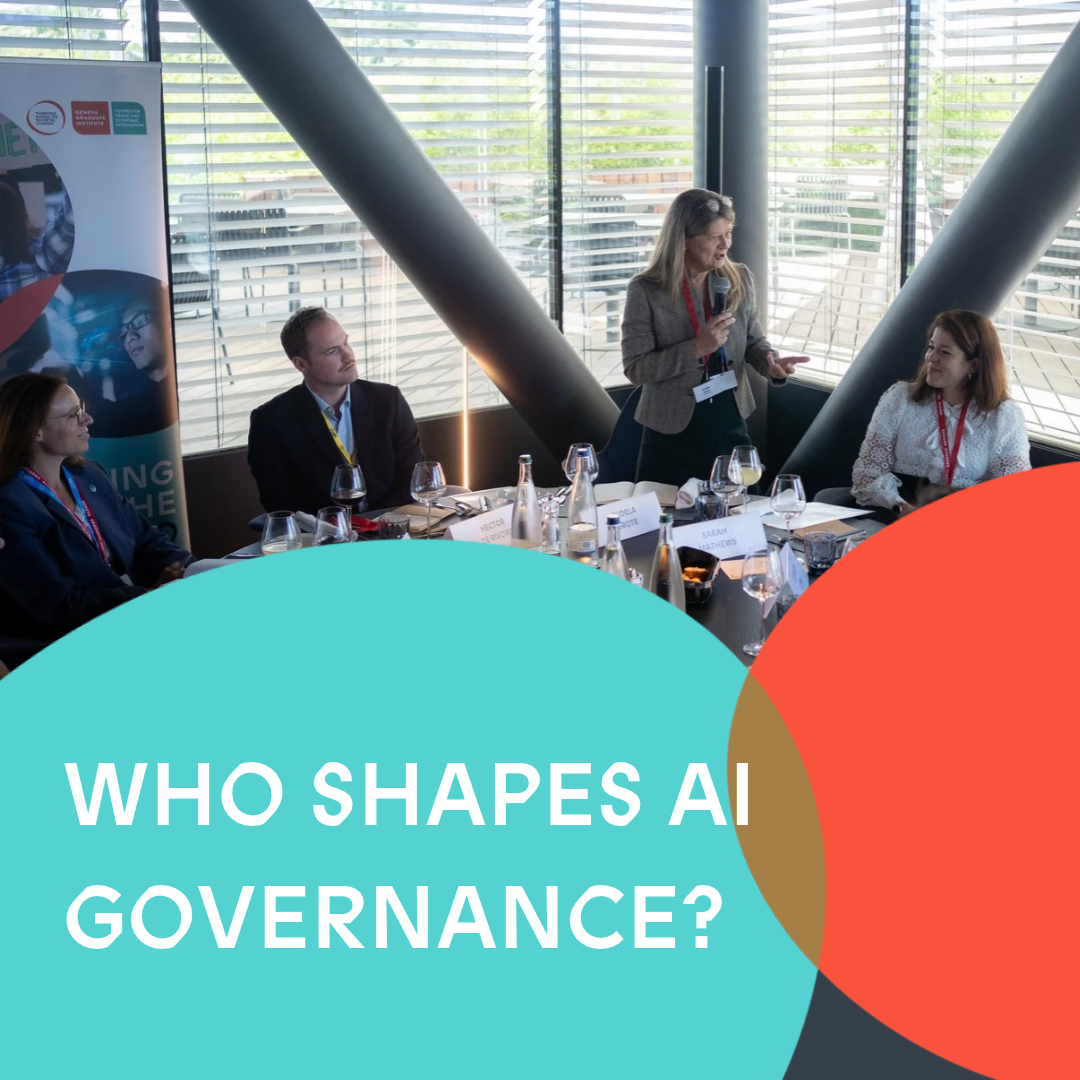
These discussion highlights capture key governance insights from the Use at Your Own Risk? Integrating Developers into AI Governance, convened alongside the first UN Global Dialogue on AI Governance 2026. The event explored who is developing AI today, how responsibility is distributed across the AI value chain, and what it takes to turn accountability into governance in practice.
-
![]()
These discussion highlights capture key insights from the event “Aligning Control and Accountability in the New AI Supply Chain: Who Answers when AI Misbehaves?”, convened alongside the AI for Good Global Summit 2025, exploring how accountability and control are distributed across increasingly complex AI systems and how anticipatory AI governance can be built in practice.
-
![]()
This TASC Takes podcast, released for International Women’s Day 2024, introduces our Co-Chair, Professor Gudela Grote, whose work on accountability, control and human agency underpins our AI governance agenda, bringing together key questions across the AI supply chain: who shapes AI, where responsibility sits, and how governance can preserve human agency as technology transforms work.
-
![Professor Gudela Grote]()
In this perspective, Professor Gudela Grote examines how fairness and accountability can be embedded into the development and use of AI at work. Focusing on control, power and human agency, she asks what it takes to design AI governance around shared responsibility, meaningful oversight and the people most affected by these systems throughout their design and deployment in practice.
-
![EU Omnibus-isation: Simplification or Structural Drift?]()
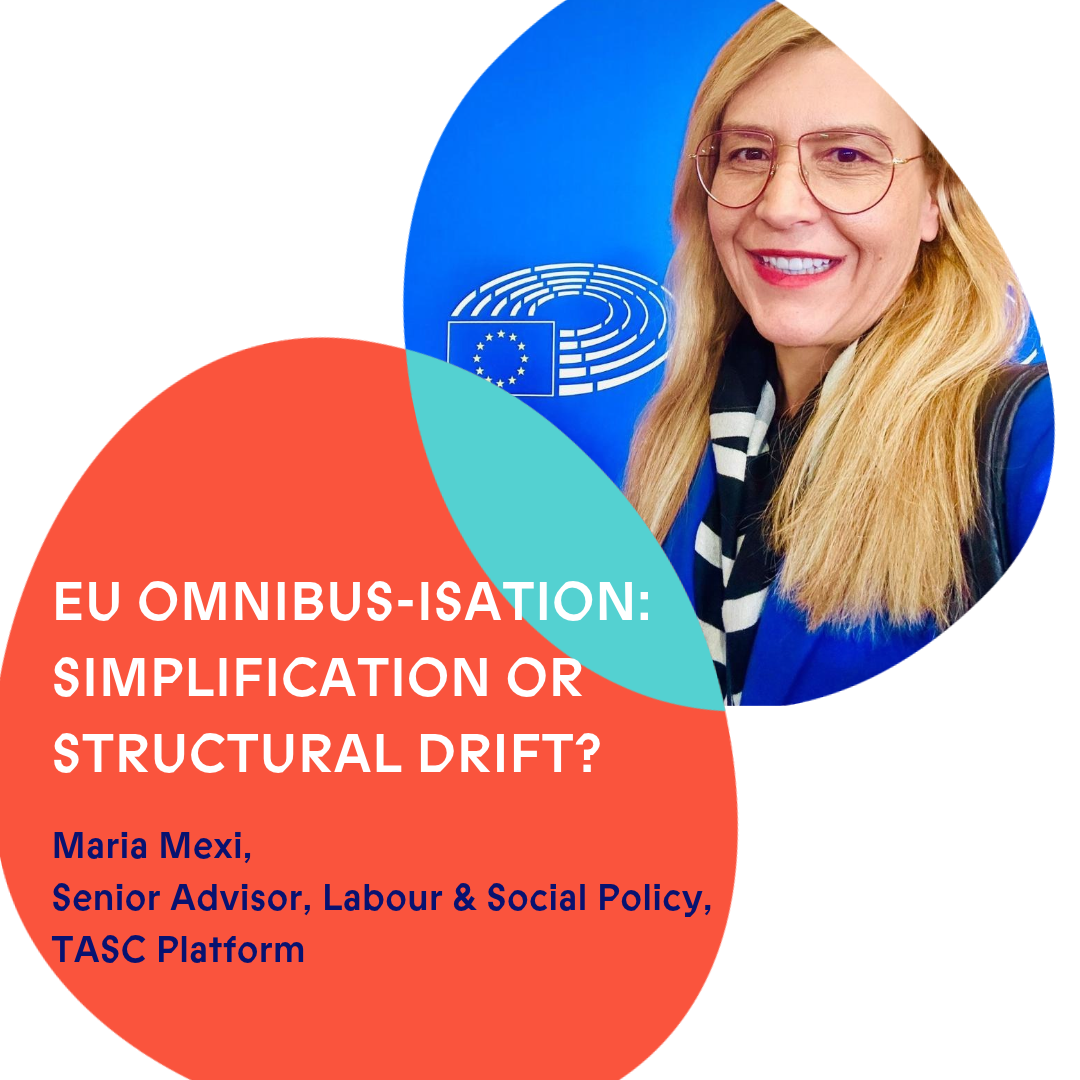
Reporting from Strasbourg and the European Parliament, Maria Mexi examines the EU’s accelerating “Omnibus-isation” and asks whether regulatory simplification risks becoming structural drift. By tracing what this shift could mean for AI regulation, data rights and labour protections, she considers how Europe’s wider AI governance model balances competitiveness, protection and accountability.
-
![]()
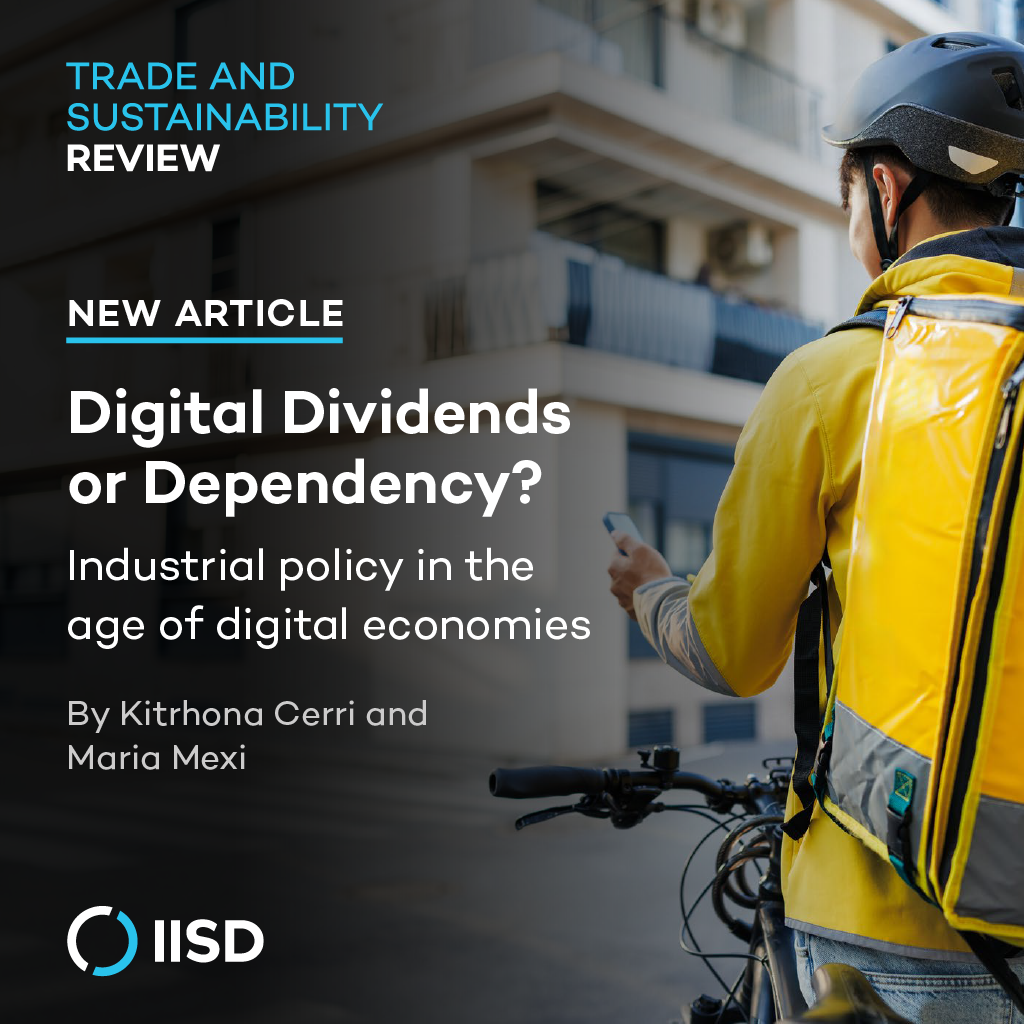
In their contribution to the International Institute for Sustainable Development’s Trade and Sustainability Review, Maria Mexi and Kitrhona Cerri unpack how platforms, data and algorithms are redefining industrial policy, and the risks of falling into digital dependency. Drawing on Kenya’s digital economy, they examine what it takes to turn digital growth into broader local benefits.
-
![]()
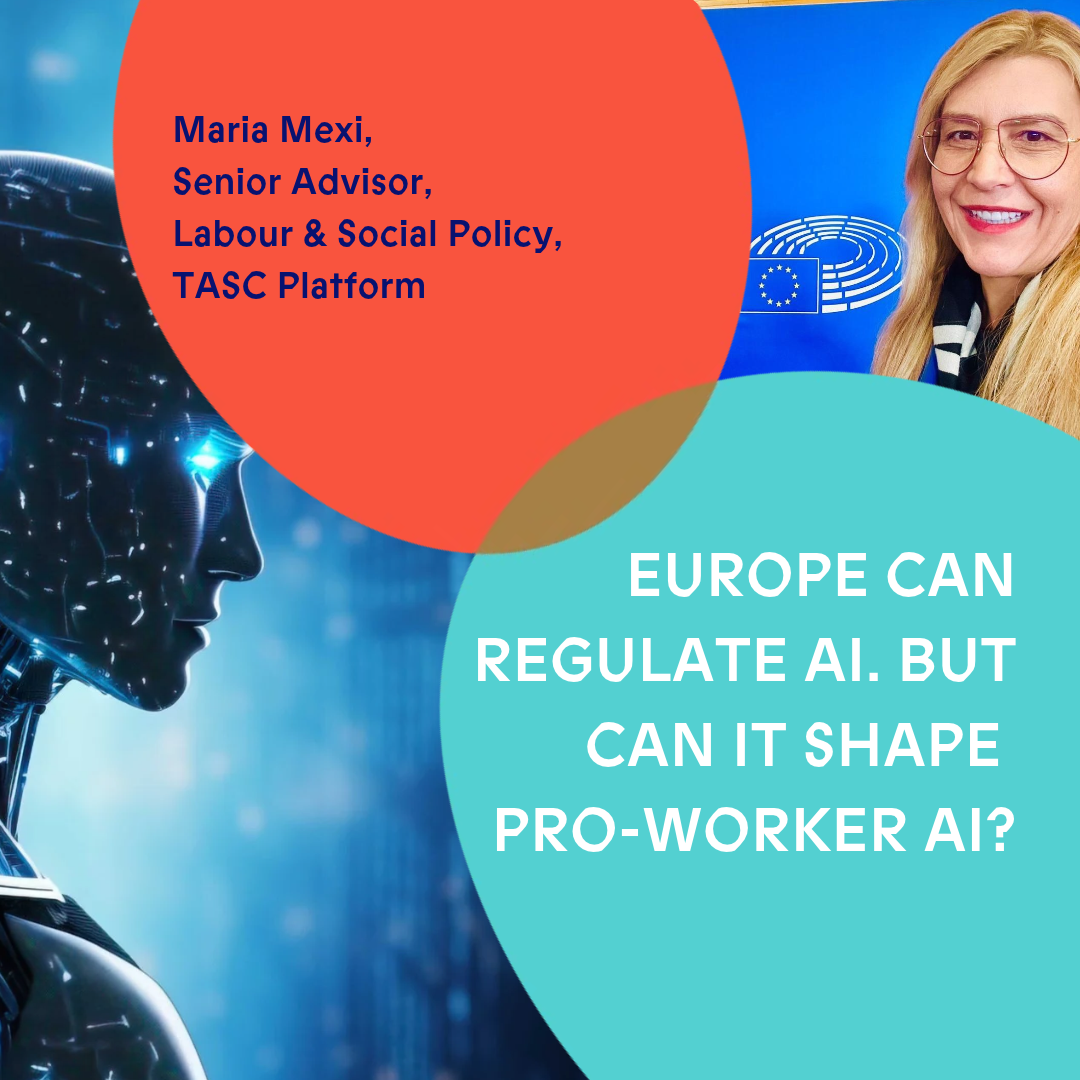
In this article, Maria Mexi, Senior Policy Advisor, TASC Platform, examines a central question for AI governance in Europe: The EU has moved faster than most to regulate artificial intelligence, but the harder question is whether Europe has enough leverage over the AI stack to steer innovation towards worker-augmenting systems rather than importing worker-substituting ones designed elsewhere.
-
![]()
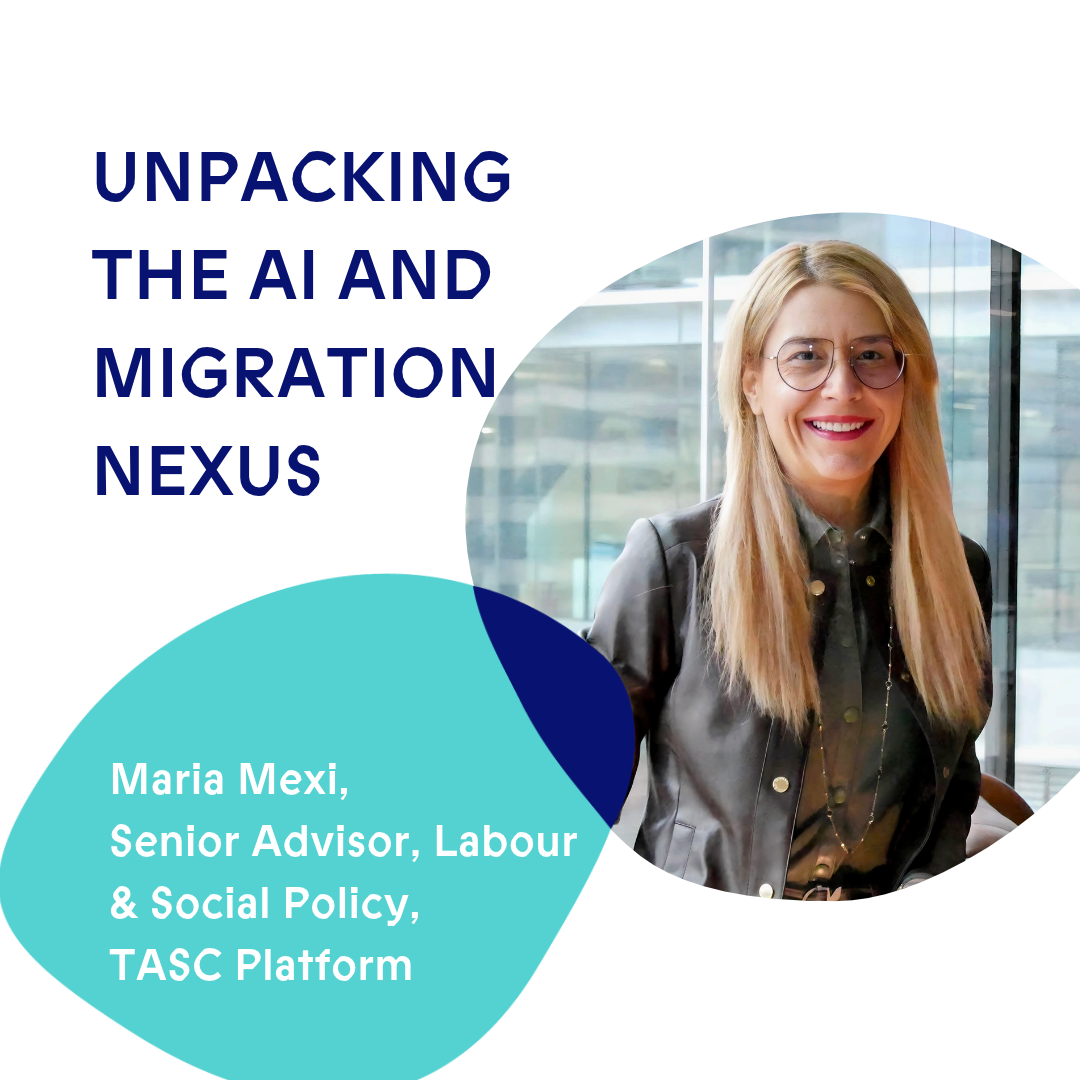
Drawing on discussions from the Future of Work Summit 2024, Maria Mexi examines the intersection of AI and Migration, and the policy choices shaping who benefits, who bears the risks and how much agency workers retain. She argues for breaking silos between AI and migration policy, strengthening social dialogue and bringing labour standards more firmly into AI governance and implementation.


Events & highlights
-
Held on 7 July 2025 on the sidelines of the AI for Good Summit, this workshop explored accountability, fairness, and governance in evolving AI supply chains. Co-hosted by the TASC Platform, Cognizant, and the International Association for Safe & Ethical AI (IASEAI), it gathered experts from policy, academia, and industry to examine how responsibility is shared across complex AI systems. Discussions focused on actionable recommendations to strengthen fairness, safety, and decent work in AI innovation.

-
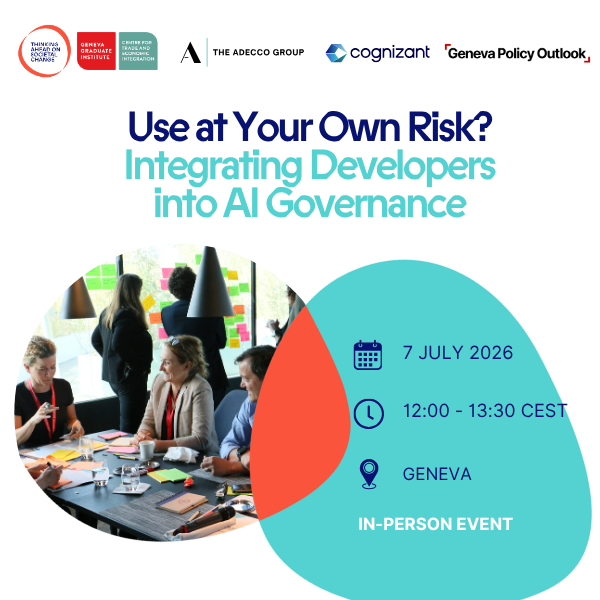
Held alongside the UN Global Dialogue on AI Governance, this working lunch explored how developer accountability can become a more central pillar of AI governance as agentic and multi-agent systems move further from meaningful user control. Bringing together leaders from The Adecco Group, Microsoft and Cognizant, the discussion examined how responsibility is distributed across an increasingly complex AI supply chain and what organisations, regulators and international governance frameworks can do to strengthen accountability further upstream.

-
Held as the ninth annual conference of the International Network on Digital Labour, INDL-9 explores AI supply chains through the people, processes and working conditions underpinning AI development and deployment. Jointly organised with the ILO, DiPLab, ACM SIGCAS and Yale University, the conference brings together researchers, policymakers and practitioners to examine the human labour behind AI — from data work and algorithmic management to responsible sourcing, regulation and social dialogue — and advance a more human-centred agenda for AI and decent work.
shape the next phase with us
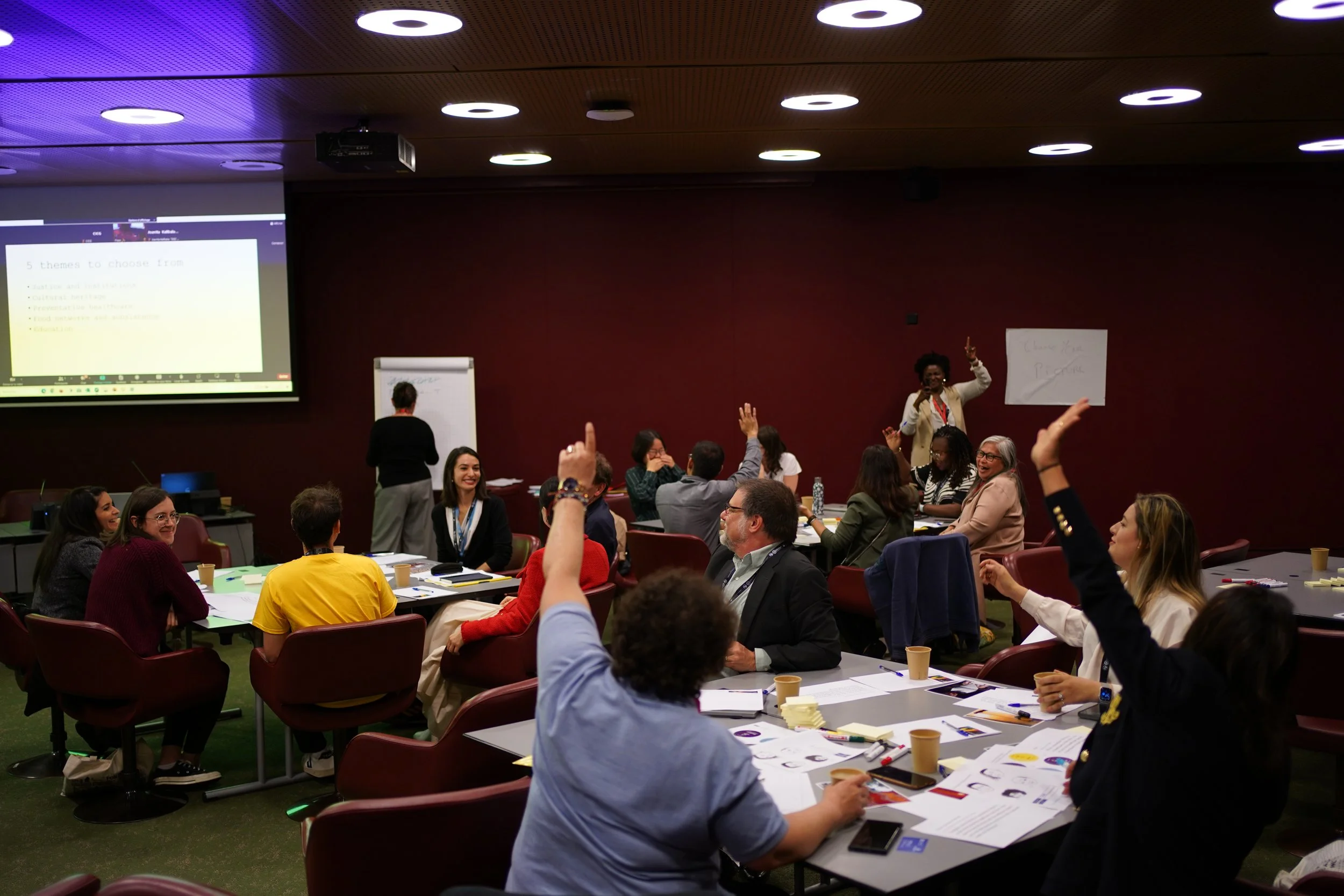
The AI Governance Programme builds on the TASC Platform’s work since 2023 at the intersection of AI, foresight and creativity, developed through its engagement with the AI for Good Global Summit. Through participatory workshops, creative experimentation and policy dialogue, this work has explored how AI is reshaping work and society.
TASC is now taking this further by building an interdisciplinary AI Governance programme across the supply chain, connecting research, policy and practice to deepen understanding, expand exchange and develop practical pathways for action.
We welcome partners and funders interested in supporting the next phase of this work.
