

Digital Dividends or Dependency? Industrial policy in the age of digital economies
In their contribution to the International Institute for Sustainable Development’s Trade and Sustainability Review, Maria Mexi, Senior Advisor, Labour & Social Policy, and Kitrhona Cerri, Executive Director, TASC Platform, unpack how platforms, data and algorithms are redefining industrial policy — and the risks of falling into digital dependency. Drawing on Kenya’s digital economy, they examine what it takes to turn digital growth into broader local benefits.
Read on for what this means for labour protections, local economic gains and more inclusive digital industrial policy.
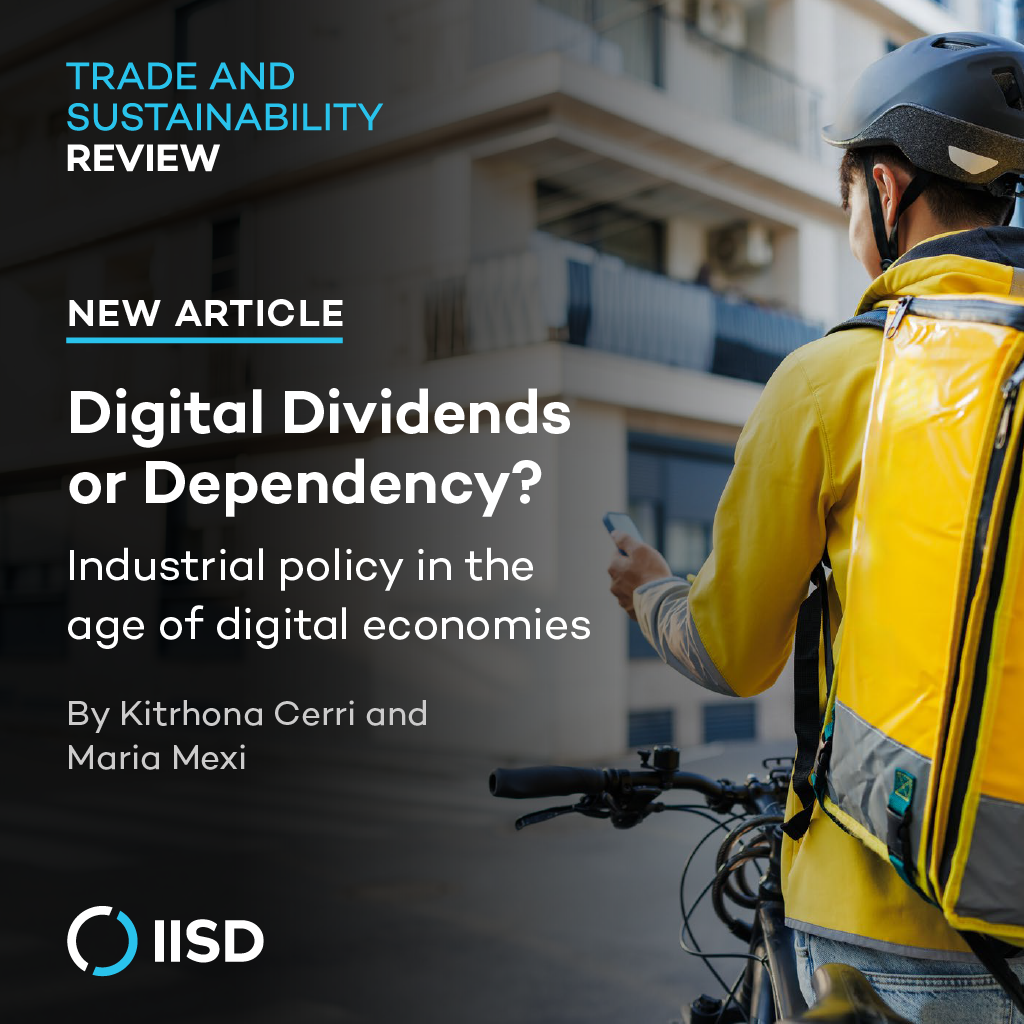
A considered examination of whether digitalisation can enable inclusive growth—or entrench new forms of dependency.
As industrial policy reasserts itself on the global stage, a central question comes into focus: will digitalisation serve as a driver of inclusive development, or risk reinforcing existing structural dependencies?
In their latest contribution to the International Institute for Sustainable Development’s Trade and Sustainability Review, TASC Platform’s Senior Policy Advisor, Maria Mexi, and Executive Director, Kitrhona Cerri explore this question through the lens of Kenya’s evolving digital economy. The article examines how digitalisation is reshaping labour markets, patterns of value creation, and economic governance and considers why, in the absence of robust policy frameworks, the anticipated digital dividends may remain unevenly distributed.
The analysis underscores the importance of aligning digital innovation with effective labour protections, targeted skills development, and mechanisms for domestic value capture. It calls for a more deliberate and strategic approach to industrial policy to ensure that digital economies are not only competitive, but also inclusive and grounded in local contexts.
At a time of intersecting green and digital transitions, the piece offers a clear message: technological advancement alone will not guarantee inclusion; it is ultimately shaped by policy choices.
Read the full article to explore how digital transformation can be harnessed to support more equitable and sustainable growth.


The Trade and Labour Programme convenes stakeholders across trade and labour research, policy and practice to examine how economic, digital and climate transitions can deliver more just and inclusive outcomes. Through fieldwork, multistakeholder dialogue, and policy engagement, the programme is building momentum for a global trade system that is socially responsive, economically resilient, and fit for the future of work, and the future of working together.
📬 Interested in joining this dialogue? Get in touch with us.