

Advancing social justice in practice: From coalition to action
Against a backdrop of renewed multilateral ambition, Marie-Laure Salles examines how universities can transform social justice from principle to implementation within the Global Coalition framework.
On World Day of Social Justice 2026, across multilateral institutions, governments, and academic communities, the question is no longer whether social justice matters, but how it is delivered.
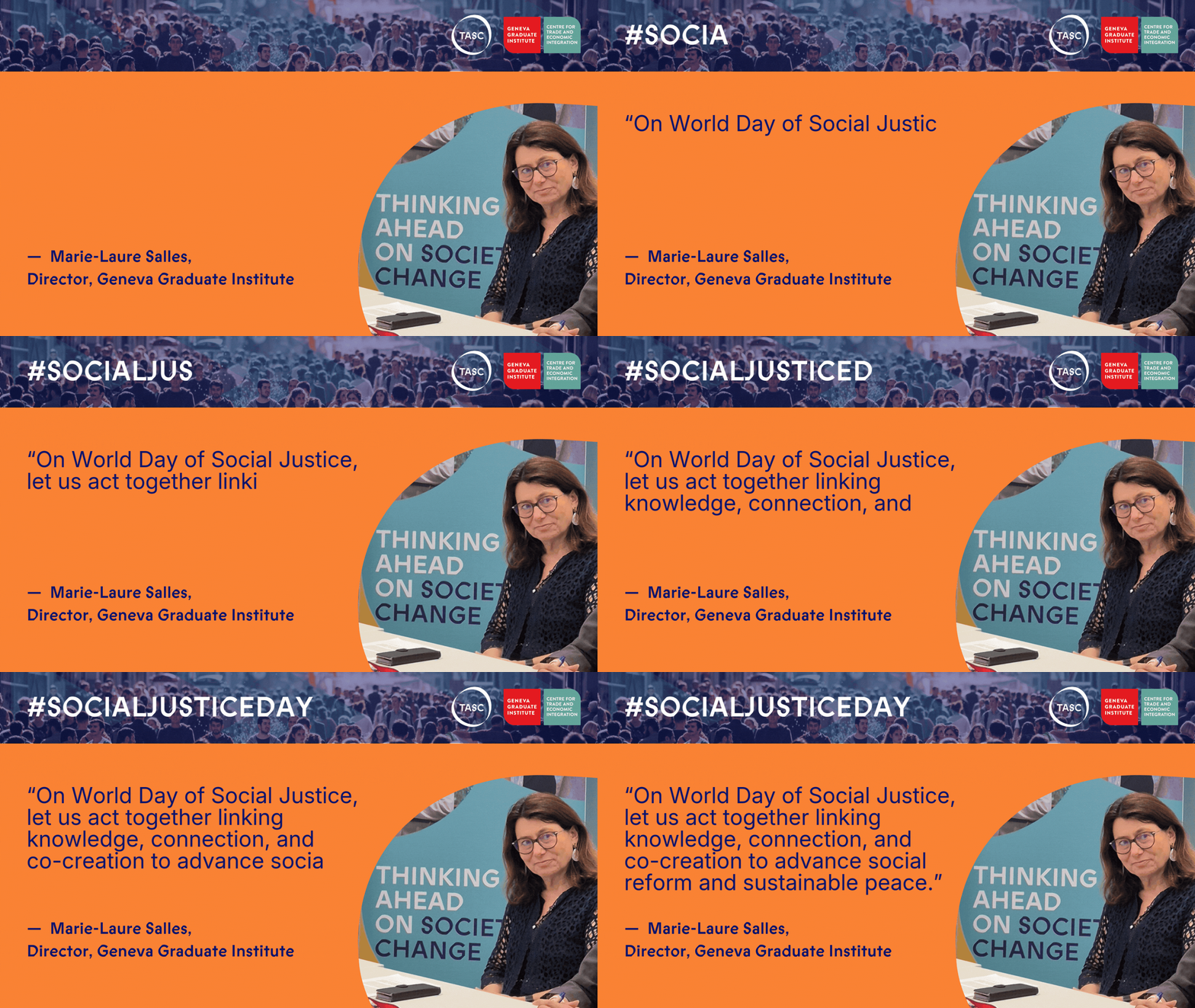
The Geneva Graduate Institute contributes to that delivery through its role within the International Labour Organisation’s Global Coalition for Social Justice to restore social justice at the centre of multilateral collaboration. After all, As ILO Director-General has stated:
“If we were to shape a new, more stable, and equitable world, we must choose a different path. One that prioritizes social justice”
Delivering Social Justice in a Multilateral Context
Led by the ILO and now bringing together more than 400 partners across governments, employers’ and workers’ organisations, international institutions, enterprises, civil society, and academia, the Global Coalition for Social Justice seeks to amplify the scale and impact of partners’ initiatives, supporting social justice and decent work while reinforcing the 2030 Agenda for Sustainable Development.

The Coalition’s inaugural Forum, held at the Palais des Nations during the 113th International Labour Conference in June 2024, marked a defining moment, anchoring social justice as a cornerstone of renewed multilateral cooperation.
Keeping momentum in support of the launch of the Coalition, Marie-Laure Salles, Director of the Geneva Graduate Institute, convened an event to concretely reflect on: "How can International Geneva advance social justice?”
Harnessing the diversity of Geneva-based multilateral actors, the discussion reinforced how social justice should be the norm and not the exception despite many asymmetries at the international level still posing obstacles to equality amongst human beings.
As the Geneva Graduate Institute continues to advance social justice through its various academic and policy initiatives, the TASC Platform forms an integral part of this commitment. The TASC Platform was created for moments of transition, to support institutions navigating large-scale societal change, lean into uncertainty, and turn complexity into cooperation in the service of human-centred policy.
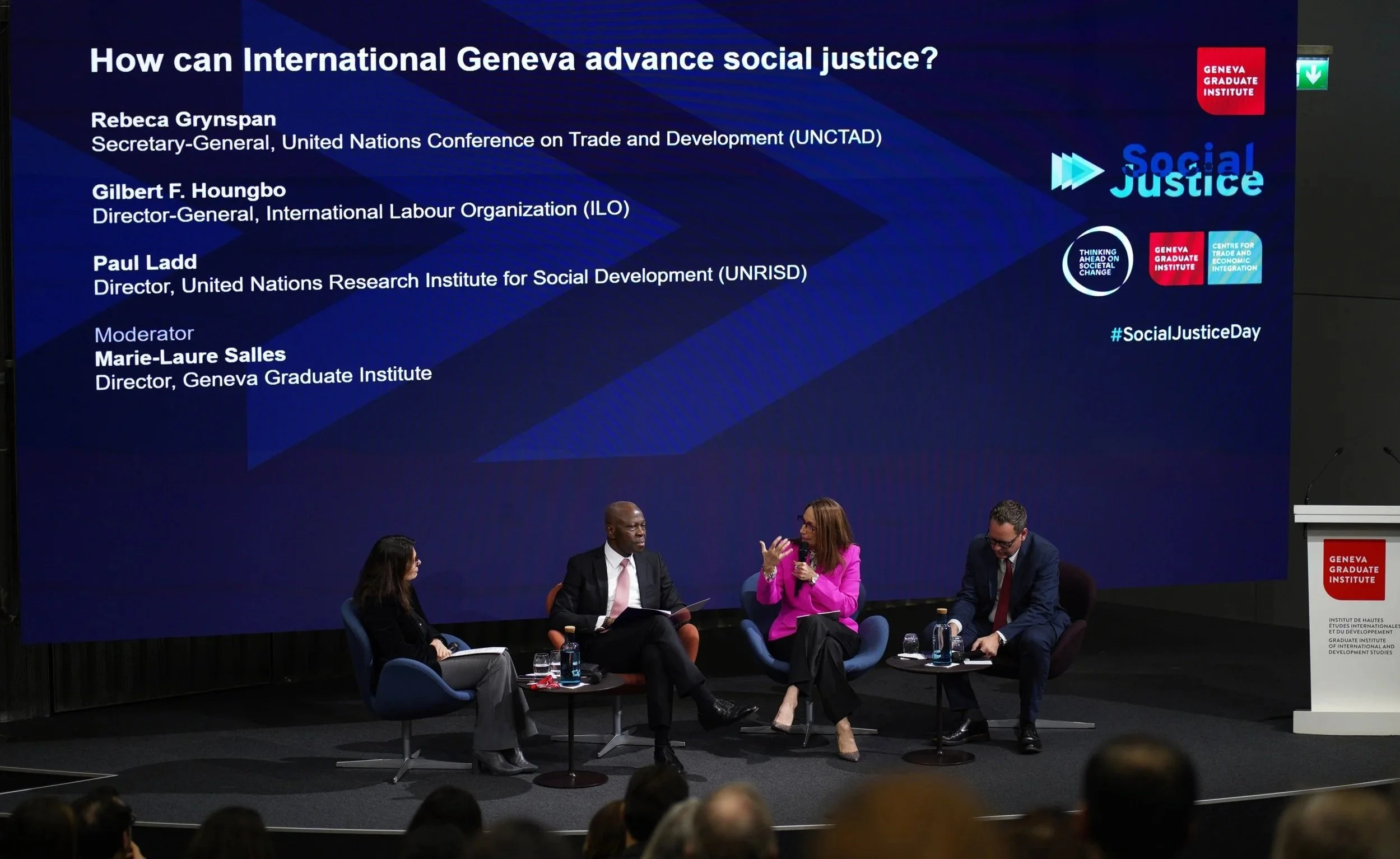
Panel: How can International Geneva advance social justice, 19 Febuary 2024
From Inaugural Forum to Global Mobilisation: The Unique Power of Academia
As academic representative on the Coalition’s Coordinating Group, the Geneva Graduate Institute helps ensure that research, teaching, and multilateral dialogue remain connected to the lived realities of labour market transformation, inequality, and sustainable development. Since the Coalition’s launch, this engagement has evolved from endorsement to architecture.
“Academic partners and institutions are more than knowledge producers. They are levers of social cohesion and legitimacy.”
This commitment carried into the Coalition’s second year with the Geneva Graduate Institute, through the TASC Platform, convening the first Academic Partners Meeting, reinforcing the role of universities within the Coalition’s 14 key interventions.
As preparations advance for the 114th Session of the International Labour Conference (2–13 June 2026), the academic network continues to strengthen collaboration and reinforce implementation across the Coalition’s workstreams.
From inaugural Forum to academic partner’s network, the Coalition reflects a widening circle of responsibility and a clear trajectory: from launch, to consolidation, to mobilisation.
From Commitment to Concrete Action

This year is particularly significant following the Second World Summit for Social Development in Doha, where leaders reaffirmed the central importance of tackling poverty, advancing decent work, and strengthening social integration.
It was a moment of renewed global solidarity and a reminder that there can be no economic growth, and no decent work, without social progress.
This is why we invite you to join ILO’s high-level discussion on 20 February, “From Doha Commitments to Action for Social Justice.”
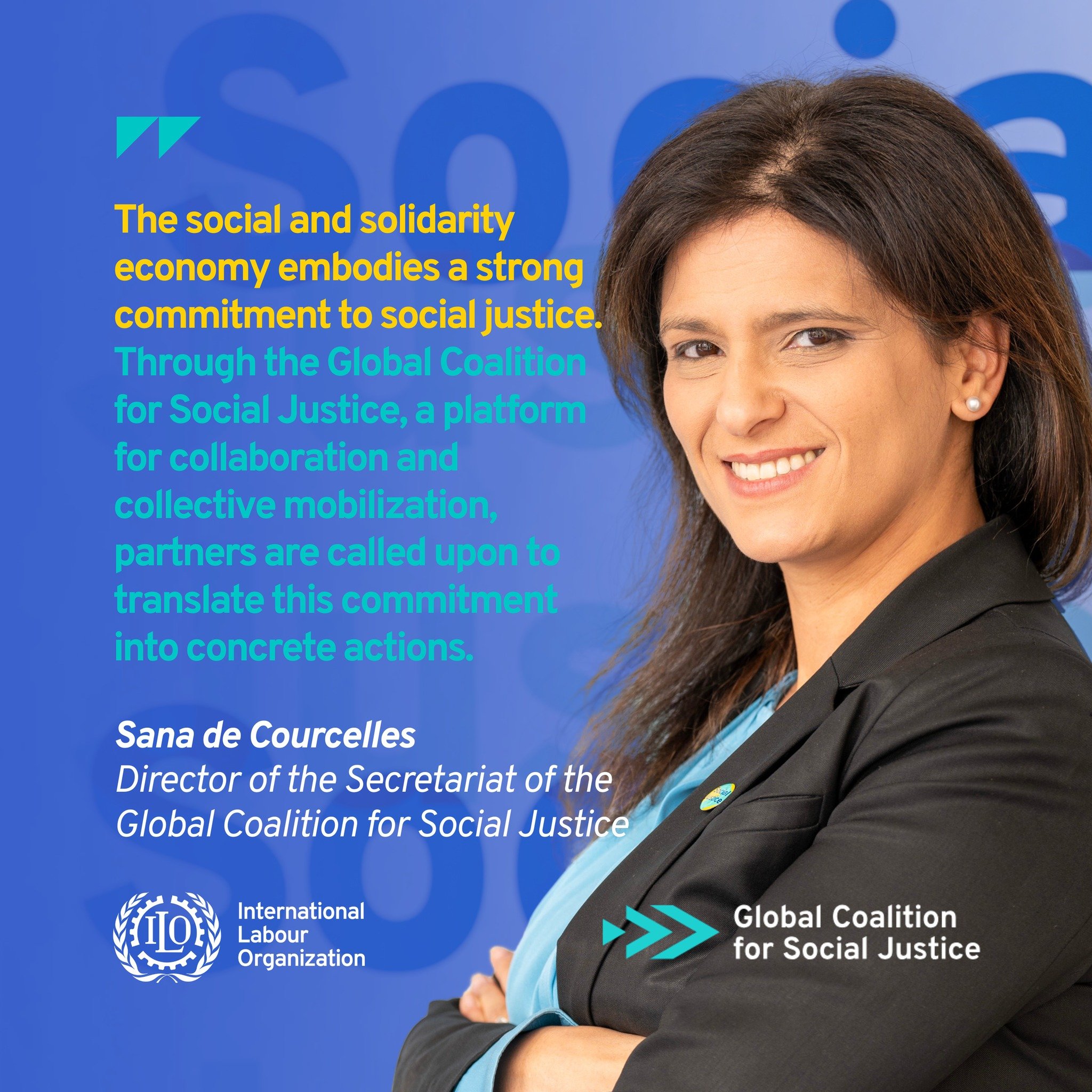
As the focus now shifts from commitments and mobilisation to concrete action, 2026 must be a year of collective delivery, ensuring sustainable development reflects its social dimension.
The Global Coalition for Social Justice calls upon its partners to translate commitment into concrete outcomes, across sectors, regions, and institutions.
Participation in the Coalition remains voluntary and open to governments, employers’ and workers’ organisations, international and regional institutions, enterprises, civil society organisations, and academic institutions. Partners commit to advancing social justice through concrete initiatives, advocacy efforts, and knowledge-sharing, without legal or financial obligations. Institutions that are ready to contribute to this multistakeholder effort are strongly encouraged to engage with the Coalition Secretariat at socialjustice@ilo.org.