

How Can Academia Bridge Knowledge and Action for Social Justice?
In this address to the 2026 Annual Forum of the Global Coalition for Social Justice, Marie-Laure Salles, Director of the Geneva Graduate Institute, reflects on academia’s role in connecting rigorous research with policy and collective action. As the Geneva Graduate Institute approaches its centenary and concludes two years as the academic representative on the Coalition’s Coordinating Group, she returns to its founding conviction that scholarship, education and international public action must reinforce one another in advancing peace and social justice.
Read on for Marie-Laure Salles’s full address, or watch her remarks here.
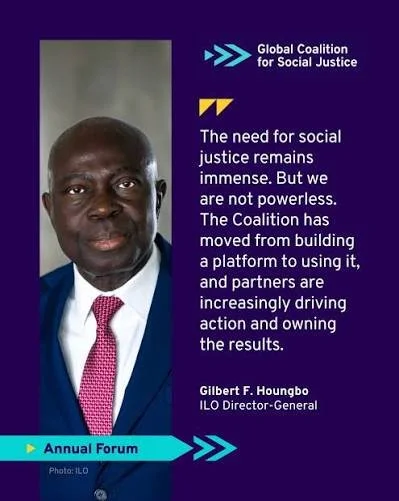
Let me begin by warmly thanking Director-General Houngbo, Sana de Courcelles and her colleagues at the Secretariat for their leadership, energy and commitment in driving this very important initiative forward. I would also like to acknowledge all the partners of the Global Coalition for Social Justice, especially the members of the Coordinating Group, the conveners of key interventions, and our fellow academic partners with whom we have had the privilege of working closely over the past two years. Let me also naturally thank my own team, which is coordinating on the side of the Institute our activities and involvement in the Coalition, and in particular Ms Kitrhona Cerri.
The Geneva Graduate Institute is proud to be among the founding academic partners of the Global Coalition and to have served, over the past two years, as the academic representative on its Coordinating Group.
As we pass this responsibility to our colleagues at the University of Panama, whom we warmly congratulate, it is also an opportunity to reflect on why this Coalition resonates so strongly with our institution's mission.
The Geneva Graduate Institute, formerly Graduate Institute of International Studies (HEI), one of the first academic centres dedicated to the study of international relations, opens in 1927 Geneva.
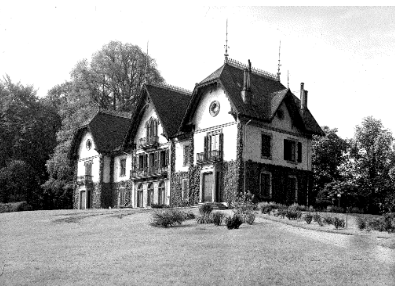
For nearly a century, and as we prepare to celebrate our centenary next year, the Geneva Graduate Institute has occupied a unique place in the landscape of education and research in international affairs. We were founded in the aftermath of the First World War alongside the International Labour Organization and the League of Nations, at that unique moment when Geneva was emerging as a laboratory for international collaboration for peace. Our founders were distinguished scholars, but they were also key members of the General Secretariat of the League of Nations and very close friends and collaborators of Albert Thomas and his team at the ILO.
Their conviction was clear: rigorous scholarship, excellent education and international public action must inform and reinforce one another if the unprecedented project of building a new diplomatic architecture and a durable agenda for peace was to succeed.
That founding intuition continues to shape our mission today. Indeed, I would argue that it grows every day more urgent. At a time when the world faces major, interconnected global challenges, while our capacity for collective cooperation and action in the service of peace is under increasing strain:
“we need to rethink, reinvent and re-enchant the institutions, instruments and practices of international cooperation. More than ever, we need to be able to work together to develop solutions that are commensurate with the complexity of the challenges we face and adapted to a profoundly transformed geopolitical landscape.”
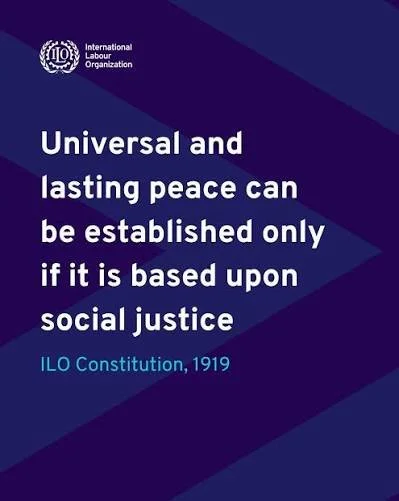
As an institution dedicated exclusively to the study of international and global affairs, we combine research, education and engagement with practitioners, policymakers and civil society. We train future leaders from across the world who believe in international cooperation for peace and who are convinced that “universal and lasting peace can be established only if it is based upon social justice”, as the ILO Constitution put it so clearly and so prominently in 1919.
Hence, we were “aligned by design”, as it were, with the mission of the ILO and with its reaffirmed ambition as carried through the Global Coalition for Social Justice.
From the outset, our purpose was never simply to produce knowledge and educate successive generations of leaders and decision-makers in international affairs, and train generations of decision-makers and actors in all dimensions of international affairs.
“Our purpose was also to serve as a bridge between knowledge and action, scholarship and practice, reflection and policy. ”
As we rewrote our institutional Charter in 2026, we affirmed at its core that the work for peace implies today, more than ever, an engagement for social justice and planetary sustainability. So we feel at home within the Coalition. At a time when inequalities, economic transformations and geopolitical tensions are testing the foundations of our societies, we need more than ever to reaffirm the founding promise of International Geneva: that peace and justice are inseparable and must be advanced together. This will not happen without an effective effort to connect rigorous analysis with collective action.
Over the last two years, we have sought to play our part in the following ways:
First, through research. Our centres and platforms have contributed knowledge and evidence to several of the Coalition's key interventions. In particular, the TASC Platform has worked on issues of policy coherence and governance readiness across trade, labour and just transitions, while our Centre on Finance and Development has produced new analysis on investments in decent work. Other colleagues in the Hoffmann Center for Global Sustainability have also worked at the nexus of trade and justice. These efforts aim to provide actionable research insights that can support decision-makers facing increasingly complex policy challenges.
Second, through convening and public engagement. We have organised events and communication initiatives here in International Geneva to raise awareness around social justice issues and to highlight the important work being undertaken by the Coalition.
And third, through strengthening the academic community itself. We had the pleasure of convening the Coalition's academic members for a first in-person meeting at the Institute last June, followed by a second annual meeting earlier this month, co-hosted with the University of Panama and Stellenbosch University.
What has been most encouraging is to witness the growth of this network. Today, 46 academic partners participate in the Coalition. Together, they are creating a rich ecosystem of knowledge, advocacy and action. Across Africa, Latin America and the Caribbean in particular, universities and research institutions are building active regional networks, developing comparative research, engaging younger generations and producing knowledge that can directly inform governments and social partners.
Throughout these exchanges, three priorities have emerged consistently.
The first is the need to value and support local knowledge, as well as youth, women's and Indigenous perspectives, not only as objects of research but as voices shaping agendas and solutions.
The second is the importance of embedding social justice more deeply in teaching, so that the next generation of practitioners is equipped to address these challenges.
And the third is the need to bring evidence and decision-making closer together, ensuring that knowledge can more effectively inform practice.
Ultimately, this is how a global coalition should evolve: through shared ownership, stronger regional leadership and lasting connections that endure beyond the formal role of any single institution. The Geneva Graduate Institute remains deeply committed to this effort as an academic partner, and we look forward to continuing our collaboration with this vibrant and growing community.
Thank you very much.