

Why mindsets matter in times of transition(s)
From policymakers to business leaders, uncertainty is increasingly recognised as the defining feature of our time – stifling innovation, sparking tensions, and stalling critical transitions across the globe through its pervasive reach across systems and scales.
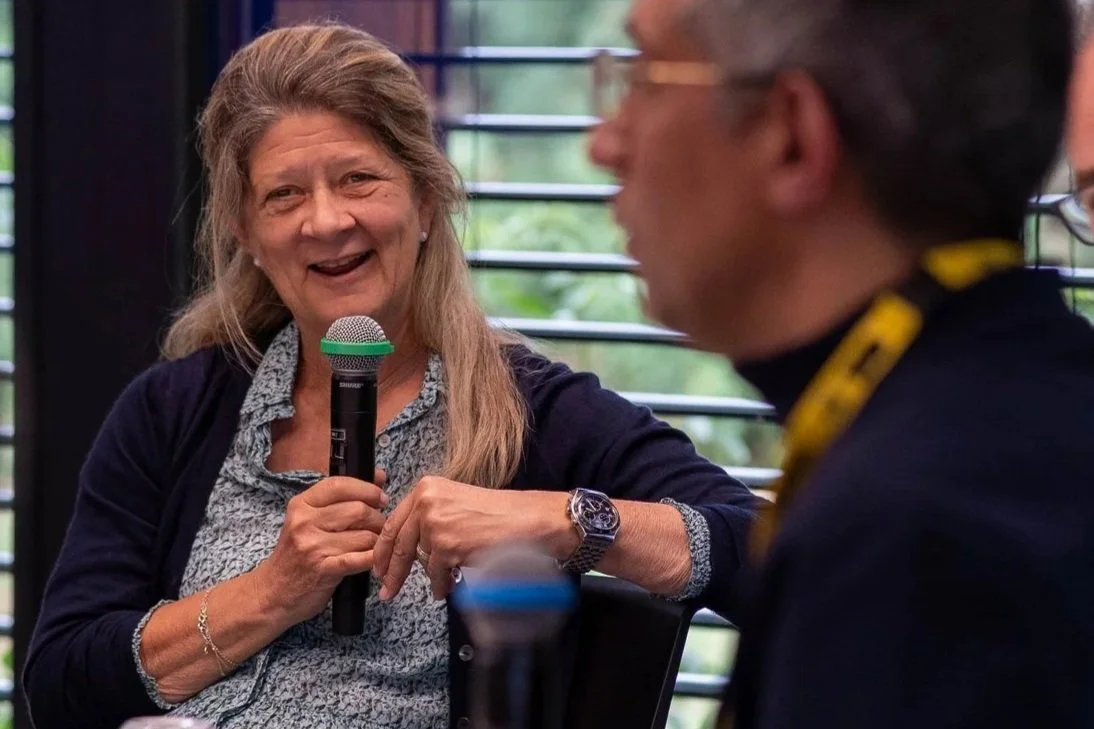
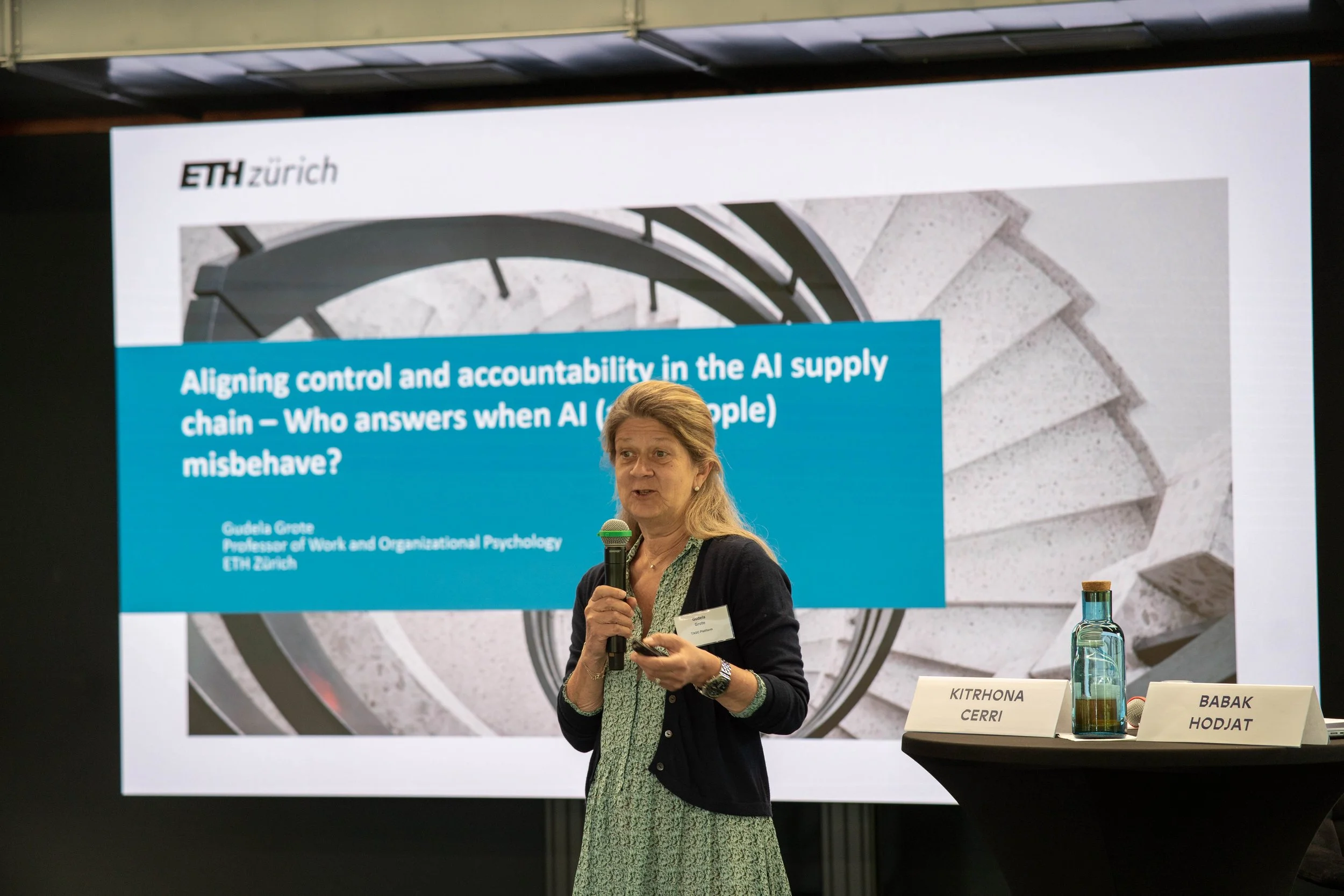
What is missing are practical tools to effectively manage uncertainty. TASC Co-Chair Gudela Grote, Full Professor at the Department of Management, Technology, and Economics at the prestigious ETH Zürich since 2000 and Geneva Graduate Institute Senior Fellow, has been working to close this gap with insights, methods and mindsets for uncertainty-savvy leadership, empowered to manage transitions with creativity and cooperation.
The politics of uncertainty
“Uncertainty” has become a defining word of 2025. Through increasing economic, societal and geopolitical tensions, it has accelerated from a background condition into a defining feature of our lives. Whether in government communications, CEO statements, policy analysis, or economic outlooks, the word uncertainty seems to be dominating narratives. The IMF’s World Uncertainty Index confirms this surge with historic highs in 2025, surpassing levels recorded during the 2008 financial crisis and the onset of the COVID-19 pandemic.
These indexes and analyses share a common observation: that uncertainty has created anxiety and defensive routines. For institutions, it has reinforced rigid procedures and entrenched solutions. For investors, it has dampened markets and innovation. In wider public discourse, uncertainty is being weaponised, raising conflict and undermining trust.
Uncertainty today is not only pervasive, it is personal and political – affecting how people experience their roles, how leaders coordinate, and how individuals, organizations and nations interact and work together.
Uncertainty in transitions
The combination of anxiety inside both individuals and organisations and volatility outside them has made our capacity for collective change and adaptation more fragile – damaging our collective ability to navigate the societal transitions triggered by technology, climate change, migration and the struggle for peace. This is especially visible in the current multilateral landscape, where overlapping crises have led to funding cuts, institutional strain, and growing mistrust that limit cooperation.
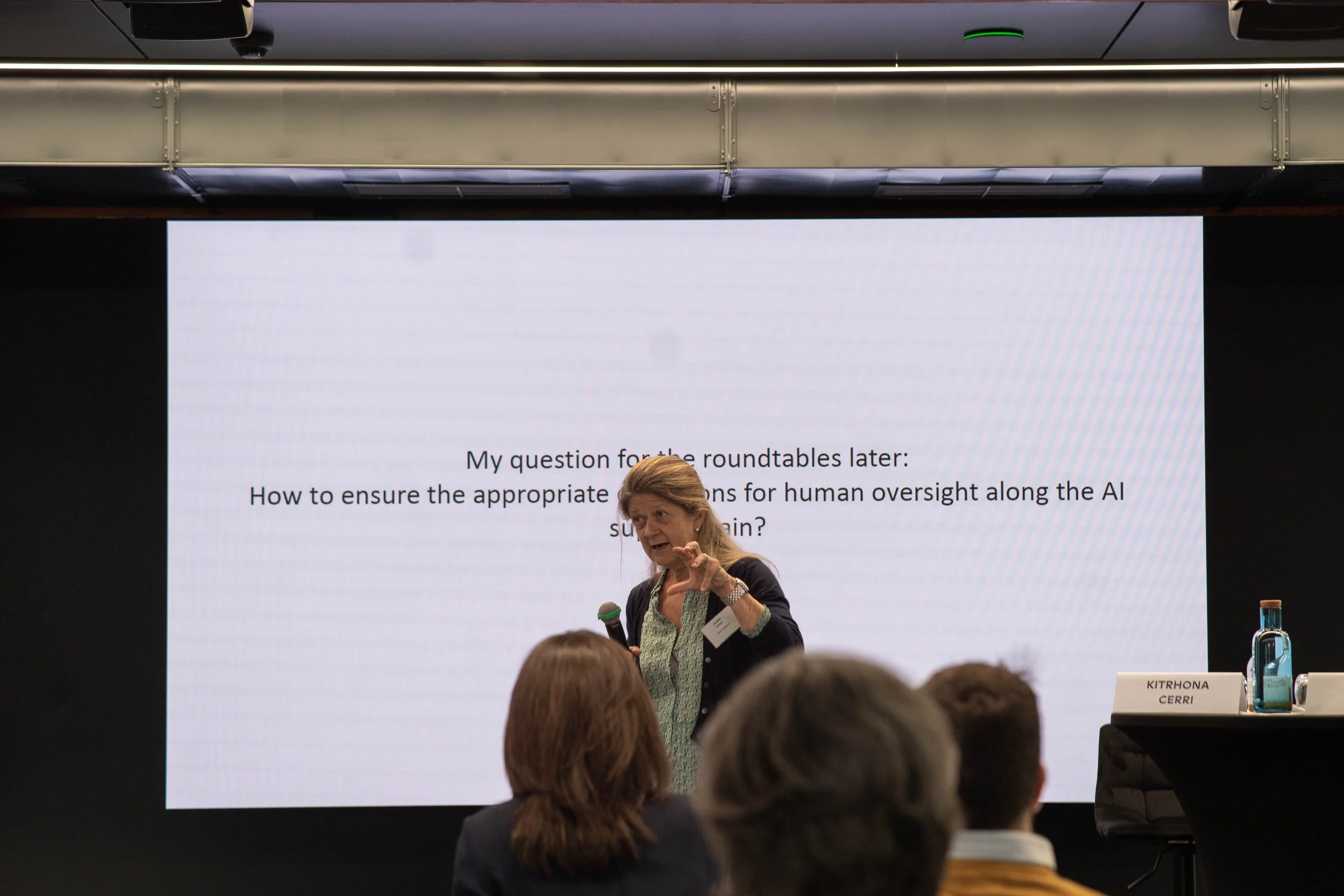
Defensive reactions to uncertainty are narrowing options and reinforcing old patterns, making transformative change seem out of reach. Could more constructive approaches to uncertainty open space for learning, collaboration, and more cohesive transitions? Seeing the threats and the opportunities that uncertainty entails and strengthening the belief that uncertainty is somewhat controllable will be paramount to mastering challenges and driving transitions at all levels of society.
Understanding and controlling uncertainty
Uncertainty in the broadest sense means "not knowing for sure" - an ubiquitous human experience in the face of a highly unpredictable future. At an individual level, people may be uncertain in relation to the tasks they have to accomplish, but also in relation to themselves, their goals, capabilities and identity. Such uncertainty directly impacts individuals' capacity to act and therefore they aim to control it. At the same time everyone is confronted with uncertainty in their wider environment, over which they have much less influence. This may cause anxiety and further hamper people's ability to deal with the uncertainties closer to them. While these processes have been mostly studied for individuals, similar processes can be observed in the actions of any organization or institution.
Controlling uncertainty tends to be associated with attempts to reduce it. However, besides "closing behaviours" that exploit existing knowledge and routines and thereby increase predictability, "opening behaviours" may also be chosen. These create uncertainty by exploring unchartered terrain in search for new opportunities for learning, experimentation, and innovation.
Sensibly choosing between these options can foster adaptation and growth in response to concurrent demands for stability and change. For example, inviting a diverse team to discuss solutions to a complex problem may at first look like a bad idea because the divergence in perspectives and backgrounds reduces the chances for a quick accord. However, if negotiations can be conducted with sufficient respect and trust, most likely a better outcome can be achieved as all stakeholders are heard and fixed-pie perceptions of one party’s gain being another’s loss are avoided.
Uncertainty-as-enabling mindsets: From threat to opportunity
If “opening” and “closing” behaviours show how we regulate uncertainty, mindsets reveal our underlying assumptions and guide how individuals make sense of and respond to the unknown in their immediate environment.
An "uncertainty-as-enabling mindset" - characterized by the belief that uncertainty is malleable and may hold opportunities – is fundamental to making effective choices between reducing or creating uncertainty. Such a mindset not only helps to address uncertainty effectively, but also fosters collaborative problem-solving. Defensive responses, withdrawal, and siloed thinking are less likely if there is a sense that uncertainty can be mastered, and even taken advantage of, for out-of-the-box solutions. Change and transitions are not only perceived as destabilizing but also as creative opportunities.
So the question becomes whether individuals and eventually also organizations and institutions can be guided towards an uncertainty-as-enabling mindset.
“Mindsets” determine whether uncertainty is seen as fixed or malleable, as a threat or an opportunity.
Fixed vs. malleable: uncertainty may be out of one’s control or something that can actively be influenced and changed
Threat vs. opportunity: uncertainty can threaten successful goal pursuit, but can also be an opportunity for learning, personal growth, and productivity.
Practical interventions: Shifting mindsets into practice
Research to date shows that even brief "wise" interventions using educational material, for instance on beneficial effects of uncertainty for cognitive and emotional growth, can measurably increase the belief that uncertainty can be enabling rather than disabling.
Such an intervention has been linked to more acceptance of diversity and less support for populist parties, and a similar intervention fostering self-affirmation has helped jobseekers to get through the difficult job search process with more success.
Further development of targeted interventions for different contexts and follow-up evaluations of their effectiveness can support evidence-based practice in the service of building uncertainty-savvy leadership.
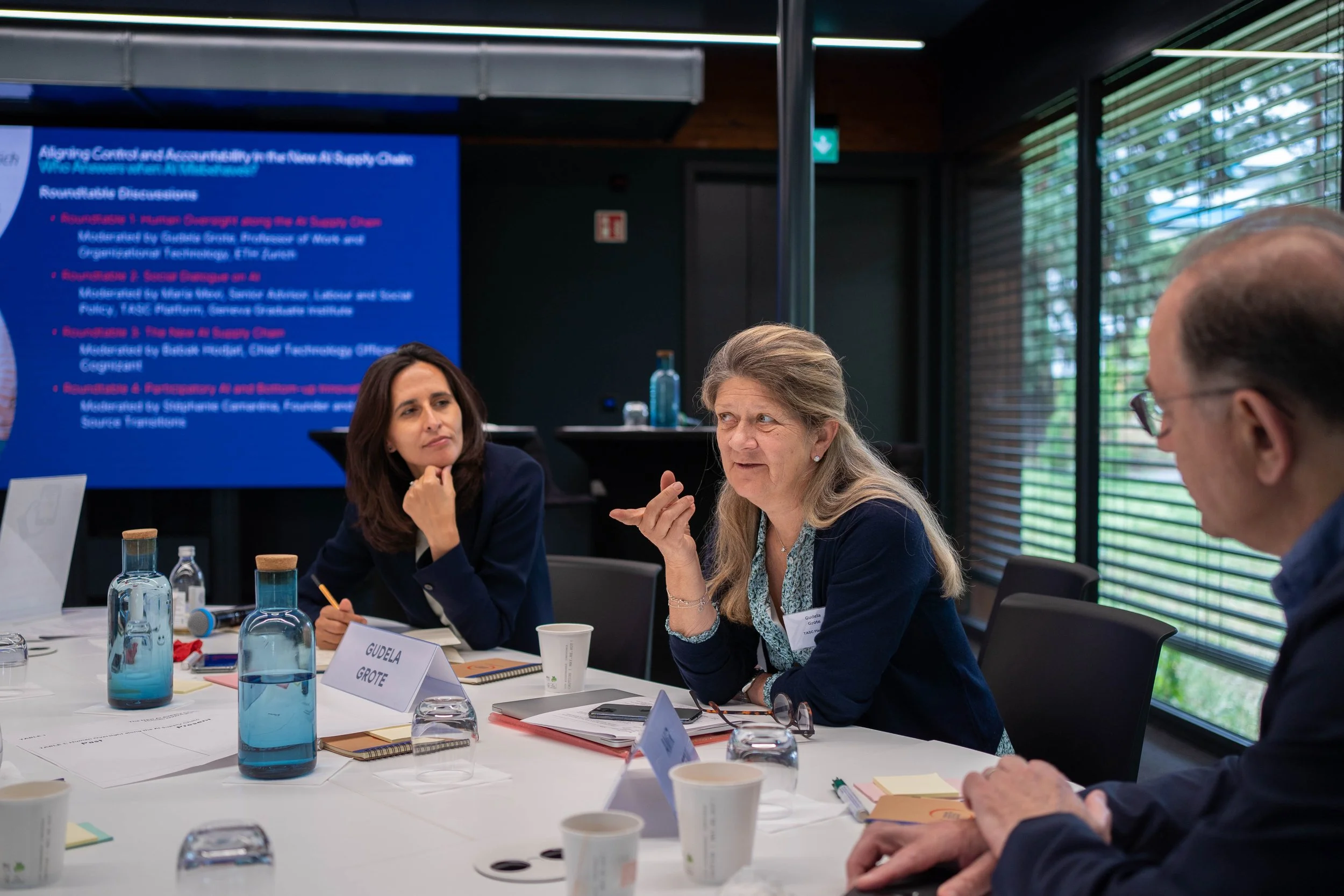
At TASC we have begun experimenting with small uncertainty-related activities as part of multi-stakeholder exchanges. We intend to develop tailored tools that range from simple sensitizing questions (e.g. "Recall a time uncertainty opened opportunities in your work.") to mindset surveys for joint reflection, and full-scale uncertainty mindset interventions. Such tools can then be further developed for use by individuals, teams, and organisations as part of their work in multilateral negotiations and policymaking.
Such efforts are needed to strengthen International Geneva which currently appears to suffer from “uncertainty rejection”, retreating into defensive postures when faced with overlapping crises and financial strain. The result is fragmentation, entrenched solutions, and stalled cooperation. Better understanding and managing uncertainty through uncertainty-as-enabling mindsets can help to build "uncertainty resilience": the collective capacity to master the unknown rather than reject it.
This important shift better places changemakers to understand and address transitions and to work towards integrative and just solutions. If fear of uncertainty leads to paralysis, a well-trained uncertainty mindset leads to innovation, inclusion, and cooperation.
International Geneva can become the laboratory of uncertainty resilience - showing how to turn the unknowns of our age into the connective tissue of a renewed multilateralism.
To learn more about the research underpinning this work, explore Professor Gudela Grote’s Work:
Self-affirmation increases reemployment success for the unemployed
People who rate uncertainty positively are less likely to vote for right-wing populists
We invite you to follow our call to action and join the TASC Change Exchange in piloting and scaling tools for uncertainty, and help Geneva stay at the forefront of international cooperation.