

An Equitable Future in the Making
Introducing the Futures Balance: An AI powered tool and methodology and AI-powered prototype to account for intergenerational equity
Shruti Merin Lal shares insights from our Futures Balance work, exploring intergenerational equity in policymaking during Building Bridges Week.
At the Building Bridges Week, the session ‘What’s Next on Accounting for the Future’, convened by The Beyond Lab at UN Geneva, together with the World Economic Forum, the Permanent Mission of Switzerland to the United Nations, the International Institute for Sustainable Development, and the TASC Platform brought intergenerational equity to the forefront of sustainable development.
Faced with urgent polycrises, policies rarely account for intergenerational equity -, which leadsing to spillover effects that will reverberate across generations. The event explored the need for embedding intergenerational equity in policy and investment decisions, and Iintroducing a novel accountability methodology and tool -, the Futures Balance and its AI driven prototype - was released to supportimplement forward-thinking sustainable development, and tackle intergenerational justice.

H.E. Ambassador Julien Thöni, Deputy Permanent Representative to the Switzerland at the United Nations & other International Organisations, Tatiana Valovaya, Director-General of United Nations Office at Geneva, Özge Aydogan, Director, The Beyond Lab at UN Geneva, and Sally Bardayán Rivera, Panama’s Deputy Permanent Representative to the World Trade Organization,
Steering Mindsets Towards the Future
Opening the session with a stark observation, Tatiana Valovaya, Director-General of the United Nations Office at Geneva, acknowledged that
“Aside from the 18% of the SDGs that haveSDGs have been attained, the real project is changing mindsets and bringing sustainable development into mainstream economic development.”
She reminded the audience how now, more than ever, it is indispensable to embed sustainable development into the core of economic systems before the window for meaningful change narrows.
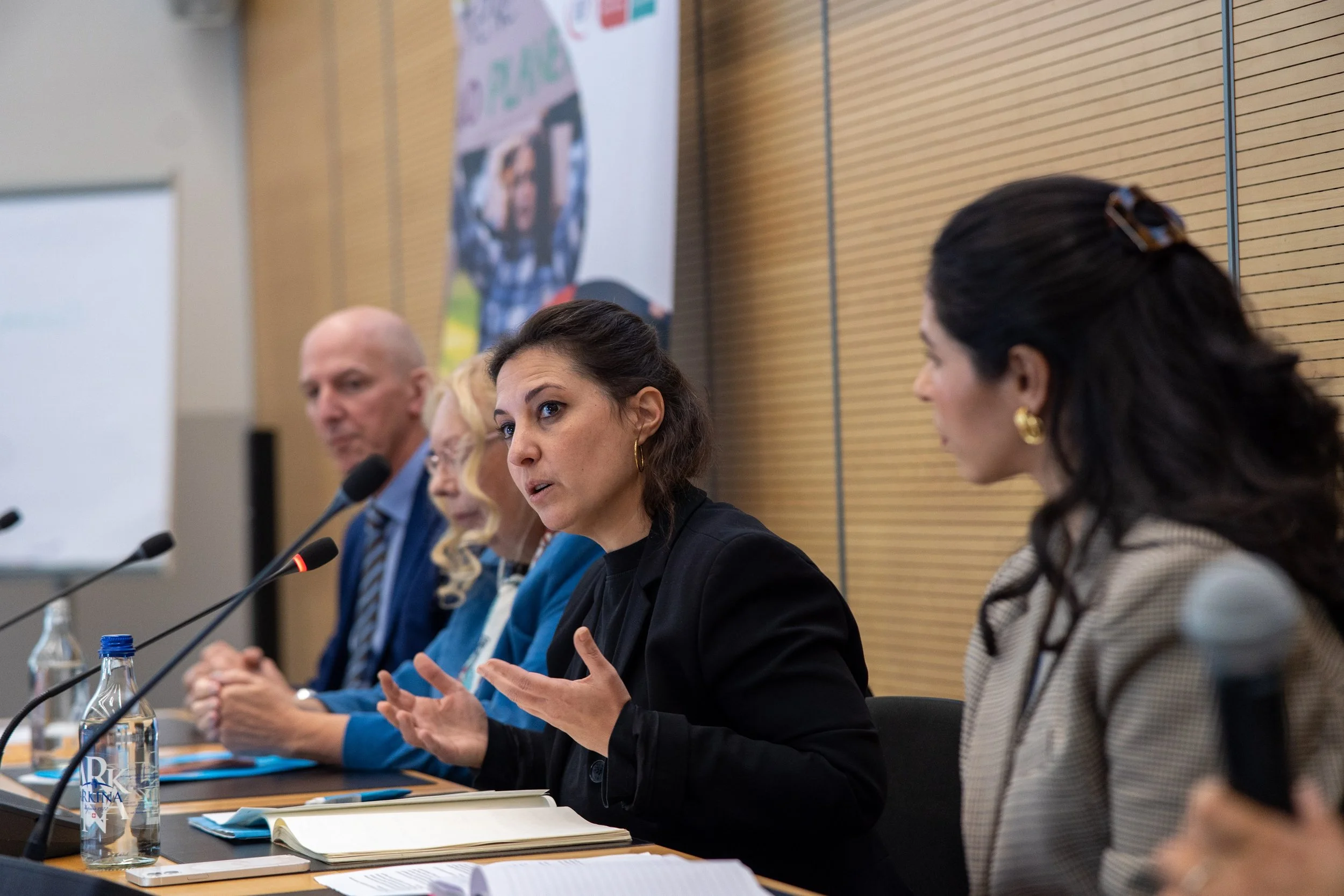
Leading The Beyond Lab with an exploratory vision, Director Ozge Aydogan placed younger generations at the forefront of the project, remarking that they don’t just hold a consultative status. Rather, they are at the helm of dialogue. Her intervention asked the audience to challenge its own thinking and assumptions driving today’s policies, as we have the power to imagine new models of governance and accountability to make sustainability the norm and to shape the future.
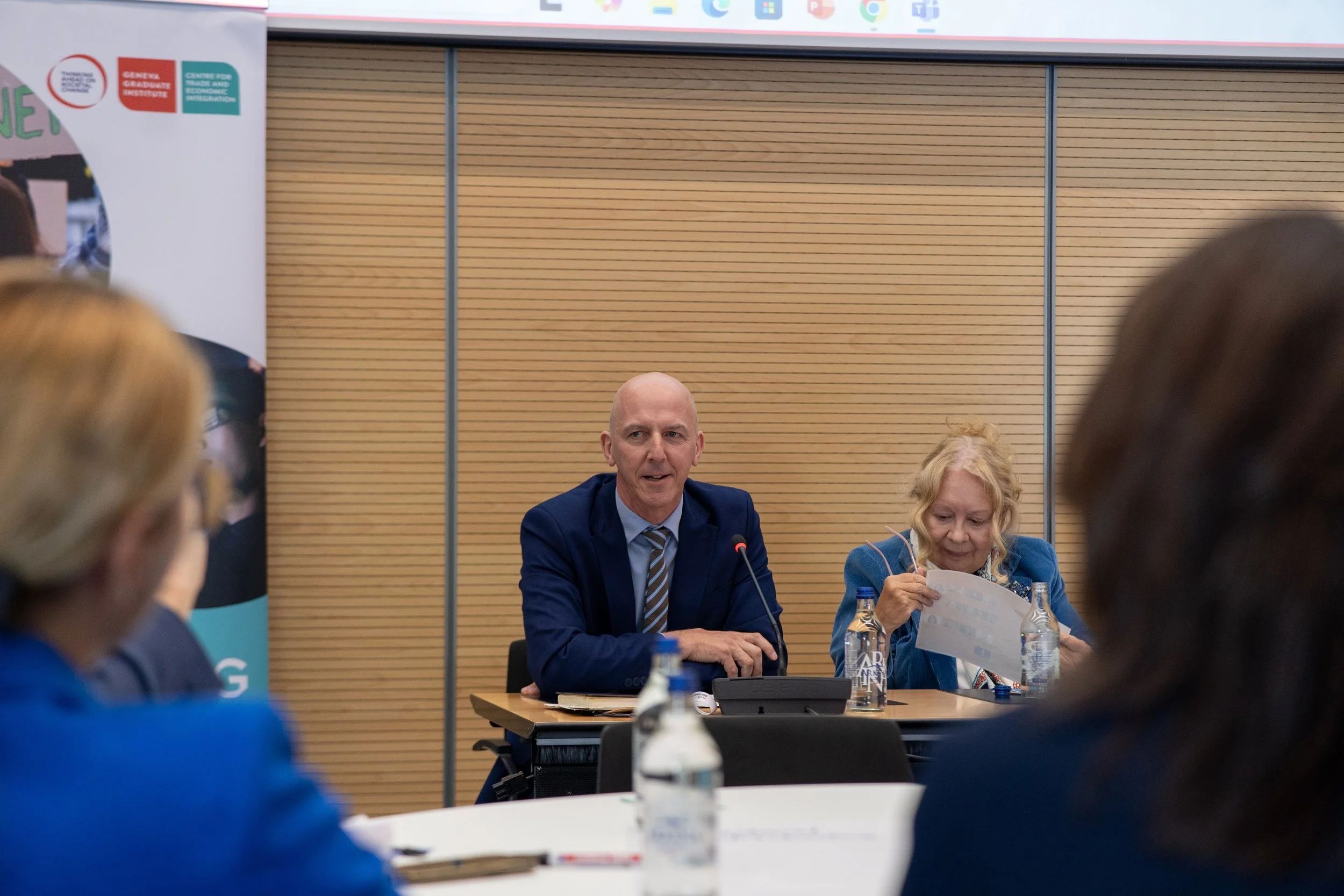
Ambassador Julien Thoni, Deputy Permanent Representative to the UN, Switzerland, reaffirmed the commitment of the Swiss government to multilateralism. Stating that “no progress occurs by chance”, he placed Geneva ats the convergence of diplomacy, science, and international relations, hailing the production of innovative solutions that are responsibly guided.
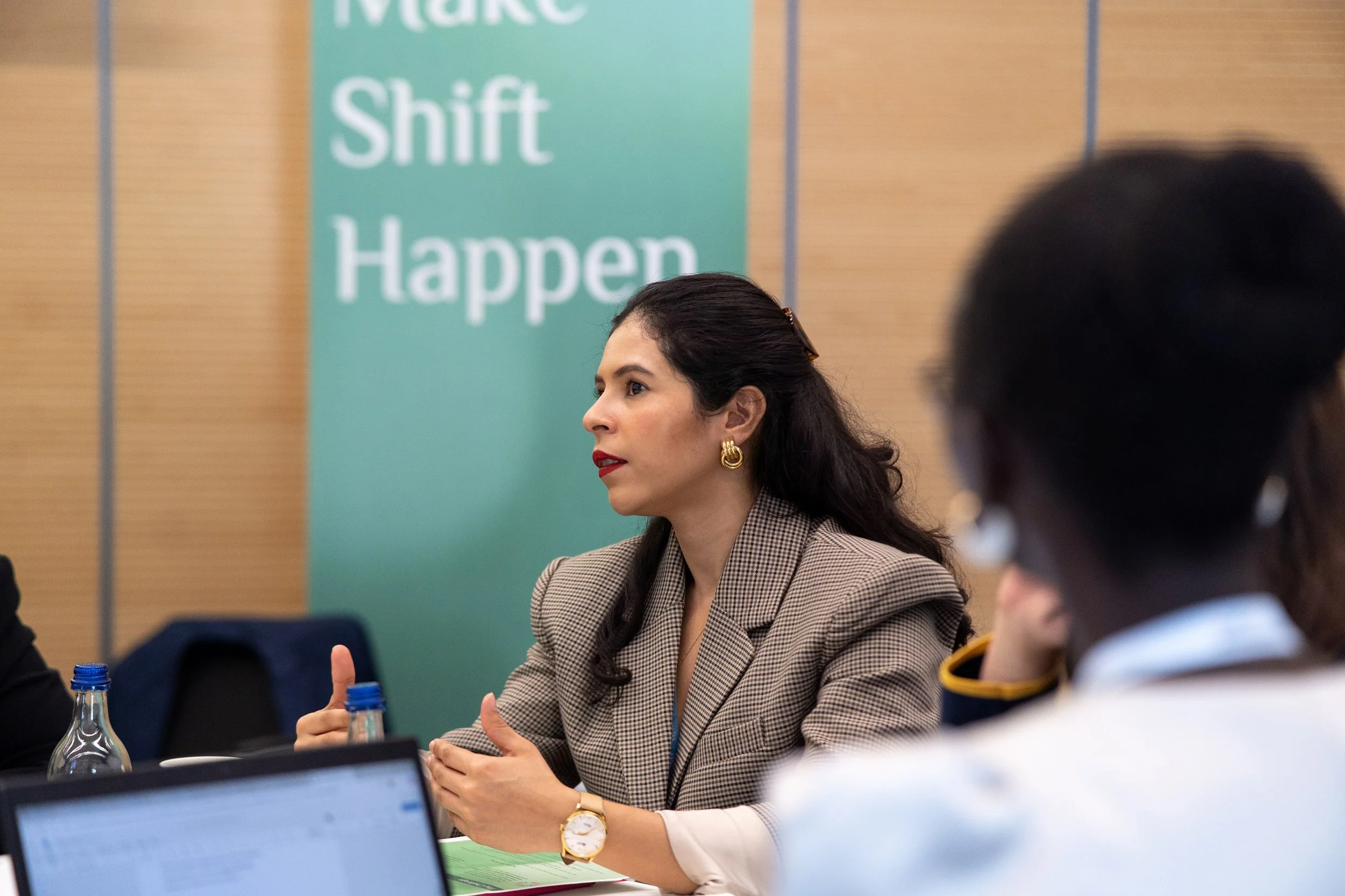
His remarks were echoed in a global context by Sally Bardayan Rivera, Deputy Permanent Representative to the WTO, Panama, who reminded the audience how Panama is one of just three carbon-neutral countries. However, as the first nation to have had to evacuate its citizens due to climate change, they are now poised to think into the future and to prepare for successive generations.
Together, their interventions drew a line between local action and global responsibility, capturing the shared challenge of turning ambition into durable commitment as even global front runners in sustainability face the cascading realities of climate risk.
Incentivising for Strategic Foresight
From leadership to implementation, how can mindset shifts within institutions translate into meaningful actions for the future? Chris Luebkeman, Lecturer at the Department of Management, Technology, and Economics, ETH Zurich reminded us of the urgency to imbue the language of foresight thinking into organizations. He reiterated the value of applying the STEEPLE method to policies, and to:
“commit to at least two ‘non-regret actions’- those that the future generations will thank us for.”

Contesting the perceived neutrality of the systems in power, Sherbano Jamil, Associate Manager at DAI and WEF Future 50 Leader, framed Switzerland as a “dystopian world” in relation to her lived experiences in Pakistan. She cautioned against using foresight as an instrument of control, reframing it as something that now must be a shared as a process that truly includes the many voices of the youth. She called for foresight to become an investment in the human capital of Asia for instance, brimming with 3 billion young people whose ideas and agency can redefine the global future.
But how exactly does foresight live within innovation, enterprise, and collaboration, turning long-term thinking into practice, and where ideas of transgenerational equity start to find their balance?
Markus Kirschlager, Managing Director, Pantarhei Advisors and WEF Future 50 Leader, planted entrepreneurs as the gardeners of tomorrow, who incorporate incentives that will outlast the current generation. For this, he advised aligning incentives with value creation for the long term and setting up intergenerational boards that co-create with young voices.
Rafia Al-Jassim, Specialist at Invest Qatar, COO at AlgaQ, and WEF Future 50 Leader, joined the conversation from Qatar, reminding us that innovation does not necessarily have to be digita l- it can be natural. Leading by example, she demonstrated how her company's use of algae as an asset incentivised investors to commit to sustainable development.
A Seat for Intergenerational Accountability
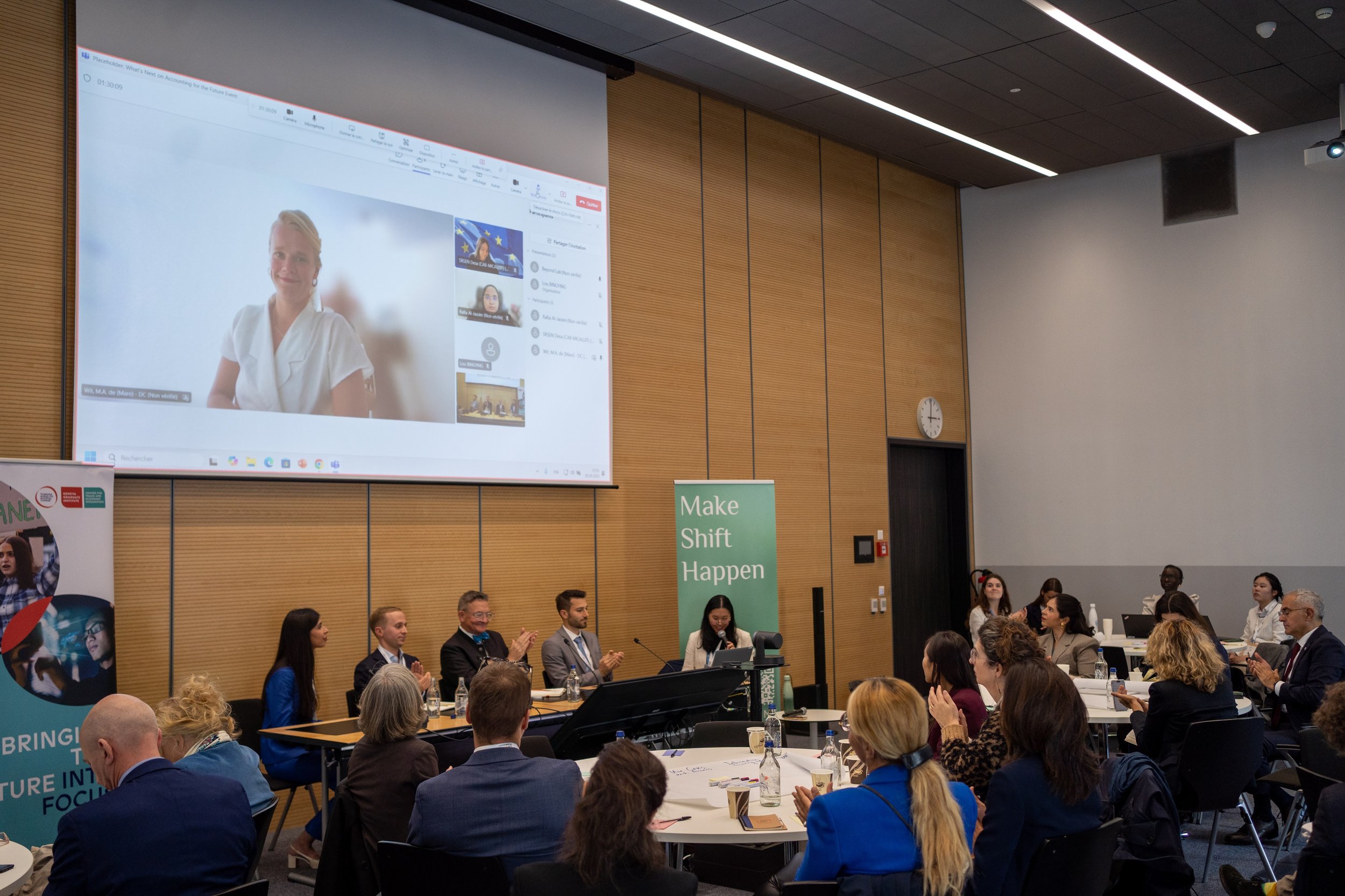
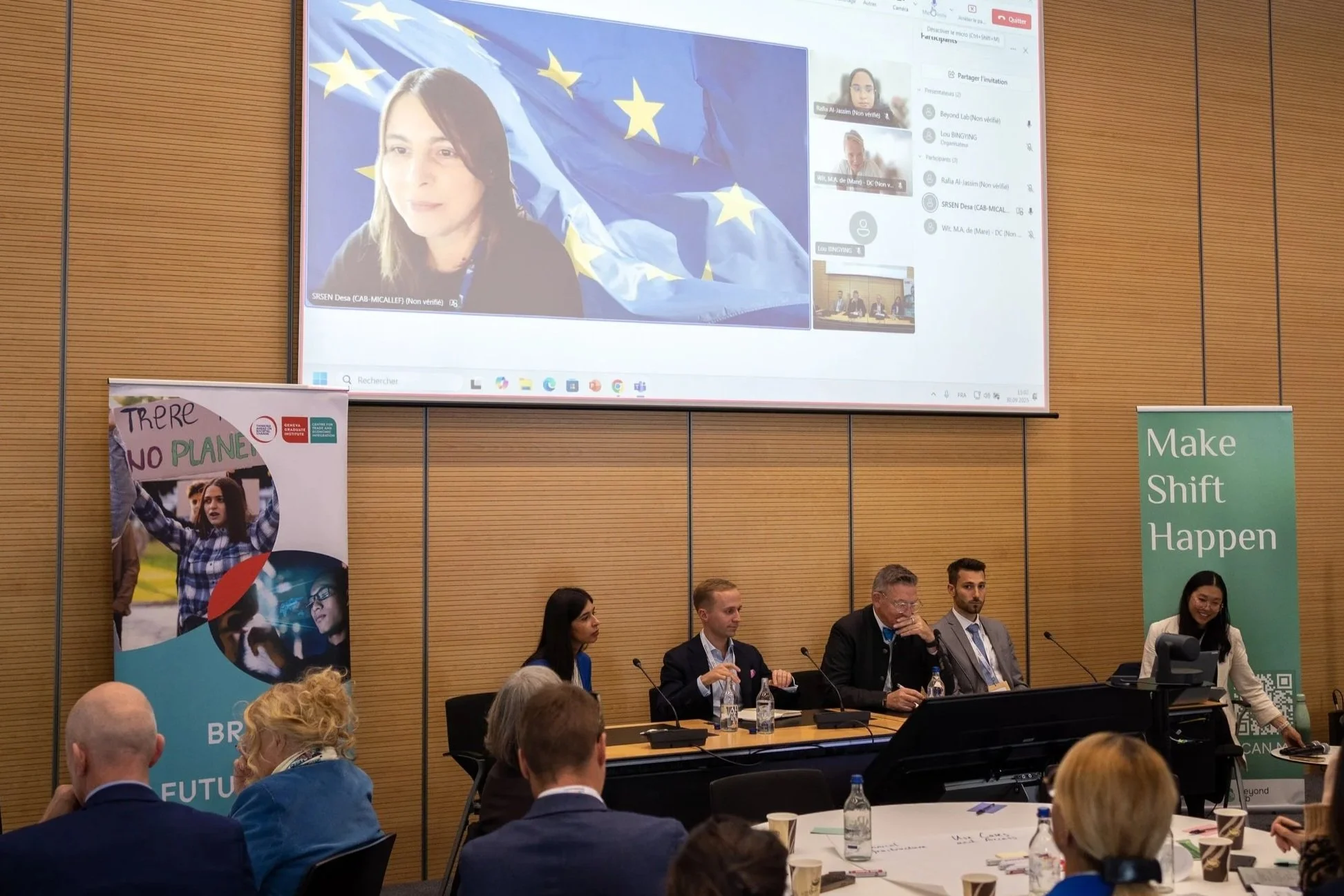
Mare de Wit, Future Ambassador for Water and Climate Adaptation at the Delta Programme Commissioner and the Ministry of Infrastructure and Water Management, and Rijkswaterstaat, joined the panel from Amsterdam. Applying intergenerational justice at the heart of policymaking, she presented three concrete steps to move in this direction:
Have a seat for the future at the table
Utilize their information in decision-making
Safeguard the interests of the future.
Desa Srsen, Member of Cabinet, European Commission, Cabinet of Commissioner Glenn Micallef for Intergenerational Fairness, Youth, Culture and Sport, brought out the efforts of the European Union in accounting for future generations. She stated that “we tend to be EU-centered, but what we do matters beyond borders”, and expressed how a strategy that accounts for intergenerational justice can serve as a moral compass while addressing the cost of non-action.
From governance and policy to entrepreneurship and private practice, a new layer of actors stepped forward. Representing the private sector, Valentin Dal Zotto highlighted the initiative Pictet Wealth Management, where they actively use strategic foresight to integrate intergenerational collaboration and called on young voices to take on the duty of communicating with senior management and leaders, and for the latter to consciously listen and act.
Futures Balance: The Methodology and Tool for Tomorrow
Kitrhona Cerri, Executive Director of the TASC Platform, and Impact Partner of the Beyond Lab Futures Balance, introduced the Futures Balance methodology and tool.
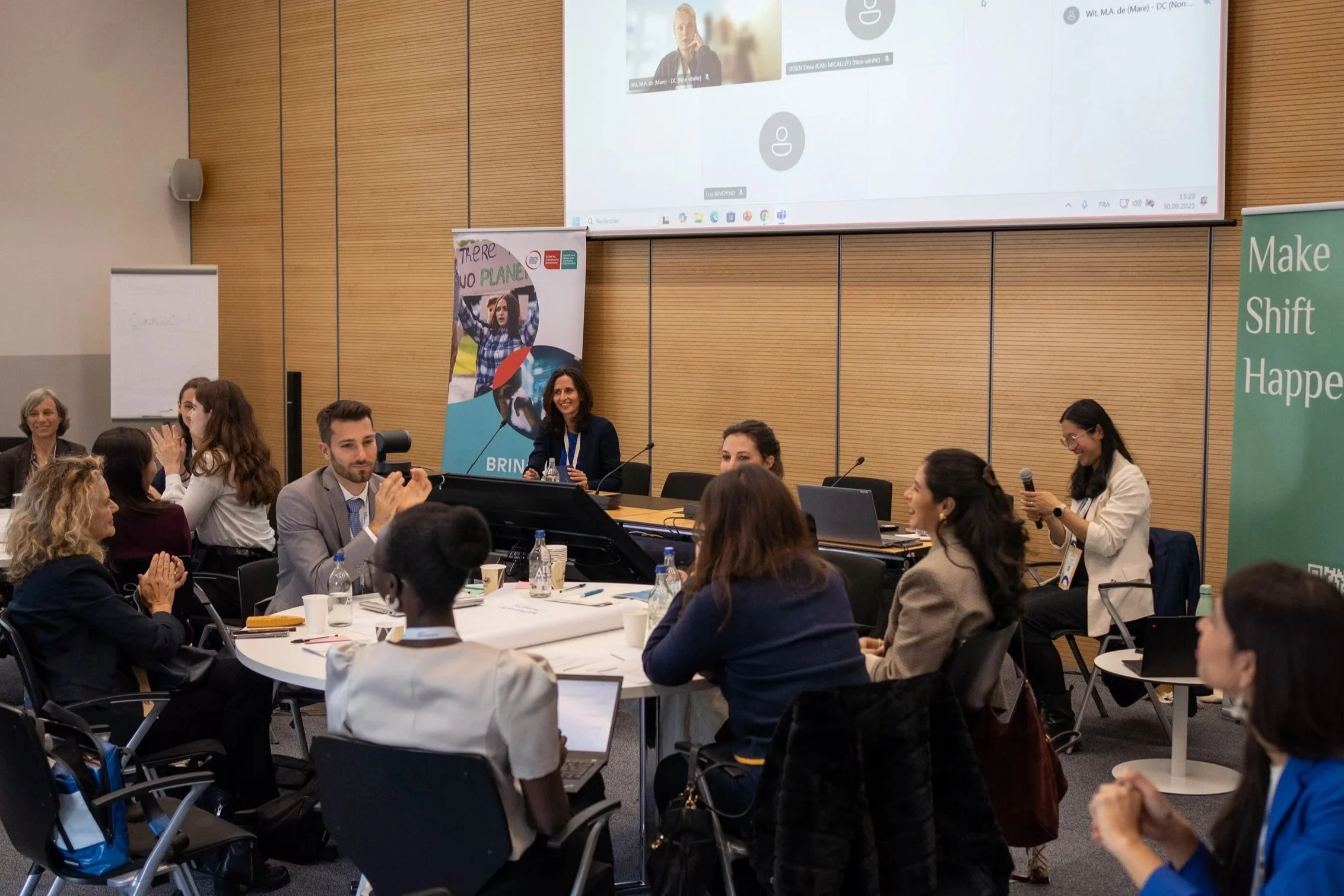
Envisioned as an innovative accounting framework, the Futures Balance and its current AI prototype aim to investigate how today’s, or tomorrow’s, policies spill over into the future across domains and multiple time horizons.
Huddled in groups, each led by a facilitator, the audience was rapt with attention at how the tool works. A live demonstration was in place, where elements like the name of the policy, description, budget, targeted population, and geography were logged in to derive an account of spill-overs and intergenerational equity. This part of the workshop had multiple stakeholders at tables, with their curiosities and critiques, to understand the creation of the tool and fine-tune it for application by policy makers and investors.
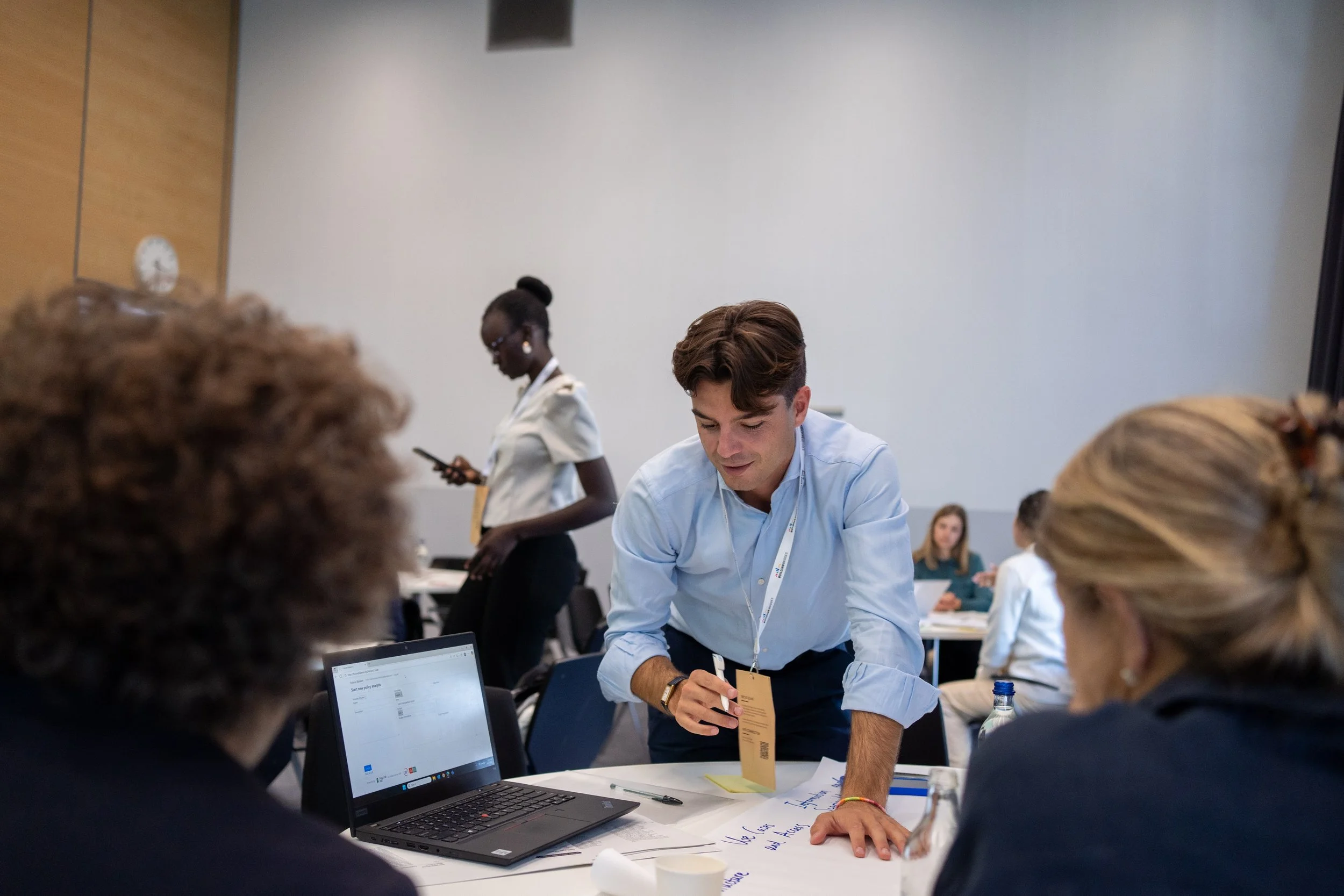
In that collective exercise, the room became a laboratory for accountability, where ideas of intergenerational equity began to take tangible forms. Accountability emerged not as an abstract value but as a structure, one that can be designed, measured, and upheld. The excitement was not not only about testing the AI prototype, but about shaping a shared moral compass for decision-making, one that weighs the cost of non-action as heavily as action itself.
While the methodology provides the conceptual foundation, anchored in the principles of intergenerational equity and regenerative development, the tool itself will offer a practical way to apply it, helping policymakers and institutions see how their decisions resonate across time and domains.
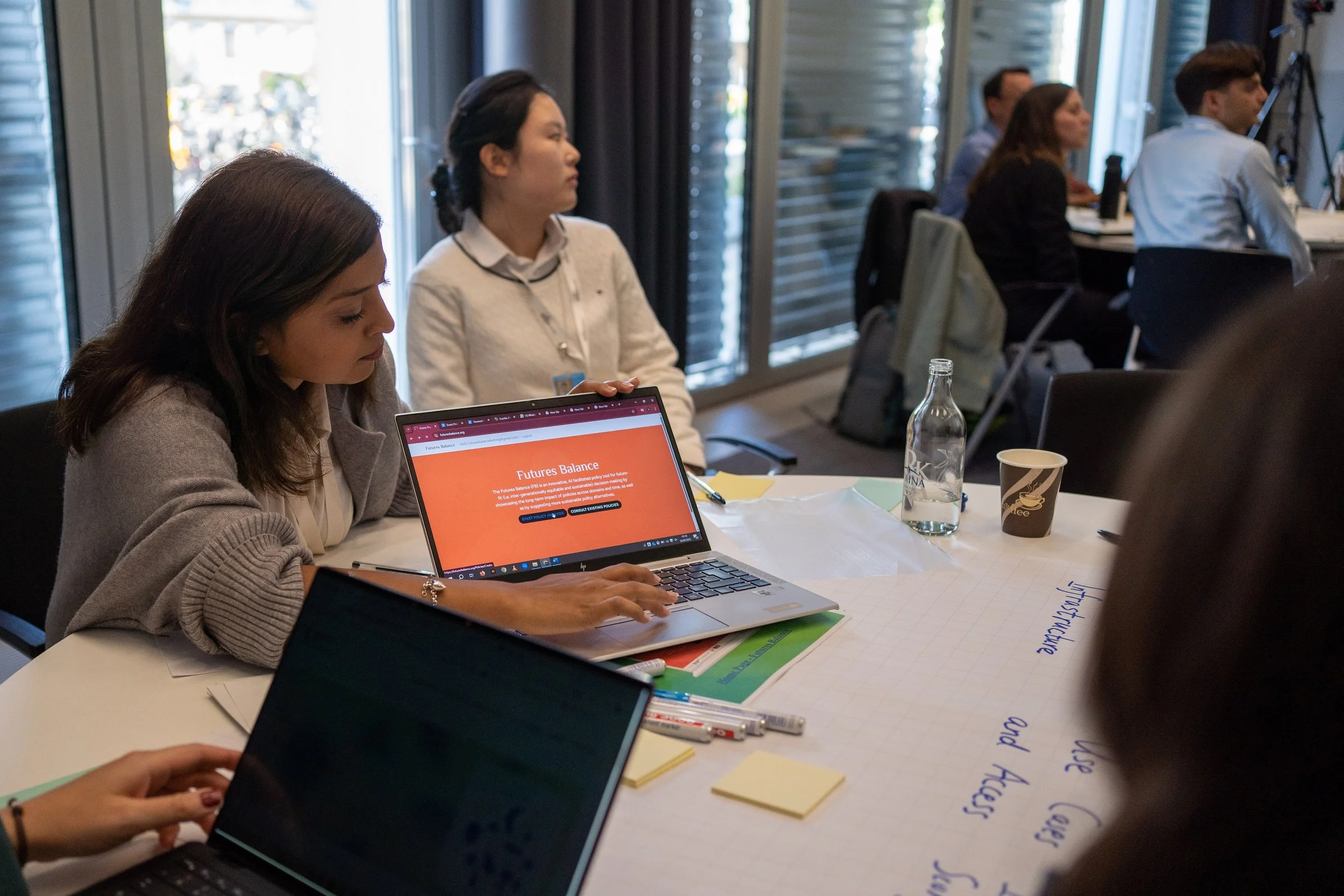
The AI-prototype presented in Geneva offered a first glimpse of this vision, illustrating how artificial intelligence can help map spillovers, trade-offs, and opportunities for long-term sustainability.
As the Futures Balance continues to develop, the initiative will deepen collaboration with partners committed to advancing long-term sustainability and accountability. Together, these exchanges will help refine the methodology, strengthen the tool, and build shared capacity to reduce our collective debt to the future.
To learn about the Futures Balance initiative, to test the AI prototype, or to explore potential collaboration, visit www.futuresbalance.org or contact the TASC Platform to continue the conversation.