

Incubate, Test and Refine: Where are We on the Arc to Social Development?
Jason Judd, Executive Director of the Cornell University Global Labor Institute in the ILR School sets the scene for the dialogue on “Beyond Tariffs: Reconnecting Economic Policy with Social Development”.
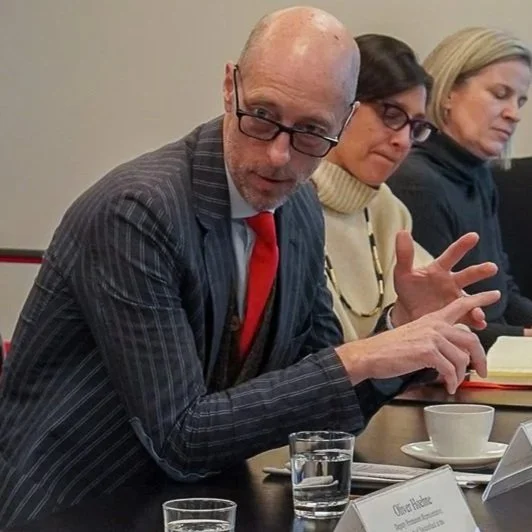
We find ourselves nearly three decades after the Copenhagen Declaration (1995). There have been big changes. Trade and investment policy are no longer defined primarily by market-opening commitments. We have designed, tested, refined, and tested again a suite of trade policy tools: tariffs, subsidies, labour and environmental standards, due-diligence and sustainability requirements all designed to make trade and economic growth more inclusive and more sustainable.
This may be reductive but this long period of trial and error is marked at one end NAFTA and the other by USMCA. Labour and environmental provisions were lashed loosely to the underside of NAFTA. In USMCA they were integrated in the agreement with, on the labour side, clear requirements for organizing and bargaining rights, mechanisms for investigating disputes, credible threat of changes in trade at the firm level. Not everyone loves the USMCA or the RRM but it definitely marks change over 30 years.
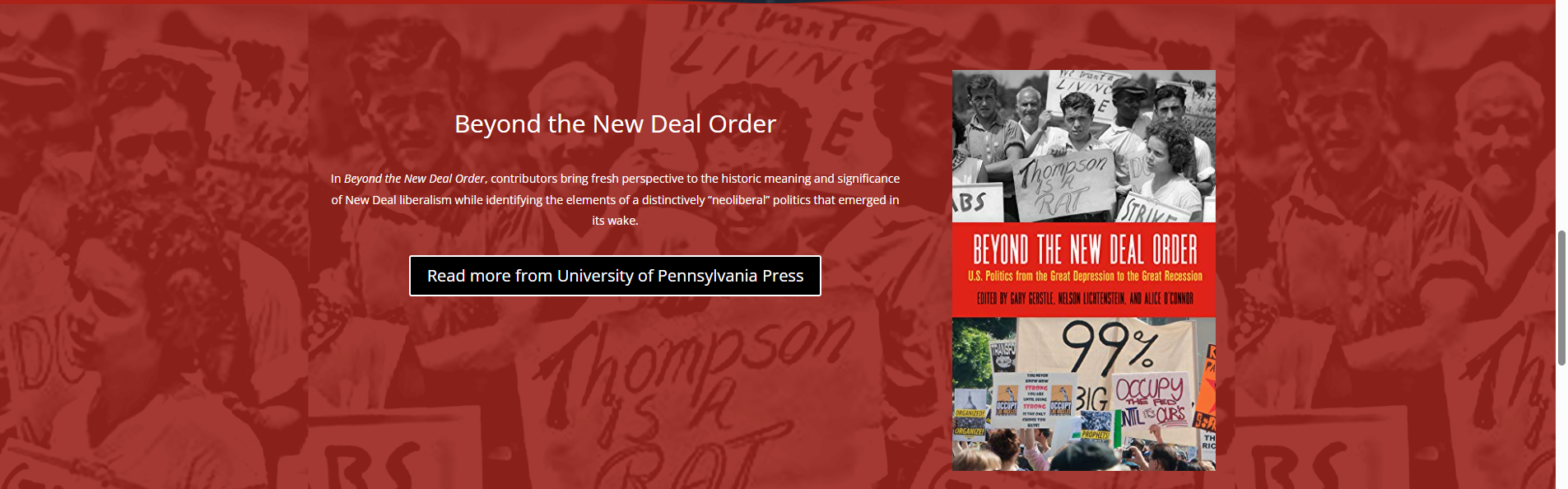
How long did it take the New Deal order to become what it was in terms of a coherent set of policy proposals? From the work of Gary Gerstle, Emeritus Professor of American History at Cambridge University:
[A]rguably, it took 30 or 40 years from 1900 through the 30s and 40s, and the seal of approval is not really achieved until Eisenhower, the Republican, blesses the New Deal order in the 1950s. By the same token, the neoliberals were whistling in the wilderness for 30 years, through the 1940s, 50s and 60s. No one really gave a hoot who Milton Friedman was in the 1950s, or Friedrich Hayek.
They worked out over a generation and a half and maybe even two generations: ideas to be refined, discussed, advanced, made more precise, tried, and reworked over a longer period of time. And during that long period of time, it's actually imperative that those who are incubating these ideas stay true to them, not in a dogmatic or an orthodox sense, but believing that the fundamental principles that underlie them can at some point be of value to the society as a whole.
We’re at Gerstle’s 30 year mark—Copenhagen to Doha—and we’re part of the incubating and testing and refining of ideas for the right relationships between trade and labour; and social development more generally. Where are we exactly along that long arc—one to two generations? I’m not sure. We have our principles, they’re clear enough: inclusive and sustainable trade and economic development. We’ve had our long period of time. We have many tools—USMCA, the new EU/Mercosur agreement, due diligence directives around the world. Are they orbiting the real agreements or woven in? How are they handling the big tests—major trade disruptions, digital transitions, climate breakdown?
And especially for GLI and TASC, how do we know if they’re working? How do we measure real outcomes for workers, for example, from trade policy and agreements? Some of that we’ll get to today.

The Trade and Labour Programme convenes stakeholders across trade and labour research, policy and practice to examine how economic, digital and climate transitions can deliver more just and inclusive outcomes. Through fieldwork, multistakeholder dialogue, and policy engagement, the programme is building momentum for a global trade system that is socially responsive, economically resilient, and fit for the future of work, and the future of working together.
📬 Interested in joining this dialogue? Get in touch with us.