

The Interdependance of Social Development and Economic Performance
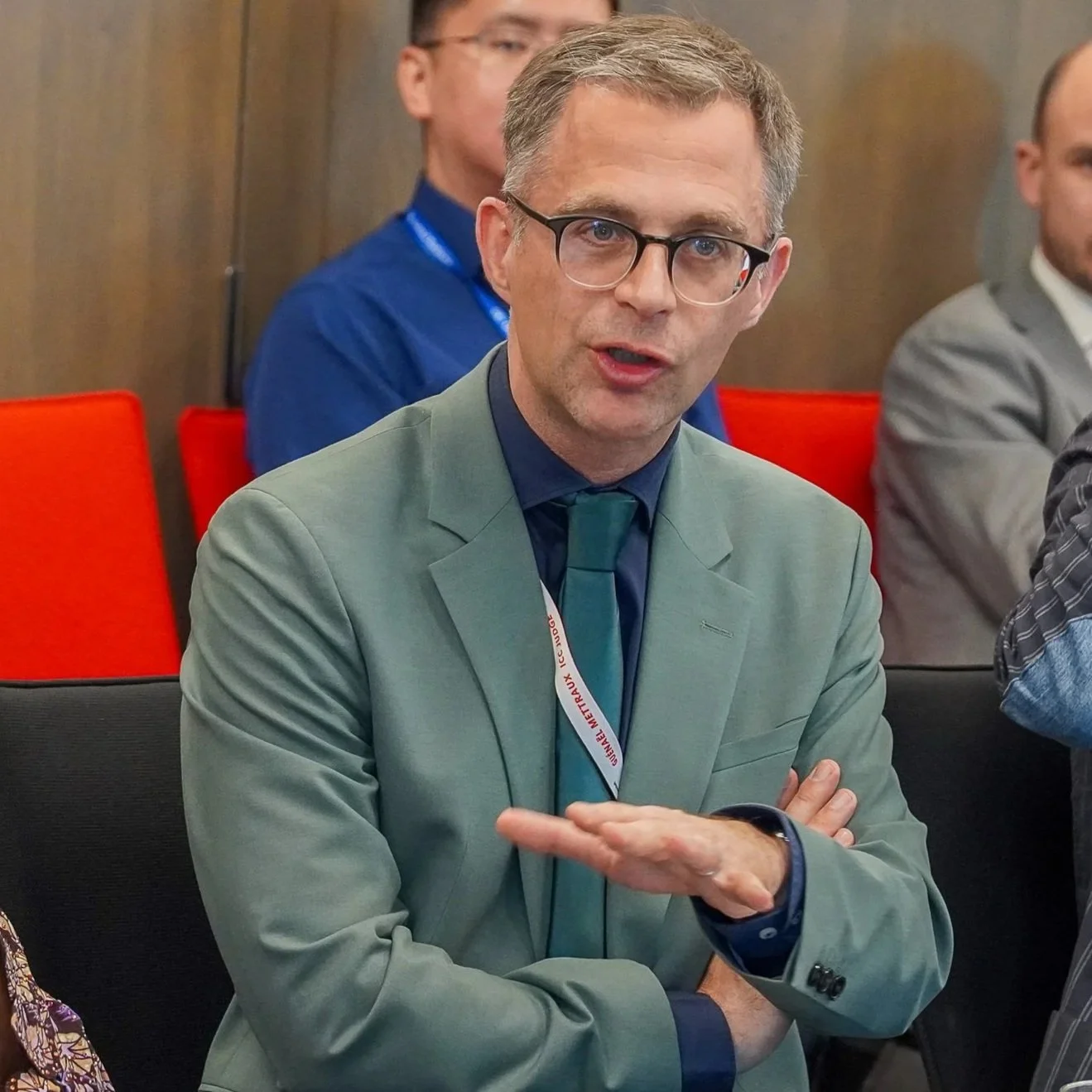
On 5th February 2026, Oliver Hoehne, Deputy Permanent Representative at the Permanent Mission of Switzerland to the United Nations in New York gave opening remarks to “Beyond Tariffs: Reconnecting Economic Policy with Social Development”.
Distinguished delegates, Ladies and gentlemen, Dear colleagues,
It is a pleasure to welcome you to this CSocD side event, which we are proudly co-sponsoring together with the Delegation of the European Union. Thank you to the co-organizers – the TASC Platform and Cornell University’s Global Labour Institute – for bringing us together to discuss an often-overlooked angle when we discuss social development: the intersection between economic policy and social development. I also welcome that we shed light on topics here in New York that are predominantly discussed in Geneva. Switzerland has been a long-term and proud supporter of the work of the TASC Platform in Geneva and beyond. This includes their Trade and Labour programme, of which I‘m sure Maria Mexi will tell you more about in a couple of minutes.
Ever since the First World Summit on Social Development in 1995, the Copenhagen Declaration is what guides our work at the Commission for Social Development (CSocD). To set the scene for today’s discussion, let me start by looking back at how the world looked when the international community gathered in Copenhagen in 1995.
In a period of accelerating globalization, there was widespread optimism that by expanding trade liberalization and opening new markets, prosperity would follow. At the same time, there was a growing awareness that the benefits of economic growth were not necessarily shared equally, and that without deliberate policy choices, social cohesion risked being weakened rather than strengthened.
This perspective is important to keep in mind when considering the circumstances under which the Copenhagen Declaration was adopted. One of the key commitments in the Copenhagen Declaration was thus to promote a favourable economic environment for social development: an environment in which economic policies actively support social progress, full employment and decent working conditions, poverty alleviation and social integration. Economic policy was not perceived as functioning in a vacuum, and certainly not as separate from social outcomes. On the contrary, it was recognized as a powerful driver of social development. That insight remains relevant today.
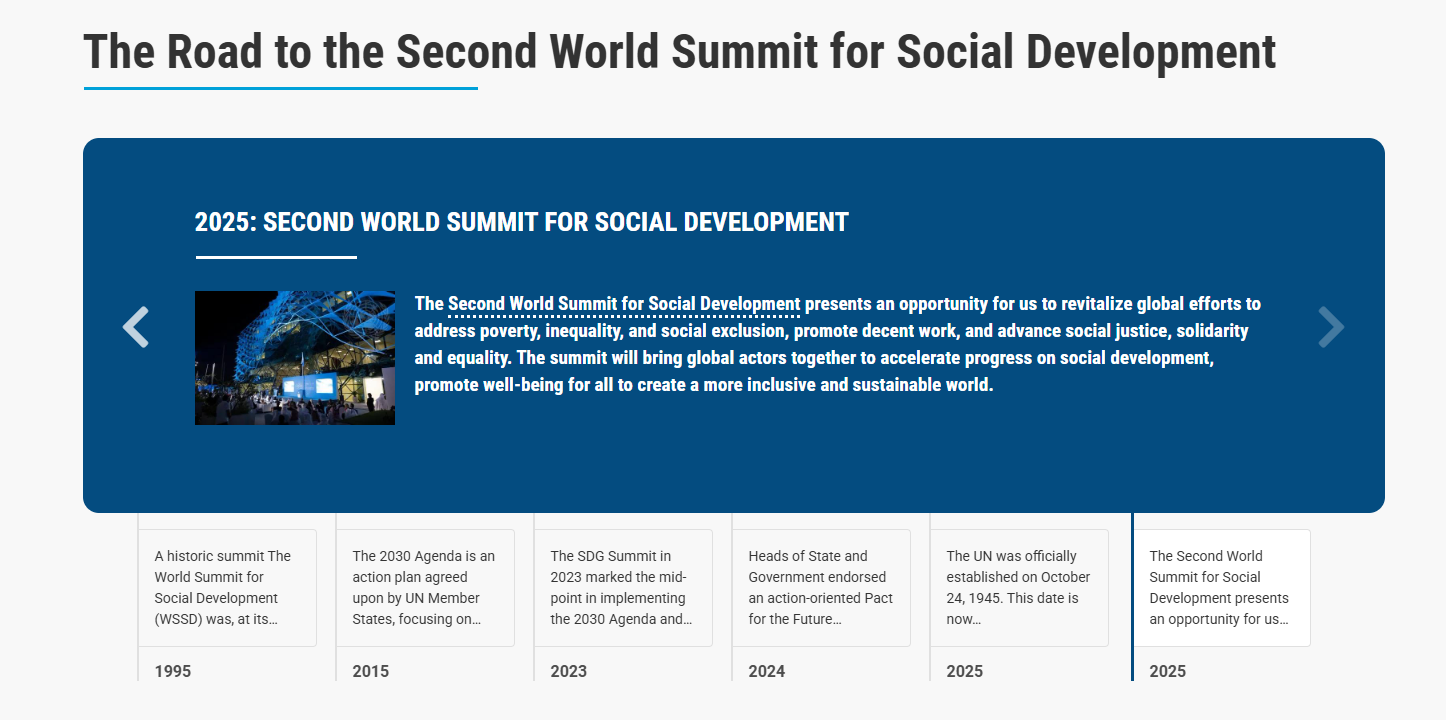
Three decades later, at the Second World Summit for Social Development in November last year, the international community gathered in Doha to reaffirm the commitments from Copenhagen and to take stock of the progress made so far. Doha made clear that the core messages of Copenhagen have not lost their relevance — quite the opposite.
A key message from Copenhagen — renewed in Doha — is: Social development does not happen in isolation. For this reason, the Doha Declaration once again emphasized the importance of integrating macroeconomic policies with social outcomes.
Of course, in many ways today’s global context is more complex and more challenging than it was in 1995. We face widening inequalities, climate change, demographic transitions, technological transformation, and increasing pressure on social cohesion. But we also have something that leaders in Copenhagen did not have yet to the same extent: robust evidence.
We now have much stronger empirical data demonstrating the mutually reinforcing relationship between social and economic development.
For example, World Bank data and other international research show clear links between improved workers’ rights, labour conditions and productivity. Therefore, investment in social rights is a smart economic choice that enhances resilience, competitiveness and long-term growth. Social development and economic performance are not trade-offs. They are interdependent. And, in fact, economic policy can be one of the most powerful levers governments have to advance social development.

This understanding shapes Switzerland’s approach in policymaking. Switzerland seeks to align its economic policy instruments with social development objectives in concrete and practical ways. One example is the integration of social and labour commitments into our free trade agreements. Beyond market access and tariffs, our modern free trade agreements include provisions on labour standards, inclusion, and responsible business conduct. Another important example is Switzerland’s National Action Plan on Business and Human Rights. Through this framework, we work to ensure that our economic activity — both domestically and internationally — respects human rights along global value chains.
The palette of economic policy instruments available to governments and economic actors today is broad — from trade and investment policy, labour market regulation, and tax policy, to corporate social responsibility frameworks. But having tools is not enough. What matters is whether we use them intentionally, coherently and effectively to advance social development. As we discuss how to accelerate progress on social development and move from ambition to action, let us remember that the vision articulated in Copenhagen remains a guiding compass. Reconnecting economic policy with social development is not a new agenda — it is a renewed commitment to an agenda we already agreed upon.
Switzerland looks forward to an open and forward-looking discussion on how we can better use economic policy — in all its forms — to promote inclusive, resilient and sustainable social development for all.
Thank you.

The Trade and Labour Programme convenes stakeholders across trade and labour research, policy and practice to examine how economic transitions can deliver more just and inclusive outcomes. Through fieldwork, multistakeholder dialogue, and policy engagement, the programme is building momentum for a global trade system that is socially responsive, economically resilient, and fit for the future of work, and the future of working together.
📬 Interested in joining this dialogue? Get in touch with us.