

Leadership in Uncertain Times: From Myanmar to a Global Dialogue
By Claudine Haenni, Managing Director, Bridging-Changes Foundation
Building resilient leadership in times of societal uncertainty requires both practical skills and trusted networks. In 2024 and 2025, the TASC Platform joined forces with the Bridging-Changes Foundation, the Geneva Centre for Security Policy (GCSP), and the Asian Institute of Hospitality Management at Les Roches to launch a Leadership Skills Training Academy for mid-level leaders from Myanmar.
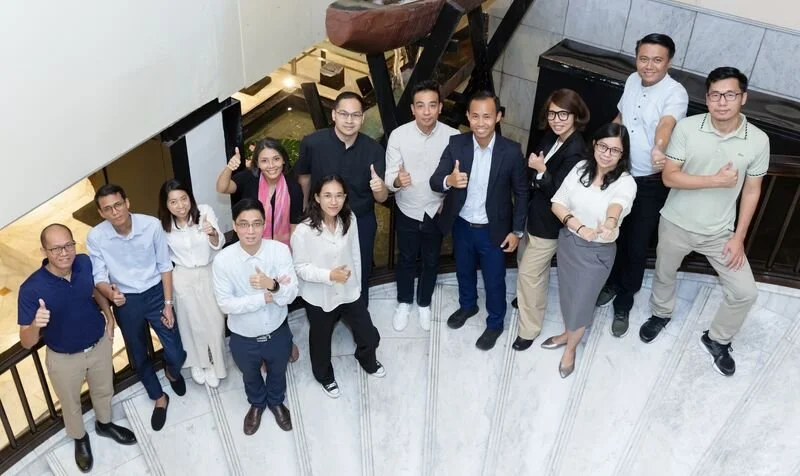
Thirteen participants from across Myanmar travelled to Bangkok three times for intensive in-person training sessions, complemented by online assignments, coaching, and peer reflection between modules. Over ten months, they completed 40 days of participative training designed to strengthen self-awareness, emotional intelligence, and collaborative leadership—capabilities essential for navigating complex transitions and uncertain environments.

The programme aimed to equip participants with the skills needed to lead in uncertain and volatile contexts. Through exercises in self-reflection, critical thinking, trust-building, and leading inclusive teams, participants explored new ways of working with their organisations and communities. Many left the programme with renewed hope, skills, and resilience—intent on applying what they had learned to the realities they face in Myanmar today.
One year later, the cohort continues to meet regularly. Despite their varied backgrounds and professional interests, the participants remain united by a shared commitment to positive change in their country. Their ongoing meetings focus on peer coaching and collective reflection, often structured around “mastermind” sessions where participants support one another in addressing real leadership challenges.
The strength of this network became evident when, at the participants’ request, an additional retreat was organised six months later in Chiang Mai. The event was largely funded by the participants themselves, who even pooled resources to ensure that those with fewer financial means could attend. The retreat reinforced both the sense of community that had developed during the programme and the shared commitment to sustaining its impact.
Participants frequently point to the practical impact the training has had on their leadership. Many describe gaining tools to better understand themselves and the environments in which they operate—skills that translate directly into more collaborative and confident leadership.
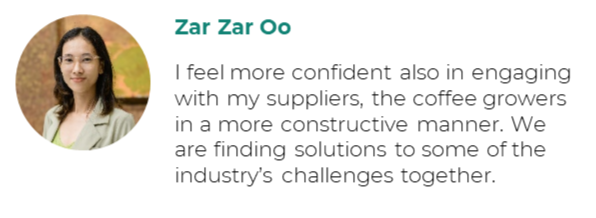
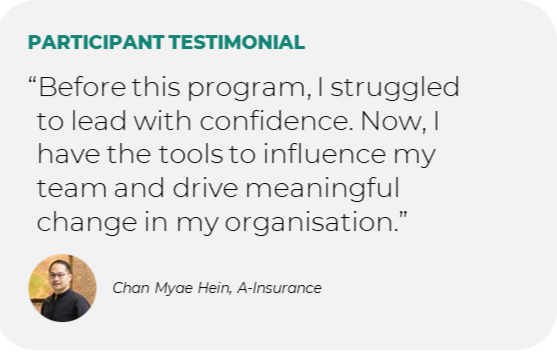
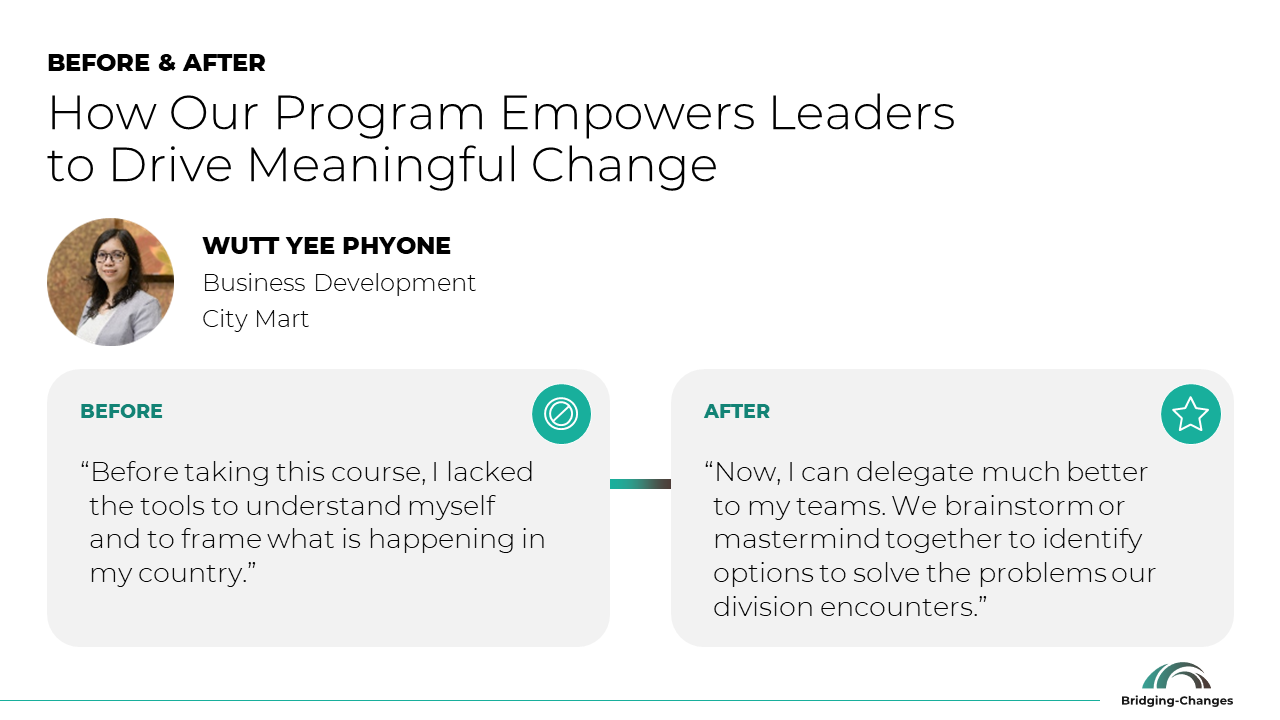
Others note how the programme strengthened their ability to engage constructively with partners and stakeholders beyond their immediate teams. For several participants, the programme marked a turning point in how they approach leadership and organisational change.
Encouraged by the results of the first cohort, the initiative is now entering a new phase. From June to December 2026, Bridging-Changes, supported by TASC and the Geneva Centre for Security Policy (GCSP). will train 24 mid-level and second-tier leaders from a large Myanmar corporation in leadership skills and emotional intelligence. At the same time, five alumni from the original Academy will participate in a parallel Train-the-Facilitators programme, helping to replicate and scale the approach locally.
The collaboration with the TASC Platform played an important role in shaping this initiative. It provided a concrete incubation project aligned with TASC’s broader work on leadership and systemic transitions. Through the partnership, participants were also connected to TASC’s international networks and dialogue spaces linking their local leadership practice with wider global conversations on societal change.
In this sense, the Leadership Skills Training Academy demonstrates how local leadership development and global networks can reinforce one another. By connecting practical experience on the ground with broader systems-level dialogue, initiatives like this help equip emerging leaders with the tools, confidence, and community needed to navigate complex transitions.
As the programme expands into its next phase, it offers a promising example of how partnerships can scale impact building bridges between individual leadership journeys, organisational change, and global networks working toward more resilient and inclusive futures.

The Bridging-Changes Leadership Academy, led by Claudine Haenni, supports emerging leaders navigating change in an increasingly complex and interconnected world. Through interactive training and peer learning, the initiative equips changemakers—primarily from Southeast Asia—with the practical leadership skills needed to foster collaboration, creativity, and innovation.
In partnership with the TASC Platform, the community connects regional leadership practice with the expertise and dialogue spaces of International Geneva, bringing new perspectives on the future of leadership into global conversations on societal transitions.
📬 Interested in learning more or joining the community? Get in touch with us.