

As we face extreme weather events and a host of other geopolitical, economic, and social crises, focusing on a just transition is becoming increasingly urgent. The challenge now is how to translate the idea of a just transition into practical pathways for change.
Read on as Dr. Anne Monier, Senior Researcher at the Centre for Philanthropy and the Geneva School of Social Sciences, University of Geneva, introduces a new practical briefing note developed with UNECE to help stakeholders navigate the definitions, challenges and pathways for action that can support a just transition.
The Philanthropy, Democracy and Just Transition initiative, and the Geneva School of Social Sciences, University of Geneva, has just published its first tool: “A Practical Briefing Note on Just Transition.”
This briefing note was developed in collaboration with the United Nations Economic Commission for Europe (UNECE), thanks to the valuable contribution of Chiara Giamberardini, Economic Affairs Officer, and Iva Brkic, Programme Manager.
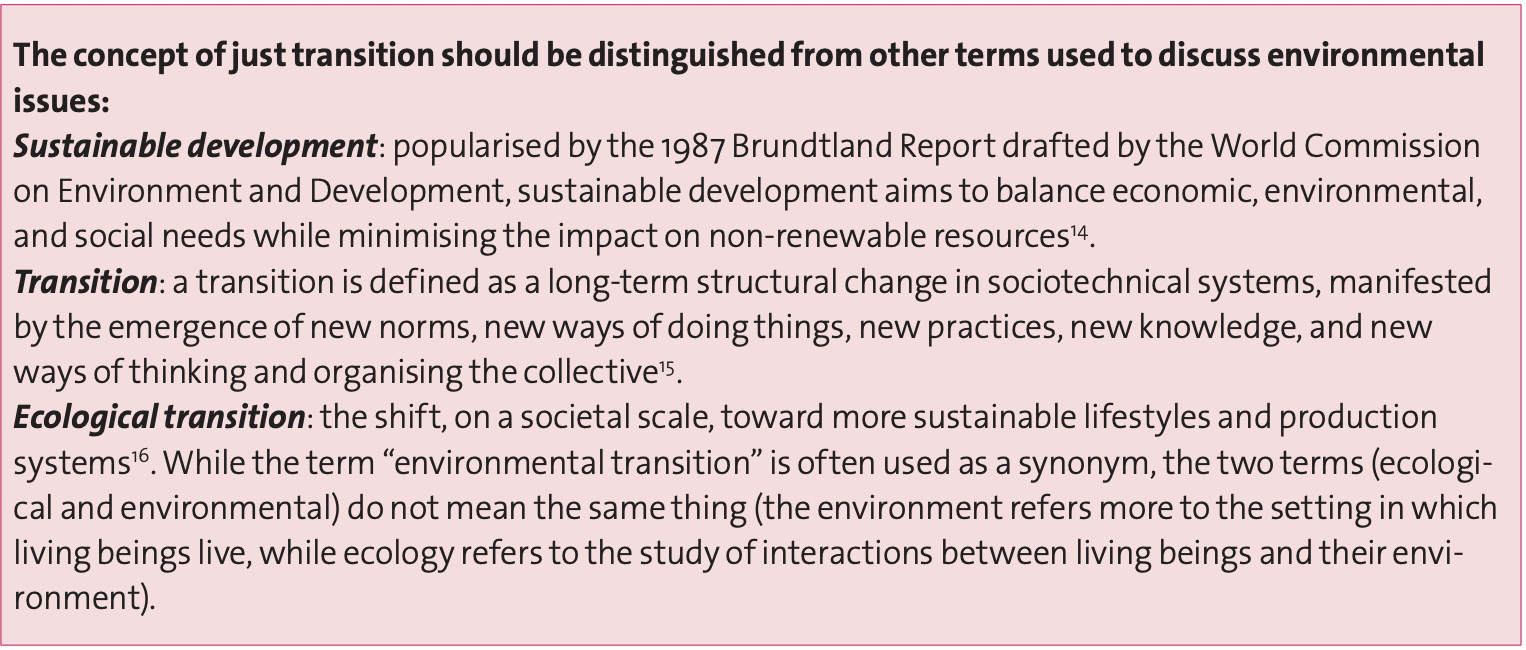
This briefing note is intended for all stakeholders (regardless of their status, mission, or function) who are at the start of their just transition journey, providing them with some basic information (definitions, challenges, and perspectives) to help them get started. Rather than offering "ready-made solutions", the note opens avenues for reflection and action. The aim is to summarise key knowledge clearly, encourage actors to reflect on these issues, and offer specific insights to help put this knowledge into practice and foster action.
The term ‘just transition’ should not become yet another buzzword.
The briefing note is divided into three main sections:
Context and Background: This section sets the stage with key figures on environmental philanthropy, noting that environmental causes receive just 2% of global and 3% of European philanthropic funding. It also introduces three critical dimensions of the issue: the semantic, systemic, and democratic stakes.
Navigating the Semantic Landscape: Focusing on the semantic dimension, this section examines how the term "just transition" is defined and applied across different settings. It explores various conceptual approaches, highlighting the framework established by the UNECE as a practical example.
Avenues for Reflection and Action: The final section provides actionable pathways and compelling arguments to emphasize the urgency of the issue, underscoring the steep cost of inaction. It offers practical guidance on how to drive change across multiple levels: individual, organizational, sectoral, and societal.
One of the approaches highlighted in the briefing note is UNECE’s framework for designing and implementing just transition pathways, grounded in three foundational principles: planning and financing, a context-specific approach, and measuring and reporting outcomes. The framework also emphasizes six interconnected pillars: social progress, workers' protection and empowerment, environmental responsibility, economic success, participatory governance, and institutional support.
UNECE has translated this framework into practice through a range of initiatives. One example is its work to empower the next generation of energy leaders, promoting meaningful stakeholder engagement and a collaborative approach that goes beyond token consultation.
“There is no ‘one-size-fits-all’ solution: we must work with precision and in a context-specific way.”
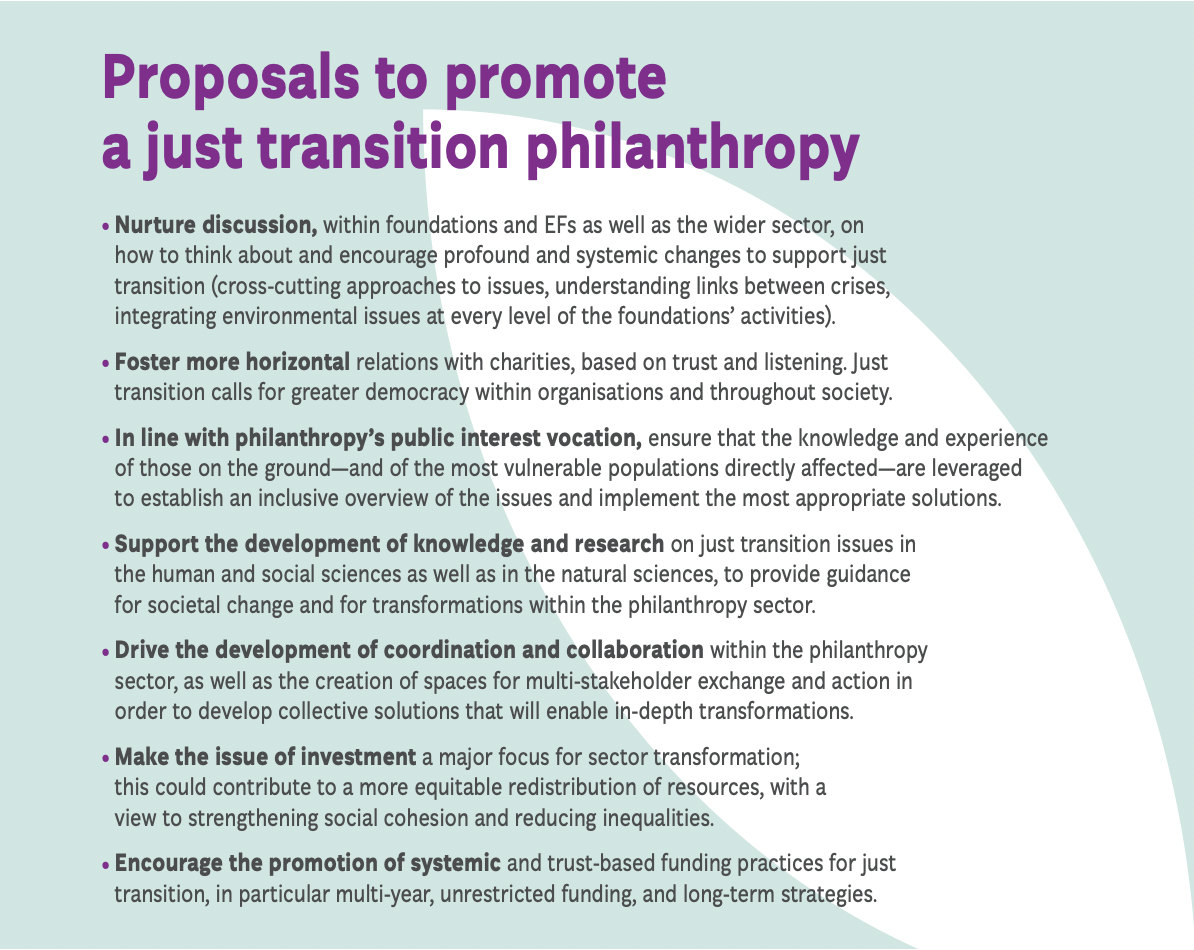
The briefing note was presented on 30 September 2026 at the United Nations in Geneva during UNECE Sustainable Energy Week. Amid discussions on strengthening energy security, affordability, and sustainability in an uncertain world, the event provided an opportunity to reflect on the role of philanthropy and on ways to advance effective multi-stakeholder collaboration.
Moving from the idea of a just transition to action requires precisely this kind of exchange: clearer shared language, practical frameworks, and collaboration across sectors.